

30/10/23
Cavex secures $6M to scale digital carbon financing platform
The Carbon Value Exchange (Cavex) has successfully closed its USD 6 million seed funding round led by E3 Capital with participation from FSD Africa Investments (FSDAi), the investment arm of Financial Sector Deepening Africa (FSD Africa).
Cavex allows small producers of carbon credits such as farmers and small businesses across Africa to sell directly to corporate buyers. It enables access to critical carbon financing for small-scale projects, which struggle to participate given the high up-front cost and time required for carbon credit validation, issuance, and brokerage. The platform aims to channel USD 500+ million in carbon financing to small-scale green projects by 2030.
The investment will enable Cavex to bring its digital carbon financing platform to commercial scalability. E3 Capital’s and FSDAi’s commitments will support Cavex in launching an innovative solution to increase trust, equity, and transparency in the voluntary carbon markets. Cavex has been incubated by 4R Digital with support from the UK’s Foreign, Commonwealth and Development Office (FCDO), Shell Foundation, and FSD Africa.
30/10/23
GIZ and Gates award grants for agri info exchange in Kenya, India
The FAIR Forward initiative of the German Development Cooperation Agency (GIZ) and the Bill & Melinda Gates Foundation have announced the cohorts of The Agricultural Information Exchange Platform (AIEP). The AIEP initiative aims to leverage advanced digital solutions, responsible AI, and language technology to improve access to crucial information for smallholder farmers and extension officers. The awardees will receive a grant of up to USD 400,000 for a 12-month project. The objective is to develop a Digital Public Good (DPI) based, AI-powered and gender-sensitive Minimum Viable Product (MVP) of the AIEP in Kenya and the state Bihar, India to help farmers overcome information barriers. Four teams have been selected: The “Tech for Her team” by Dalberg and DeHaat; the “dynAg team” by CGIAR’s International Rice Research Institute (IRRI), International Maize and Wheat Improvement Center (CIMMYT), Gramhal, IKSL, DISYS India and Sumrath; the team of Viamo , Producers Direct and HarvestPlus; and the team of Digital Green and Gooey.AI.
01/11/23
BII commits $26.5M to AFEX to address food security in Nigeria, Kenya, Uganda
British International Investment (BII), the UK’s development finance institution and impact investor, has announced a USD 26.5 million commitment to AFEX, Africa’s leading commodities platform, which operates 200+ warehouses in Nigeria, Kenya, and Uganda and serves 450,000 farmers. The investment is set to benefit smallholders and lead to improvements in food security. The additional warehouses will provide 230,000 MT of storage capacity, enabling up to 200,000 more farmers to access low-cost storage and maximise sales from crop harvests, potentially helping increase farmer incomes. The capital will also scale warehouse technology and next-generation software that captures post-harvest pricing. Smart storage solutions have the potential to preserve the lifespan of harvested crops, and so increasing the volume of food available.
03/11/23
J-Palm Liberia bags $1.2M for sustainable palm oil
Agritech J-Palm Liberia has secured USD 1️.2 million funding from the USAID Africa Trade and Investment programme. This investment is part of the work of USAID Agribusiness Incubator and Development, a five-year, USD 20 million programme aimed at boosting Liberia's agricultural sector. J-Palm Liberia buys fresh l palm kernels from smallholder farmers in Liberia. It then turns palm kernels into oil and uses the oils to create a range of natural health and beauty products. The objective is to deliver a sustainable, no-deforestation palm product that makes communities more resilient to climate change. The new funding from USAID Africa, which will also support digitalisation, will help foster J-Palm’s growth and market expansion. The agritech is developing, with support from the GSMA Innovation Fund and funding from the UK Foreign, Commonwealth and Development Office (FCDO) and the Swedish Cooperation (Sida), two mobile blockchain apps to deliver transparency and traceability to Liberian palm oil supply chains. An estimated 250,000 individuals in the country are reliant on harvesting palm oil for income. Liberia accounts for 43% of the remaining Upper Guinea forests of West Africa.
06/11/23
Mayani partners with GCash for famer finance in the Philippines
Agritech start-up Mayani, a digital B2B marketplace linking farmers and fisherfolk in the Philippines with buyers, has partnered with mobile money provider GCash to provide credit to farmers. Mayani will work with Fuse, the lending arm of GCash, to provide a suite of non-collateralised digital lending products to Mayani farmers, initially in the municipality of Lian, province of Batangas. Mayani has a base of 44,000 smallholders and fisherfolks across seven regions of the Philippines. It has 30,000 B2C customers, which include hotels and restaurants, food processors, and large supermarket chains. GCash claims to have 81 million users and 2.5 million sellers and merchants across the Philippines. Established in 2019, Mayani started with funding from the Asian Development Bank (ADB) and the Japan International Cooperation Agency (JICA). In January this year, the startup raised USD 1.7 million in a seed funding round led by AgFunder via its GROW Impact Fund.
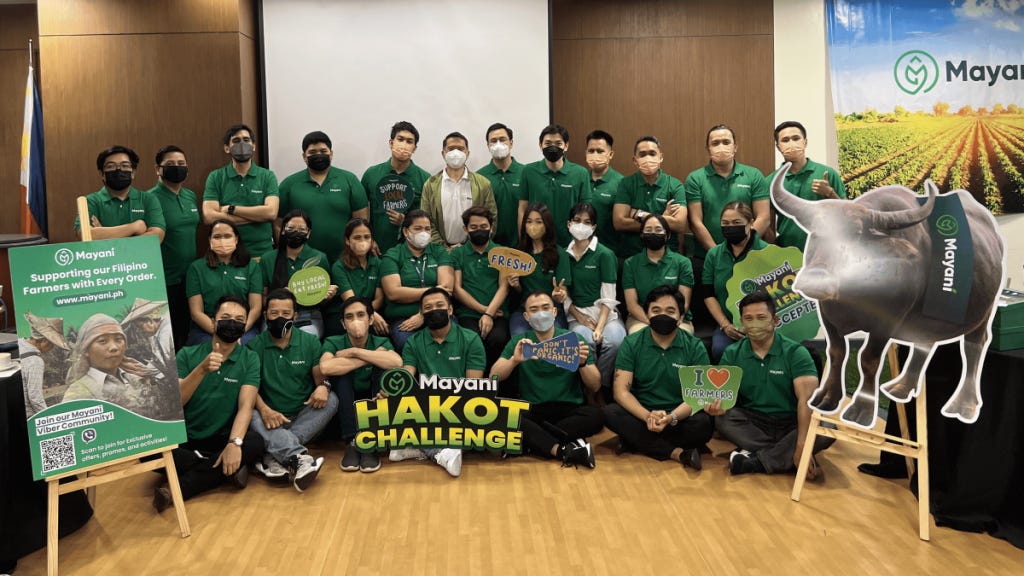
Photo credit: Mayani
06/11/23
UPAg, a DPI for agriculture data launched in India
India’s Ministry of Agriculture and Farmers' Welfare has launched the Unified Portal for Agricultural Statistics (UPAg), an online agricultural data management platform designed to generate crop estimates. UPAg integrates with other systems generating agriculture statistics. It serves as a centralised hub for near real time information on crop production, market trends, pricing, and other vital agricultural data. As a digital public infrastructure (DPI) for agriculture, it offers real-time, standardised, and verified data on agricultural commodities, facilitating data-driven decision-making for policymakers, researchers, and private sector actors. UPAG has been designed by IT services company Object Technology Solutions India (OTSI). Data sharing between UPAg and state governments allows for the generation of more granular level estimates of crop production, which can be used to inform local decision-making.
One that we missed..
23/10/23
IFAD and Grow Asia to support farmers with digital agriculture in Southeast Asia
The International Fund for Agricultural Development (IFAD) and multi-stakeholder platform Grow Asia have launched the Smallholder Economic Empowerment through Digital Solutions (SEEDs) project, with financial support from the Republic of Korea’s Ministry for Agriculture, Food and Rural Affairs (MAFRA). SEEDS aims to accelerate and scale-up social and economic development for small-scale farming families and rural people in Cambodia, the Philippines and Vietnam through digital and ICT solutions. The project will leverage partnerships with governments, agribusinesses, technology, and support organisations to bring localised solutions that bridge the digital gap in the region. It should benefit 48,000 people, as well as 30 start-ups and 150 government officials across the three countries. The first phase of SEEDS will be a comprehensive analysis of the policy and regulatory landscape influencing the uptake of digital innovations in smallholder agriculture. The plan is for existing grassroots farmer organisations that work with IFAD-funded projects to act as the last mile providers of services and training to farmers.
02/11/23
New report: An assessment of Tanzania’s digital agriculture ecosystem
A recent report by consulting company The AgTech Network provides an assessment of the digital agriculture ecosystem of Tanzania. The study, which was commissioned by the United States Agency for International Development (USAID) through global development firm DAI, maps actors within the country’s digital agriculture ecosystem, and identifies challenges and opportunities for digital technology adoption including those of Tanzanian women and youth. The assessment reveals key challenges for the scale-up and sustainability of digital agriculture including limited access to reliable digital infrastructure, affordable devices, and mobile services, as well as low digital literacy rates, especially in rural areas. Among key actions for policymakers, funders and NGOS, the report recommends prioritising the development of centralised government-led open farmer databases/registries, along with guidelines to standardise the collection and management of data. The report also invites funders to support digital financial services for smallholders, including credit and leasing, by making finance available to agri DFS providers through guarantees and blended finance mechanisms.