

09/01/24
Nigeria’s Zebra CropBank bags funding from Catalyst Fund
Nigerian agritech Zebra CropBank has secured an undisclosed investment from the Catalyst Fund to expand its reach to smallholder farmers. The start-up addresses the lack and inefficiency of storage facilities, poor access to markets and finance. It is building and leasing solar powered micro-warehouses at close proximity to farming communities and clusters. Using a USSD-based solution, farmers are able to efficiently and transparently store and trade their produce at the micro-warehouses. The solution enables farmers to link receipts from the sale of crops to processors and other B2B buyers and to unlock credit so they can invest in inputs to increase yields. In its first phase, Zebra CropBank has deployed five solar micro-warehouse units registering 1,400 farmers in Enugu State. With the new funding, the startup aims to build a network of 190+ micro-warehouses nationwide by 2027.
10/01/24
Indonesia’s Semaai secures an additional $4.7M to expand in Central Java
Indonesia’s agritech Semaai has raised USD 4.7 million in a pre-series A funding round led by CyberAgent Capital with support from Sumitomo Corporation Equity Asia, Ruvento, MyAsiaVC, Heracles Ventures, and several existing backers. The funding comes almost a year after the February 2023 bridge funding round (USD 1.65 million). Since it started in 2021, the startup has raised a total amount of USD 7.7 million.
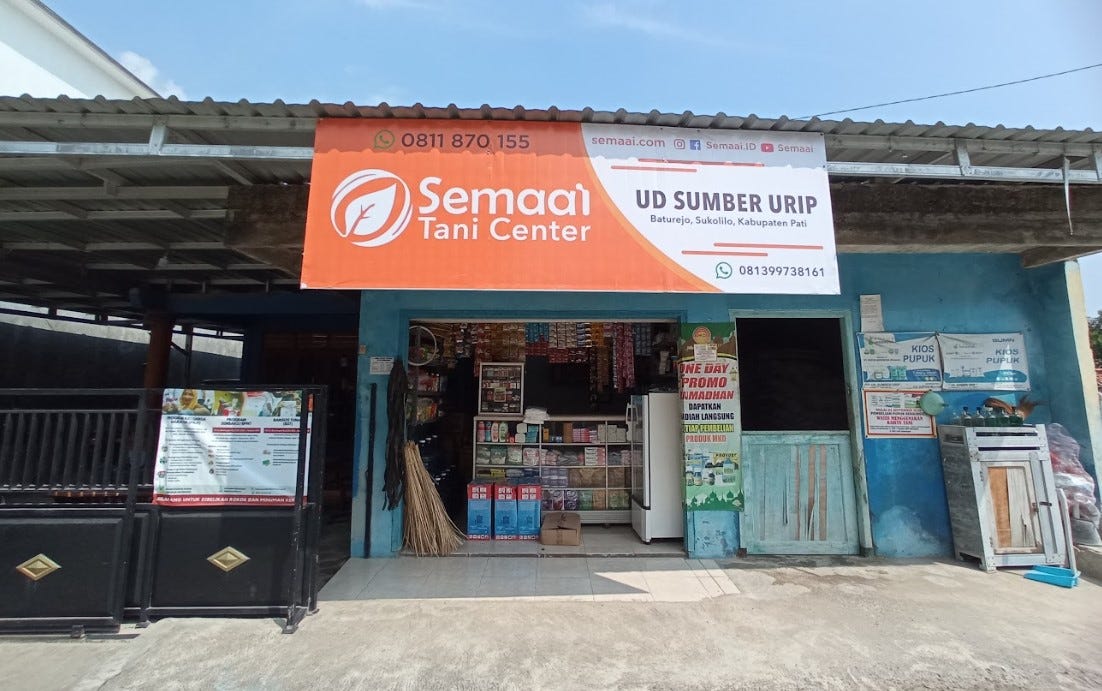
Photo credit: Semaai, AsiaTechDaily
Semaai has developed a digital agriculture solution centred around a marketplace app for agricultural inputs such as seeds, fertilisers and pesticides, and extending to advisory services. The company leverages a network of agri retailers (toko tanis), and its own network of delivery centres to support service delivery. It plans to use the new funds to strengthen its presence in Central Java. It is also looking to provide financial services to farmers through fintech partnerships, and to improve its advisory services. The startup said that in the last year it experienced an eight-fold increase in the user base and a fifteen-fold increase in net revenue.
11/01/24
Mastercard’s Community Pass reaches 5M users globally, 1.2M smallholders in Uganda
At its second annual Community Pass Customer Summit in Kampala, Uganda, Mastercard said that the solution has reached nearly 5 million users globally in Uganda, Kenya, Tanzania, Ethiopia, and India. In Uganda only, it has reached 1.2 million smallholders. Previously Mastercard said that it plans to bring Community Pass services to 15 million farmers in Africa by 2027. First piloted in Kenya in 2015, Community Pass services, such as the Farm Pass, are app-based solutions that establish a digital identity for unbanked communities. Farm Pass digitises payments and farmer financial histories, increasing market linkages and access to financial services. In addition, Mastercard announced a collaboration with Shell Foundation and Co-operative Bank of Kenya to provide below-market interest rates to smallholder farmers against lending for green technology.
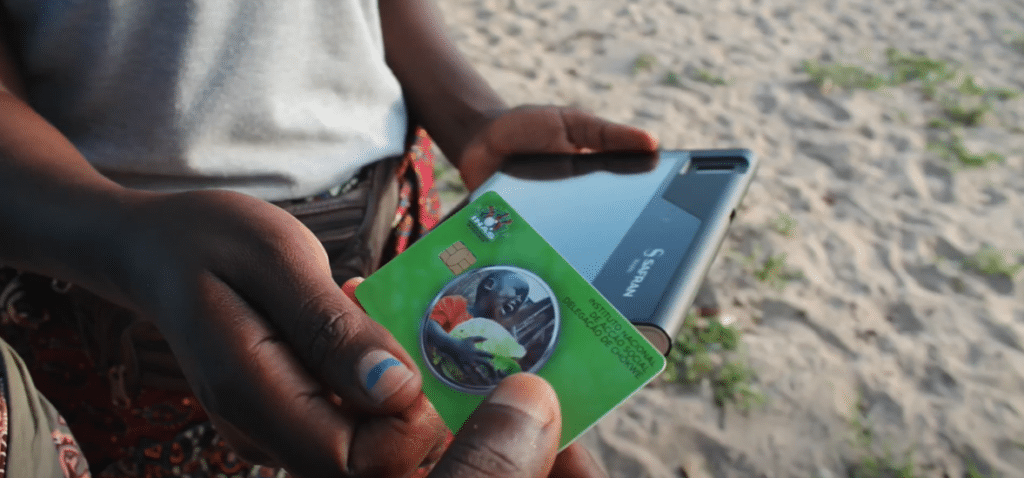
Photo credit: Mastercard
12/01/24
Oxfam shares highlights of blockchain project in Cambodia
NGO Oxfam has shared insights on the BlocRice pilot in the Preah Vihear province, Central North of Cambodia. The project, which started in 2018 and concluded last December, tested the use of blockchain technology to improve the livelihoods of commercial farmers in the paddy value chain. The objective was to use blockchain to monitor all the parts of a contract farming deal, between farmers, a local rice exporter (Amru Rice) and a rice buyer in the Netherlands (Sanorice), ensuring full visibility and traceability for the agribusinesses, and fair prices for farmers. BlocRice created an accessible database (a digital smart contract) visible to all the participants in the project. Farmers could see the blockchain database using the BlocRice application on a smartphone. The project demonstrated that through contract farming facilitated by blockchain technology, farmers can secure access to markets and receive premium prices during harvest. Oxfam claimed that farmers engaged in the pilot were able to negotiate better deals and improve their revenues. While there is potential to scale up the solution, it is unclear whether the agribusinesses engaged in the project will continue using it.
15/01/24
India’s agri e-commerce KisanKonnect raises $3.75M in pre-series A
Indian agri e-commerce KisanKonnect has raised USD 3.75 million in a pre-series A funding round led by climate tech-focused fund Green Frontier Capital, with the participation of agri input company Dhanuka Agritech, VC Grid and family offices. Established in 2020, KisanKonnect is an agri e-commerce solution enabling 5,000+ farmers in the state of Maharashtra to sell produce to about 100,000 customers in the cities of Mumbai and Pune. In addition to linking farmers to markets, the startup works closely with the farming community to promote sustainable agricultural practices. It plans to use the funding to expand its activities in this area and strengthen its climate smart agriculture value proposition to farmers. KisanKonnect has previously raised an undisclosed amount of funding in a seed round from actor Shilpa Shetty.
16/01/24
DayaTani bags $2.3M for AI-driven agritech solution in Indonesia
Singapore based DayaTani, an agritech with operations in Indonesia, has raised USD 2.3 million in a seed round red by Ascent Venture Group. Other investors included Northstar Ventures, BRI Ventures, and Gentree Fund. Established in 2023, DayaTani has been working throughout last year in the island of Java to develop a digital solution that provides a range of digital agriculture services to Indonesian farmers including market linkages (inputs and outputs), finance and advisory. With support from Microsoft Singapore, the startup has built a chatbot allowing farmers and field agents to ask agri-related questions in their regional language via text or speech. The chatbot is enabled by AI models that offer practical recommendations, for example on the use of fertilisers. Farmers can access the advisory on WhatsApp. The startup also has a field force app. To add to the AI model ground-level data such as weather information, DayaTani plans to install 100 Internet of Things (IoT) devices. In a statement, the company said that has formed partnerships with input companies, as well as other agritechs and agribusinesses in Indonesia as it looks to commercialise the solution.
17/01/24
UNDP announces $1Bn Pan-African initiative to support startup ecosystem
At the World Economic Forum Annual Meeting in Davos, the United Nations Development Programme (UNDP) officially announced a new initiative to bring catalytic and commercial capital to support Africa’s startup ecosystem. Launched in partnership with several African countries, including Ghana, Rwanda and Nigeria, the initiative dubbed “timbuktoo” has the ambition to mobilise and invest USD 1 billion of public and private funds to transform 100 million livelihoods and create 10 million dignified new jobs across the region in 10 years. Key gaps that timbuktoo aims to address comprise the academic-industry R&D gap, a lack of local angel investors, weak local incubator business models, and small, fragmented markets. The initiative will have a presence in eight hubs across Africa, including Kigali, Cairo, Cape Town, Accra, Casablanca, Dakar, Lagos, and Nairobi. These hubs will support local startups working across sectors such as fintech, healthtech, edtech, cleantech, creatives and agritech with a view to develop global-level players.