

16/09/24
iFarmer secures new funding in Bangladesh
Bangladesh-based agritech startup iFarmer has received an investment from UK-based VC firm Razor Capital, though the financial terms were not disclosed. Established in 2019, iFarmer is a full-stack agriculture startup supporting smallholder farmers by offering access to agricultural inputs, financing, advisory services, and market connections. With the new funding, the startup aims to expand its footprint, enhance its supply chain, and explore export opportunities. Recently, iFarmer renewed its partnership with Guardian Life Insurance to provide insurance coverage for loans in case of unforeseen circumstances such as death or permanent disability of the borrower. The agritech has registered over 150,000 farmers and 14,000 retailers. It has disbursed to date USD 53.5 million in financing. In Bangladesh, there are about 16.5 million farmers and agriculture contributes about 11% of GDP.
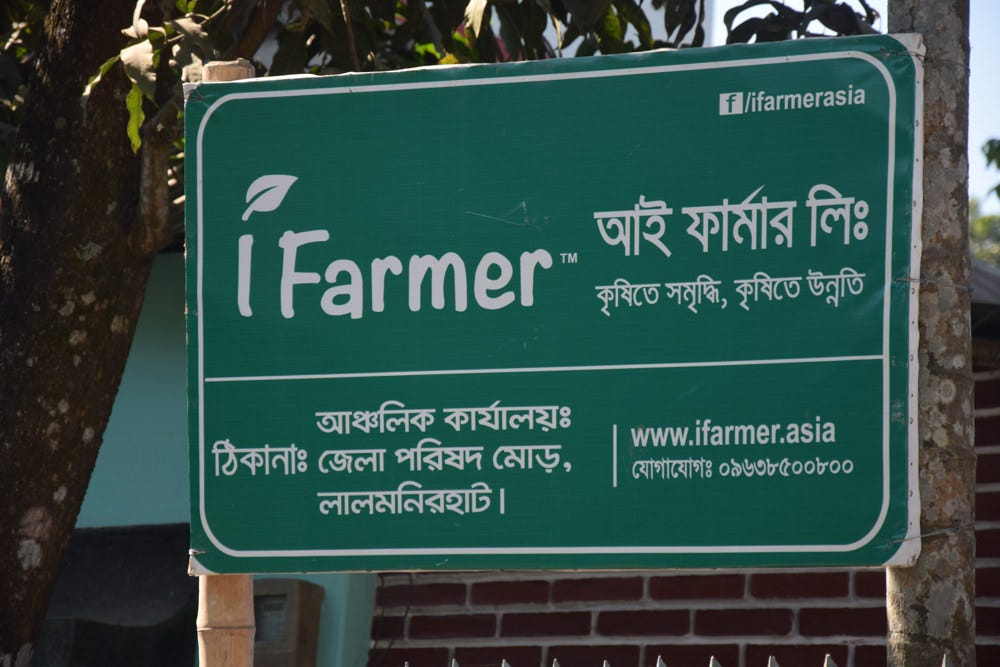
Photo credit: iFarmer
18/09/24
New $33.5M Uncap fund to support agri SMEs and agritechs in Africa
Early-stage African investor Unconventional Capital (Uncap) has launched a EUR 30 million (USD 33.5 million) fund dedicated to providing non-dilutive, revenue-based financing to early-stage SMEs in Africa. Unconventional Capital will collaborate with partners, including “Scaling digital Agriculture Innovations through Start-ups” (SAIS), an agritech initiative funded by the German Federal Ministry for Economic Cooperation and Development (BMZ) and implemented by the German Development Agency (GIZ), as well as the business accelerator O-Farms, a circular agriculture programme run by Bopinc and funded by the Ikea Foundation. These partnerships will enable Unconventional Capital to harness its expertise and networks to better support SMEs in high-impact sectors. The fund is launching with initial support from The Bill & Melinda Gates Foundation and the Bayer Foundation.
23/09/24
Kenya’s Amini launches open version of environmental data platform
Kenya-based climatetech startup Amini has launched Amini Lite, a lightweight version of the Amini platform designed as a one-stop-shop for various data points on Africa and the Global South. Amini Lite aims to support developers and data analysts, especially those looking to quickly integrate highly technical datasets (e.g. geospatial data from satellite imagery or remote sensing).
Amini’s core commercial solution is its B2B digital platform that provides environmental data to a variety of organisations working with farmers, including businesses and governments. The startup uses geodata from satellites and ground truth data (e.g. IoT and research data) with AI to drive supply chain resilience and economic inclusivity for farmers. The platform supports different use cases including flood detection, decision making support, and traceability/visibility in supply chains. Amini has to date raised USD 6 million. Its funders include Salesforce Ventures, the Female Founders Fund, Satgana, Pale Blue Dot and Superorganism.
25/09/24
AgDevCo secures $25M from FCDO to support African agribusinesses
AgDevCo, a specialist investor in African agriculture, has announced £25 million (USD 32 million) of funding from the Foreign, Commonwealth, and Development Office (FCDO) of the UK Government. The plan is to use the funding to establish AgDevCo Ventures, a new unit that will make investments in the range of GBP 0.75-2.5 million (USD 1-3.35 million) in early-stage agri-SMEs including those implementing digital agriculture solutions. Initially, investment will be concentrated in East African countries where AgDevCo is already present (Kenya, Uganda, Tanzania, Rwanda). AgDevCo Ventures wants to support the development of commercial agriculture on the continent, achieving impact through job creation and linking smallholder farmers to market opportunities.
17/09/24
Good reads (1): GSMA releases agritech investment readiness toolkit
The GSMA has published the new report “Investment readiness: A toolkit for agritech innovators”. The toolkit is designed to help agritechs in emerging markets enhance their investment readiness through practical guidance for their fundraising journey. It offers an overview of the agritech VC investment landscape, insights into investor criteria and decision-making processes, and actionable advice to strengthen the investment readiness of agritech start-ups. The GSMA finds that investors are gravitating towards agritech solutions that address specific challenges. These include agri-e-commerce platforms that connect farmers directly to consumers; supply chain management solutions that address inefficiencies within value chains; and climate-resilient agriculture solutions.
The report also highlights how AI-readiness is taking a central role in investment decisions. At the same time, investors are focusing on agritech startups that take an ecosystem approach over isolated farmer-facing apps. The toolkit is an output of the GSMA AgriTech programme, which is currently running the GSMA AgriTech Accelerator, an initiative funded by the German Development Agency (GIZ).
18/09/24
Good reads (2): 60 Decibels uncovers experiences of Kenyan farmers with digital agriculture
A new study by impact measurement organisation 60 Decibels looks at farmer engagement with digital agriculture services. The report titled “Digital Farmer Services in Kenya: The Farmer Perspective” summarises insights from 1,484 Kenyan farmers from 38 of the country’s 47 counties during the 2023-24 agricultural season. It finds that digital farming services are widely used, with 56% of farmers reporting they used a digital tool at least once during the 2023-24 masika season (mid-March to May). Information and advisory services are the most commonly used digital farming solutions among Kenyan farmers. 46% of farmers accessed these services during the masika season.
The study finds that one in five Kenyan farmers use digital tools to access farm inputs or equipment. Somewhat surprisingly, most Kenyan farmers do not use digital solutions to sell their produce. 68% of the farmers interviewed sold their produce, but only 8% used digital solutions to do so. For this report, 60 Decibels partnered with The Bill & Melinda Gates Foundation and Busara Center for Behavioral Economics, to develop a farmer-centric methodology.