

12/09/23
WeGro partners with FSP for farmer loans in Bangladesh
Bangladesh’ agri-fintech WeGro has partnered with Bangladesh Finance Limited, a non-bank financial and investment services provider, to offer affordable loans to marginal farmers. Established in 2021, WeGrow has an app that connects individual and institutional financiers with smallholders, enabling the financiers to invest in agricultural projects. It also enables its farmers to access quality inputs and markets. Through the partnership, Bangladesh Finance Limited is looking to reach a greater number of rural entrepreneurs. According to its website, the financial services provider serves 10,000+ families in Bangladesh, and has a loan portfolio of BDT 14.04 billion (USD128.1 million). It has the strategic objective to support sustainable agriculture. WeGro, which is currently reaching 3,000+ farmers and provides financial services according to Shariah finance model, is planning to expand nationwide and impact 200,000 farmers by 2024. The company secured its first USD 100,000 funding in 2022, and subsequently raised additional funds from VC Accelerating Asia.
12/09/23
ISF Advisors expand agri finance database
ISF Advisors, a research and advisory firm specialised in food systems and agriculture, has updated its open database providing information on funds that invest in agricultural finance. An additional 60 funds representing a value of USD 8 billion have been added to the Fund Database. The database includes local and global funds including those that support providers of digital financial services and those focusing on sustainable agriculture, such as nature-based solutions. Per each entry, it provides information on the financial instruments available (e.g. equity, debt, grant), regions of focus, fund size and ticket sizes available. This recent expansion brings the database to over 170 impact-oriented funds in the agricultural finance sector, and specifically in smallholder finance, representing approximately USD 32 billion.
14/09/23
Uganda’s Emata bags $2.4M to boost agri DFS adoption
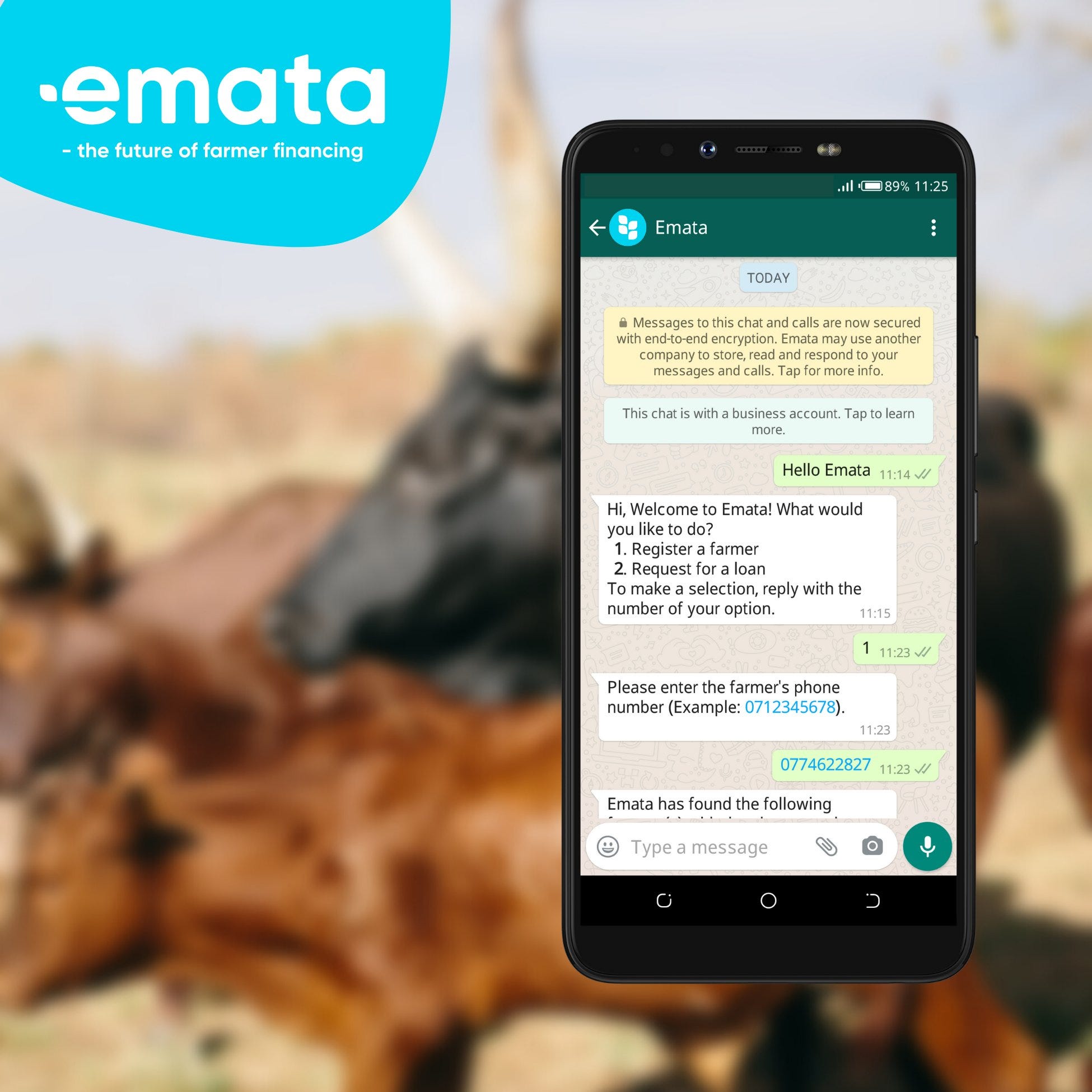
Ugandan agritech start-up Emata has raised USD 2.4 million seed funding to develop its agri value chain digitisation solution and expand internationally starting from Tanzania. Emata raised the money, two thirds as on-lending capital and one third as equity investment, from VC firm African Renaissance Partners, and other investors including start-up accelerator Norrsken Accelerator, Zephyr Acorn, angel investor Marcus Boström and Draper Richards Kaplan Foundation. Emata digitises the agricultural value chain for cooperatives and agribusinesses, enabling the disbursements of loans to commercial smallholders in the in the dairy, maize, oilseeds, and coffee value chains. Its solution allows cooperatives, farmer organisations and agribusinesses to digitise records, register deliveries, create payment schedules, and communicate with farmers via SMS. The data collected is used for AI-powered credit scoring, enabling automated disbursements of loans, which farmers repay at harvest by selling their produce to the cooperatives and agribusinesses. According to reports, Emata has currently 50 agribusiness partners. Established in 2020, when it secured a microfinance license, it currently serves 40,000 individual farmers, having disbursed USD 1 million in loans.
Source: Emata’s website.
14/09/23
India’s Leads Connect Services gets $62.5M, will boost agri-fintech play
Leads Connect Services an Indian farm analytics and agri advisory company, has raised INR 5 billion (USD 62.5 million) from FMCG company BL Agro. The plan is for BL Agro to obtain a controlling stake in the agritech in three years. Among its solutions, Leads Connect Services has the Agrani software-as-a-services (SaaS) platform, a digital farmer database that enables farmers to access finance via agri-fintech services. Leads Connect Services plans to use the funding to improve its technology with artificial intelligence (machine learning) and increase reach among farmers by establishing Agrani centres in multiple cities. Last April, the company formed a partnership with The International Crops Research Institute for the Semi-Arid Tropics (ICRISAT), a CGIAR organisation, to support India’s Farmer Producer Organisations (FPOs) in extending digital agriculture and financial services to farmers. Founded in 2009, Leads Connect is headquartered in the state of Uttar Pradesh.
15/09/23
Indonesia’s Kora gets $400K from Antler and eFishery’s CEO
Indonesian B2B agritech start-up Kora has raised IDR 6.1 billion (USD 400,000) in pre-seed funding from VC firm Antler and from angle investor Gibran Huzaifah, the CEO of Indonesia’s aquatech and unicorn eFishery. Founded in 2022 by Dian Prayogi Susanto, one of the founders of agritech Habibi Garden, Kora focusses on improving post-harvest operations for farmers and middlemen in the maize value chain. The company supports farmers accessing post-harvest corn processing facilities (dryers) and connects them directly to corporate buyers. The funds will be used to expand operations, including greater use of digital solutions. Kora currently operates in the Lampung province in the island of Sumatra, which contributes 9% of total national maize production. The company claims that farmers in its ecosystem record an average increase in income of 25-38%.
18/09/23
FAO, IsDB, IFAD to collaborate on digital agriculture in MENA
The United Nations' Food and Agriculture Organisation (FAO), the Islamic Development Bank (IsDB), a multilateral development finance institution that operates in line with Islamic principles, and the International Fund for Agricultural Development (IFAD) have announced a trilateral partnership to foster the adoption of digital agriculture in IsDB Member Countries in the Middle East and Africa. Broadly, the partnership aims to leverage smart agriculture technologies to support the development of low carbon agriculture, improve resilience, contribute to poverty alleviation, create employment, and reduce vulnerability to climate-related risks for smallholders and pastoralists. FAO will assist IsDB by implementing agricultural projects in member countries. FAO and IsDB signed a MoU in 2020. Since 2021, IsDB has also a Cooperation and Co-financing Agreement (CCA) with IFAD aimed at tackling climate change, improving food and water security in common member countries. As part of the agreement, each of the two institutions have agreed to contribute USD 250 million in 2021-2025.
One that we missed..
08/09/23
eFishery to support sustainable shrimp farming in Indonesia
Indonesian aquatech eFishery has formed a partnership with The Aquaculture Stewardship Council (ASC) to advance sustainable aquaculture by small scale shrimp farmers in Indonesia. A key goal in this collaboration is to enhance understanding of the ASC standards within the Indonesian shrimp industry. ASC is an NGO that supports the sustainability of the seafood industry by running a certification and labelling programme for seafood farmers. Under the partnership, eFishery will support Indonesian shrimp farmers to achieve ASC certification by committing to responsible practices, while it enables them to access international markets. ASC will also work with eFishery to identify opportunities and develop mechanisms to link eFishery’s data collection systems to an always-on, seamless digital audit process that enhances efficiency, accuracy, and transparency.
15/09/23
New blog: Commonwealth Secretariat promotes agri data as “DPI”
A recent blog by Benjamin Kwasi Addom of the Commonwealth Secretariat shares details of the new initiative by the Secretariat to support member countries in managing their agricultural data via a digital public infrastructure (DPI) model. The initiative is kicking off with a country-level multi-stakeholder dialogue in Malawi this month. The objective of the national dialogue is to understand challenges in the availability and quality of agricultural data in Malawi, build consensus for a national infrastructure, and start co-creation and development. A DPI can be defined as a set of shared digital systems that should be secure and interoperable, and can be built on open standards and specifications to deliver and provide equitable access to public and/or private services. Examples in the agriculture sector are the G20’s proposed Digital Public Infrastructure for Agriculture in the Global South (DPI4A) and Ethiopia's data exchange DPI FarmStack. The Commonwealth Secretariat is calling member countries to consider agricultural data as a national resource. Through its Commonwealth Connectivity Agenda for Trade and Investment, it has developed a DPI model to support member countries in building their national infrastructure for agricultural data.