

20/05/24
WeGro, Dhaka Bank and VISA partner for digital farmer finance in Bangladesh
Bangladeshi agri-fintech WeGro has launched a co-branded debit card tailored for farmers in partnership with VISA and local bank Dhaka Bank. Through the bank card, farmers engaged by WeGro can access loans from Dhaka Bank and purchase agricultural inputs such as seeds and fertilisers. The partnership is supported by the Swiss Agency for Development and Cooperation (SDC). Established in 2021, WeGro has an app that connects individual and institutional financiers with smallholders, enabling the financiers to invest in agricultural projects according to the Shariah finance model. It also enables its farmers to access quality inputs and markets. According to its website, it has to date engaged 4,500+ farmers. The startup secured its first USD 100,000 funding in 2022. In June 2023, it raised additional funds from VC Accelerating Asia.
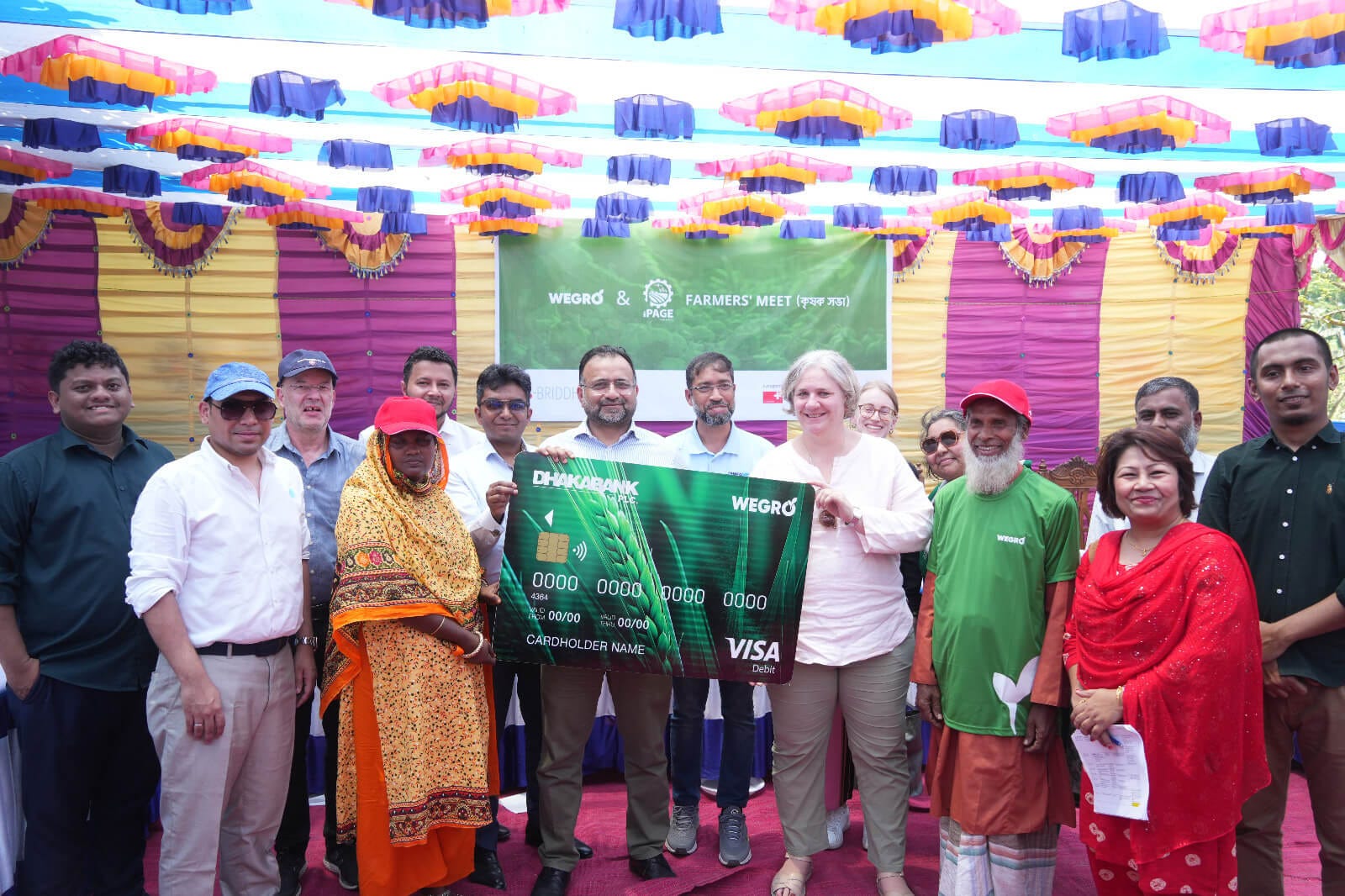
Photo credit: Dhaka Bank
20/05/2024
VC OpenSeed targets investments in pre-seed African agritechs
London-based early-stage venture capital firm OpenSeed has reached the first close of a new USD 10 million fund, which plans to support African pre-seed startups including agritechs. The fund, which will also support startups in Europe, wants to contribute to Africa’s economic growth and technological advancement. Besides agritech, it will target the fintech and health tech sectors. OpenSeed is looking to invest as much as USD 150,000 in the startups. OpenSeed is a so-called “operator VC”, where the investor has had significant operational experience in the startup or tech industry. Under this model, besides funding, OpenSeed will provide to startups support via a community of fifty individual operators.
21/05/24
Indian VC firm raises funds to support pre-Series A agritechs
Indian venture capital firm IVY Growth Associates has announced a new fund dubbed Arigato Capital with an objective to raise INR 2.5 billion (USD 30 million). The plan is for the new fund to start raising capital in June 2024 and to close all commitments from investors over the next 15 to 18 months. The fund will eventually backup startups in India and elsewhere, across multiple sectors including agritech, and beyond the seed stage or in pre-series A stages. The average ticket size should be around USD 500,000. Besides agritechs, the fund plans to invest in startups working in cleantech, generative AI, fintech, consumer brands, and software-as-a-service (SaaS).
24/05/24
IRRI launches digital agriculture database with Philippines’ government
The Philippines’ Department of Agriculture – Bureau of Agricultural Research (DA-BAR) – and the International Rice Research Institute (IRRI) have launched an online platform listing digital agriculture tools and services in the country. The platform dubbed D4AgPH is a comprehensive searchable database that aims to support and improve data-driven decision-making in the rice-based agri-food systems in the Philippines. D4AgPH originates from an IRRI-led national assessment and inventory of existing digital agriculture services and tools. Currently, the database hosts 67 digital solutions. D4AgPH has a data entry facility allowing innovators to contribute their solutions. A readiness assessment conducted by IRRI of the tools and services included in the database reveals that 50% are ready for further expansion, 19% are in the pilot stage, and 29% are ripe for commercialisation. IRRI is an international agricultural research and training organisation with its headquarters in the Philippines and offices in seventeen countries.
27/05/24
Good reads: FAO’s study looks at digital inclusion in rural transformation
FAO’s new report “Towards digital inclusion in rural transformation” highlights the factors that lead to digital exclusion in digital agriculture initiatives. It provides evidence regarding how digital divides play out, and offers recommendations on how to improve digital inclusion for rural areas and marginalised groups. The report identifies three main priority areas to ensure inclusive digital agriculture services. First, it calls for digital agriculture practitioners to be responsive to the needs and priorities of all individuals, especially the rural poor and marginalised groups. Second, it advocates for the inclusion of offline options to ensure continued participation for those with limited technology access. In addition, it calls for concerted action by all stakeholders involved in digitalisation efforts, including service providers, government and mobile network operators, to actively address digital divides and reduce structural inequalities in order to prevent further exclusion and disparities.