

Highly localised, accurate weather information is one of the most important needs of smallholder farmers, particularly for the majority of them working in tropical regions with increasingly unpredictable weather patterns and high climate variability. One study across six African countries found that, in a typical year, around a third of farms were affected by extreme weather events, reducing national crop production by an average of 29%.
For years, ArisTechia has been tracking developments in this space, with companies from Ignitia to TomorrowNow working to solve the weather intelligence conundrum.
This week, two developments put the spotlight on what AI can do to change the weather (and crop) forecasting game. The OpenAI Foundation is backing a USD 60 million initiative targeting weather and crop-disease forecasting for 100 million farmers, while Google has released a new version of its WeatherNext AI forecasting technology with forecasts at resolutions of up to 5 km.
10/09/26
OpenAI Foundation backs $60m AI forecasting initiative targeting 100m smallholder farmers
The OpenAI Foundation is providing USD 60 million to an initiative aiming to bring AI-powered weather and crop disease forecasting to 100 million smallholder farmers across South and Southeast Asia and East Africa over the next three years.
The initiative brings together the University of Chicago’s Development Innovation Lab, UC Berkeley, CIMMYT, Precision Development, Digital Green and AIM for Scale. It will work with national meteorological agencies and governments to develop and distribute more localised weather forecasts and crop disease information.
The programme will use AI-based weather models that require substantially less computing capacity than conventional forecasting approaches, potentially reducing the cost of producing localised forecasts. CIMMYT will also use AI and NASA Earth-observation data to improve forecasting of wheat pathogen outbreaks.
For last-mile delivery, Precision Development will support the distribution of forecasts and agricultural advice through channels including text messages, voice calls and chatbots. Digital Green will integrate improved forecasts into FarmerChat, its AI-enabled advisory solution, which currently reaches more than 2.1 million farmers.
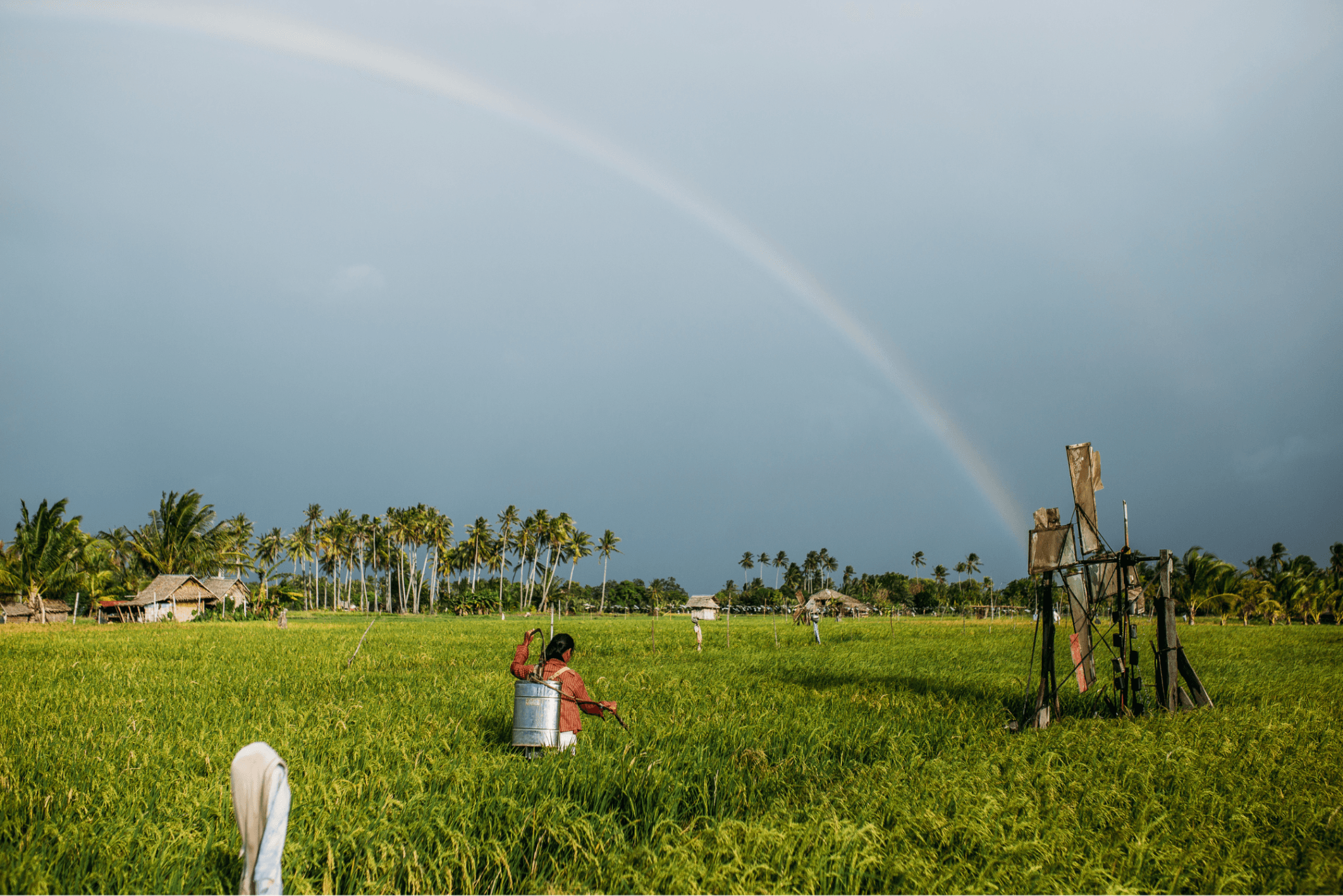
Photo credit: OpenAI Foundation
AIM for Scale, an initiative based at New York University Abu Dhabi and jointly funded by the UAE and the Gates Foundation, will work with governments and multilateral development banks to support larger-scale financing, building on AI-powered forecasting work that reached 38 million farmers in India in 2025.
Why it matters
At USD 60 million and a target of 100 million farmers, this is one of the largest investments to date in applying AI to smallholder agriculture. The programme will test whether the scale already achieved in India, where AI-powered forecasts reached 38 million farmers in 2025, can be replicated across countries in Asia and Africa.
03/09/26
Google upgrades WeatherNext AI weather forecasting with 5 km resolution
Google DeepMind and Google Research have launched WeatherNext 3, the latest version of Google’s AI-based weather forecasting technology, offering more frequent and higher-resolution forecasts.
WeatherNext 3 incorporates live satellite observations and generates new global forecasts every hour. Google says it can provide temperature and moisture forecasts at resolutions of up to 5 km, compared with 25 km for WeatherNext 2, while precipitation forecasts are up to 50% more accurate for forecasts one day or more ahead.

Image credit: Magnific
Google says the improvements are particularly significant in Latin America, Africa and Asia-Pacific, where high-resolution forecasting has historically been constrained by the cost of running regional forecasting systems. The model is being made available through Google Earth Engine, BigQuery and Google Cloud and will also feed into Google products including Search, Maps and Gemini.
WeatherNext is already being used in digital agriculture. In Zambia, climatetech non-profit TomorrowNow is integrating WeatherNext models into the country’s national Digital Climate Advisory Service, which provides localised weather and agricultural advisories to smallholder farmers.
Why it matters
WeatherNext 3 could improve the quality and localisation of weather information available to digital agriculture services, particularly in countries with limited forecasting infrastructure. Higher-resolution and more frequently updated forecasts could support more locally relevant decisions around planting, irrigation and harvesting, while AI-based forecasting could reduce some of the computing costs associated with producing this information.
13/09/26
BRICS backs new Digital Agriculture Network at New Delhi summit
BRICS leaders have backed a new initiative to support cooperation in digital agriculture as part of a wider package of agricultural initiatives endorsed at the 18th BRICS Summit, held in New Delhi on 12–13 September.
The network BRICS Network on Digital Agriculture identifies several areas of collaboration including AI-based decision-support tools, geospatial intelligence, satellite crop monitoring, IoT, agricultural data platforms, digital extension services and digital public infrastructure. It will also support joint research, demonstration projects and capacity building.
The initiative was originally agreed by BRICS agriculture ministers in June and will initially be coordinated by the Indian Institute of Technology Delhi (IIT Delhi), with member countries contributing technologies, experience and policy approaches. Rather than a single BRICS-wide digital platform, the network is intended as a framework through which individual projects and technologies can be developed and shared.
The New Delhi summit also backed wider agricultural cooperation on agroecology and regenerative agriculture, genetic resources and farmers’ rights in seed systems.
Why it matters
The network brings together major agricultural economies including India, China, Brazil, Indonesia and South Africa around practical applications of AI, geospatial technologies and digital public infrastructure in agriculture. Its value will ultimately depend on whether this cooperation produces technologies, data infrastructure and approaches that can be deployed beyond individual countries.
03/09/26
AgriConnect reaches 10 million farmers in Africa in first year
A new World Bank blog reports that the World Bank Group and the International Fund for Agricultural Development (IFAD) have reached at least 10 million farmers in Africa through targeted investments under AgriConnect, one year after launching the initiative.
AgriConnect aims to connect 300 million family and smallholder farmers globally to markets, finance and agricultural services by 2030. Africa has been an early focus, accounting for five of the first ten country compacts launched under the initiative.
AgriConnect combines investments across six areas: AgTech, innovative finance, farmer cooperatives, infrastructure, policy reform, and skills, extension and research. In Togo, for example, the programme aims to mobilise more than USD 100 million in private capital and increase agriculture’s share of bank lending from around 1.2% to 5%. Planned interventions include digital farmer registries, insurance, warehouse financing and credit guarantees.
15/09/26
Grow Indigo pays 2,500 Indian farmers for carbon credits
Indian agritech Grow Indigo, a joint venture between Indian seed company Mahyco and US-based agritech Indigo Ag, has made carbon credit payments to around 2,500 farmers in Punjab and Haryana, in one of the first examples of Indian smallholders receiving income from agricultural carbon markets.
Farmers received payments ranging from approximately USD 34 to USD 170 for more than 57,000 carbon credits generated from regenerative agricultural practices adopted between 2019 and 2022. These included direct-seeded rice, which can reduce methane emissions by nearly 90 per cent, as well as low-tillage residue management.

Image credit: ESGNews.Earth
The credits form part of Grow Indigo’s Aadi carbon farming project, which received its first issuance earlier this year under the VM0042 methodology developed by carbon standards organisation Verra to measure and verify emission reductions and soil carbon removals from improved agricultural practices. The issuance covered around 30,000 acres in Punjab and Haryana. Under its original agreements with farmers, Grow Indigo says farmers are entitled to 75% of net revenues from the sale of their credits.
However, the credits have not yet been fully sold to buyers. With the sales process taking longer than expected, Grow Indigo offered farmers an immediate fixed payment funded by the company itself rather than waiting for the credits to be sold. Most farmers opted for the fixed payment.
Why it matters
The payments provide an early test of whether agricultural carbon markets can translate verified emissions reductions into additional income for smallholders. They also highlight one of the challenges: the process from adopting new farming practices to verification, credit issuance, sale and farmer payment can take several years. Grow Indigo’s decision to advance payments reduces that delay for farmers, but transfers some of the carbon price and buyer-demand risk to the company.
11/09/26
Cameroon extends digital cocoa traceability partnership
Cameroon’s National Cocoa and Coffee Board (NCCB) has renewed its partnership with agritech company COOKO for another three years, as the country expands efforts to improve digital traceability across its cocoa supply chain.
The partnership, first established in 2021, uses digital tools to support first-mile traceability, including farm mapping, geospatial monitoring, traceable harvesting and transaction records. The renewed agreement will also support research into cocoa quality, farmer incomes and other areas.
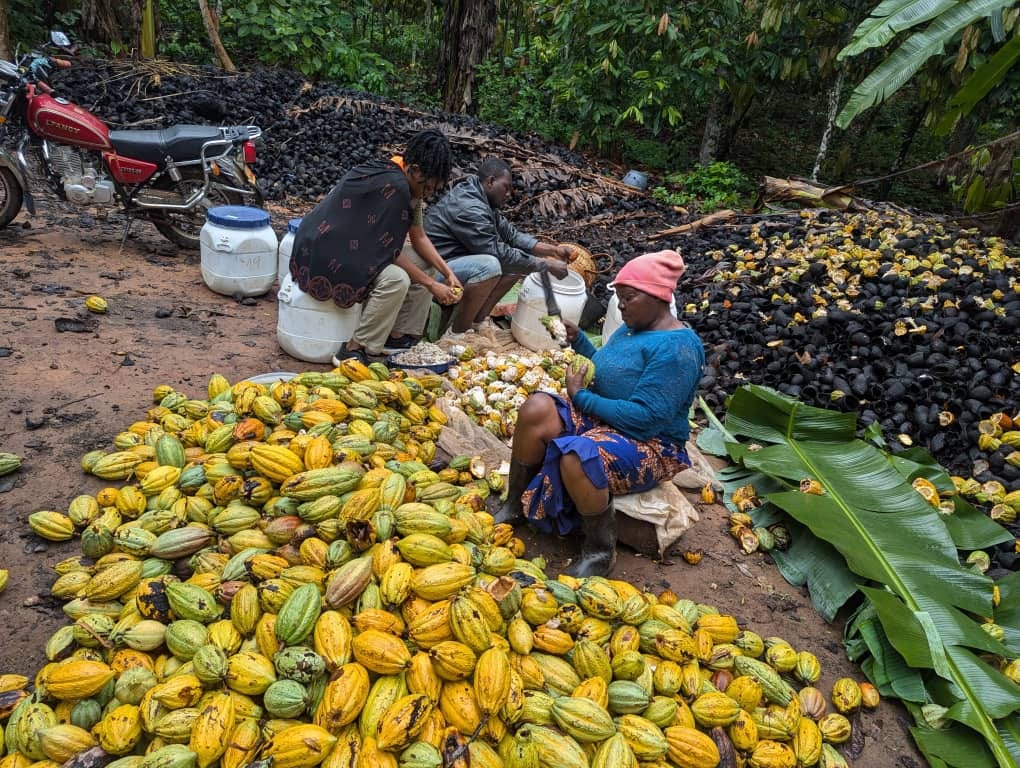
Photo credit: CocoaRadar
The initiative forms part of a broader push to strengthen cocoa traceability in Cameroon. The NCCB has also developed the ONCC TRACE platform to track cocoa transactions, alongside initiatives to collect and share georeferenced farm data.
Why it matters
Digital traceability is becoming increasingly important for cocoa-producing countries as export markets introduce stricter sustainability and deforestation requirements, including the EU Deforestation Regulation (EUDR). For Cameroon, better farm and supply-chain data could help exporters demonstrate compliance and maintain access to the EU market, while potentially improving visibility over how cocoa moves from farmers to buyers.
14/09/26
Kenya’s Twiga Foods enters statutory administration
Kenyan agritech company Twiga Foods has entered a formal administration process after years of financial difficulties and pressure from creditors.
GT Flow Limited, formerly known as Twiga Foods One Limited and an operating entity within the Twiga Foods group, was placed under statutory administration on 17 August, according to a notice published in the Kenya Gazette in September. Creditors and suppliers have been given 30 days to submit their claims.
Founded in 2014, Twiga built a technology-enabled distribution platform connecting farmers and food suppliers with urban vendors and kiosks in Kenya. The company became one of Africa’s best-funded agritech startups, raising more than USD 160 million from investors including the International Finance Corporation (IFC), Goldman Sachs and Creadev.
Twiga has faced financial pressure for several years, including supplier debts, successive rounds of job cuts and disputes with creditors. The company subsequently sought to move towards a more asset-light distribution model, including through investments in established Kenyan FMCG distributors.
Why it matters
Twiga’s difficulties come despite substantial investor backing. A USD 35 million convertible round secured in late 2023 ranked in the top 1% of comparable deals for Kenyan startups but was not enough to put the business on a sustainable footing. Twiga’s experience shows that even significant amounts of capital cannot compensate indefinitely for a business model struggling with high operating costs and weak unit economics.