

14/05/26
Anthropic commits $200M to Gates Foundation, backs AI tools for farmers
Anthropic has committed USD 200 million in a mix of grant funding, Claude usage credits, and technical support to the Gates Foundation. The plan is to make AI tools more accessible and useful, while supporting the development of public goods, freely available resources, across health, education, and agriculture.
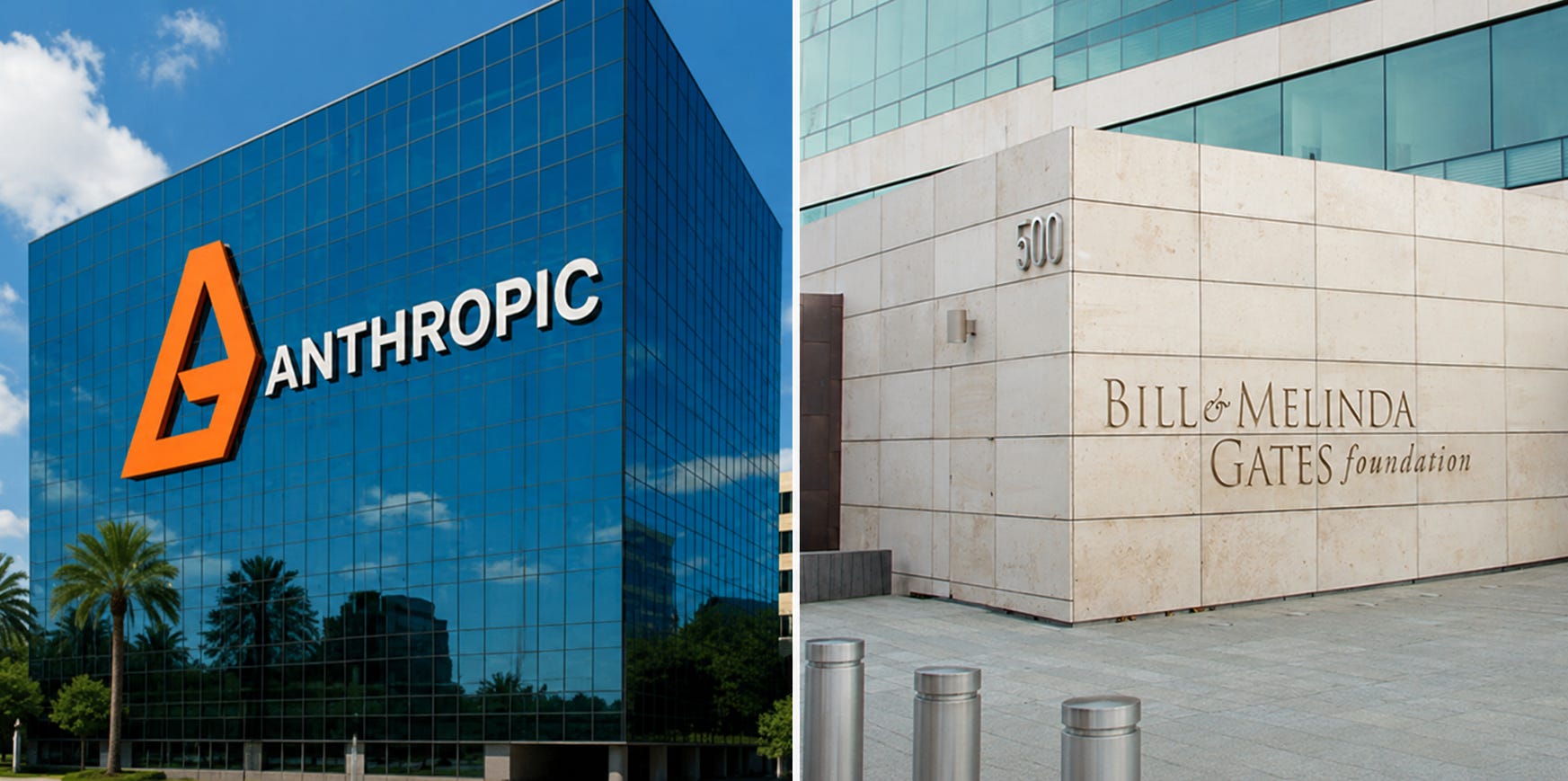
While the partnership is primarily aimed at improving health outcomes in low- and middle-income countries, it also includes a dedicated agriculture component. This will support agri-specific enhancements to Claude, the development of local crop datasets, and the creation of benchmarks to evaluate AI performance across agricultural applications, with the resulting tools made available as public goods.
Ultimately, the goal is to lay the foundations for more intelligent and accessible agricultural advisory services. Leveraging locally relevant data and local languages, AI can deliver personalized, real-time guidance on planting decisions, soil health, crop diseases, livestock management, and market conditions. By lowering the cost and complexity of delivering this support at scale, the partnership could help strengthen decision-making for farmers, extension workers, financial institutions, and public agencies that serve them.
Just yesterday, Anthropic announced it raised USD 65 billion in its latest funding round (Series H) reaching an evaluation of USD 965 billion, making it leapfrog its arch-rival OpenAI as the to become world’s most valuable AI firm.
Why it matters
As public and donor funding for rural development comes under increasing pressure, Anthropic’s commitment highlights the growing role of private tech companies in supporting agricultural innovation. Importantly, the initiative focuses not on a single product or startup, but on developing shared AI capabilities, datasets and benchmarks that can underpin a new wave of agricultural advisory and decision-support services.
20/05/26
ONO raises pre-Series A funding to digitise agri trade and embedded finance in India
Indian agritech startup ONO has raised USD 1.2 million pre-Series A round to expand its platform focused on digitising agricultural trade workflows and embedded finance for agri-SMEs and mandi (middlemen) ecosystems.
The company digitises operational processes across traditional agricultural markets, including mandi transactions, collections, and supply chain coordination, while using transaction-level data to support AI-driven underwriting and collateral-free working capital. Its user base spans farmers, traders, commission agents, and agri-SMEs operating across India’s fragmented agricultural supply chains.
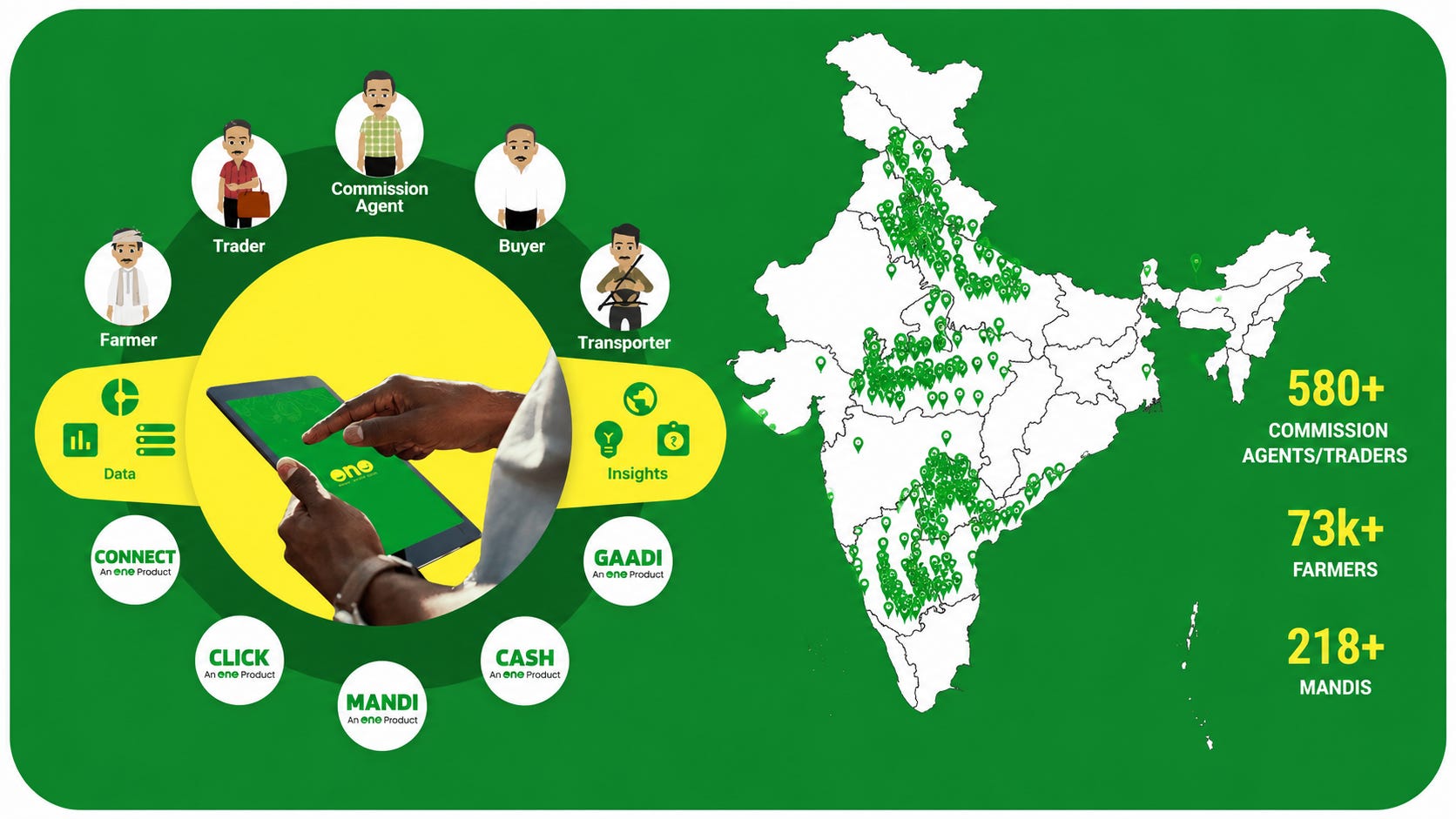
Image credit: ONO
ONO is building digital infrastructure for agricultural commerce. Through products such as ONO Connect, which provides market information and price discovery, and ONO Cash, which offers working capital and farmer loans, the platform connects market participants while embedding finance into day-to-day agricultural transactions. The new funding will support the expansion of digital mandi operations, supply chain connectivity, and data-driven financial services.
Why it matters
While many agritechs focused on smallholder farmers operate through advisory, input distribution or marketplace models, ONO digitises the underlying trade and financial infrastructure surrounding agricultural value chains. As mandi ecosystems become more digitised and financeable, the resulting improvements in liquidity, collections, market coordination and working capital access can indirectly strengthen the broader smallholder ecosystem connected to them.
21/05/26
AFC and Hello Tractor partner on warehouse receipt finance in Kenya
Agricultural Finance Corporation (AFC) has formalised a partnership with agritech platform Hello Tractor to scale a Warehouse Receipt System (WRS) finance product in Kenya, in collaboration with Financial Sector Deepening (FSD) Kenya, the International Finance Corporation (IFC) and the Warehouse Receipt System Council (WRSC).
The initiative combines warehouse storage and agricultural lending to enable smallholder farmers to access financing using stored crops as collateral. Under the model, farmers store produce in certified warehouses and receive warehouse receipts that can be used to secure short-term loans, helping reduce distress sales immediately after harvest.
AFC will provide agricultural financing, while Hello Tractor will leverage its network of booking agents and farmer relationships to support onboarding and loan distribution at the local level. FSD Kenya and IFC are supporting de-risking and ecosystem development around warehouse receipt financing.
The partnership also comes as Kenya expands its electronic Warehouse Receipt System Central Registry eWRS-CR (see story on ArisTechia), part of a broader effort to digitise warehouse receipts and strengthen their use as collateral within agricultural finance and structured commodity trade.
According to AFC and FSD Kenya data, post-harvest losses among Kenyan smallholder farmers can reach 30–40% of production.
Why it matters
Hello Tractor is a unique example of a startup building momentum around mechanisation platforms on the continent, with more than 6,000 connected tractors across Africa. While previous initiatives such as its PAYG mechanisation financing programme in Ethiopia expanded access to equipment financing, the AFC partnership signals a broader move into post-harvest infrastructure and warehouse receipt finance, reinforcing Hello Tractor’s evolution into a wider agricultural infrastructure and finance platform.
18/05/26
Analysis: AFC’s $100M commitment signals a growing role for African capital in agritech
The Africa Finance Corporation, a multilateral finance institution established to catalyse private sector-led infrastructure investment across the region, has approved a USD 100 million commitment to Africa-focused technology fund managers, marking a push to increase the role of local institutional capital in the continent’s innovation ecosystem. In doing so, AFC aims to address the underrepresentation of African capital in venture funding and catalyse greater participation from local institutional investors.

Photo credit: Yabiladi.com
The funding will be allocated across several Africa-owned venture capital funds investing in sectors including fintech, healthtech, logistics, climate technologies, and agritech. While the announcement is not agriculture-specific, it represents an important signal for agritech startups in the region, where fundraising conditions remain challenging. Among the selected funds is Future Africa Fund III. Future Africa’s broader investment track record includes agriculture-related ventures such as ThriveAgric and Farmcrowdy.
For agritech, the announcement is less about immediate funding and more about who controls the flow of capital. As African institutions take a larger role in financing local innovation, they may also play a greater role in shaping which technologies, business models, and startups receive support. More broadly, AFC’s initiative reflects an effort to deepen local ownership within Africa’s innovation ecosystem and reduce dependence on external sources of venture capital.
16/05/26
Good Reads: AI may determine whether digital advisory finally works for smallholder farmers
A recent article by Digital Green CEO Nidhi Bhasin explores how India’s next phase of digital agriculture will depend less on scaling generic advisory platforms and more on leveraging AI to deliver contextual and actionable support for smallholder farmers.
In a country where agriculture employs more than 40% of the workforce, agritech startups are increasingly delivering weather, pest and market intelligence at scale. The piece argues that many first-generation digital advisory systems struggled because recommendations were often too generic or disconnected from local realities, limiting on-farm impact and behavioural adoption.
AI-driven models are now being used to personalise advisory around local weather conditions, crop cycles and farmer-specific needs. Digital Green’s Farmer.Chat platform, reaches around 7 million farmers across India and Africa, with approximately 60% of users reportedly taking action based on recommendations received through the platform. The article also highlights the World Economic Forum-backed Saagu Baagu initiative in Telangana, which uses AI and data-driven advisory to support chilli farmers through more localised recommendations.
The piece argues that AI’s greatest contribution may not be making advisory more localised and relevant, but fundamentally changing the economics of agricultural extension. According to Digital Green, traditional extension services cost around $35 per farmer, compared to roughly $3.5 for video-based advisory, while GenAI-powered systems could reduce costs to as little as $0.35 per farmer.
At the same time, inclusion remains a challenge. Women account for approximately 45% of Farmer.Chat users, yet barriers around smartphone access, digital literacy, and participation in agricultural decision-making continue to limit adoption. The article warns that without stronger coordination between agritech platforms, public digital infrastructure, and government-led inclusion efforts, AI could reinforce rather than reduce existing inequalities.