

16/04/26
Bangladesh’s iFarmer raises $1.5M to scale input distribution and market access
Bangladesh-based agritech iFarmer has secured USD 1.5 million in foreign funding from Symbiotics, a Switzerland-based platform for impact investment. The financing will help cover day-to-day operating costs, allowing the company to expand distribution of agricultural inputs and strengthen farmers’ access to markets across Bangladesh.
Established in 2019, iFarmer is a full-stack agriculture startup enabling smallholders to access agricultural inputs, financing, advisory services and markets through an integrated digital model. As previously reported by ArisTechia, in 2024 iFarmer received investment from UK-based VC firm Razor Capital. The startup leverages several partnerships with financial service providers in Bangladesh to provide financial amd insurance services to farmers.
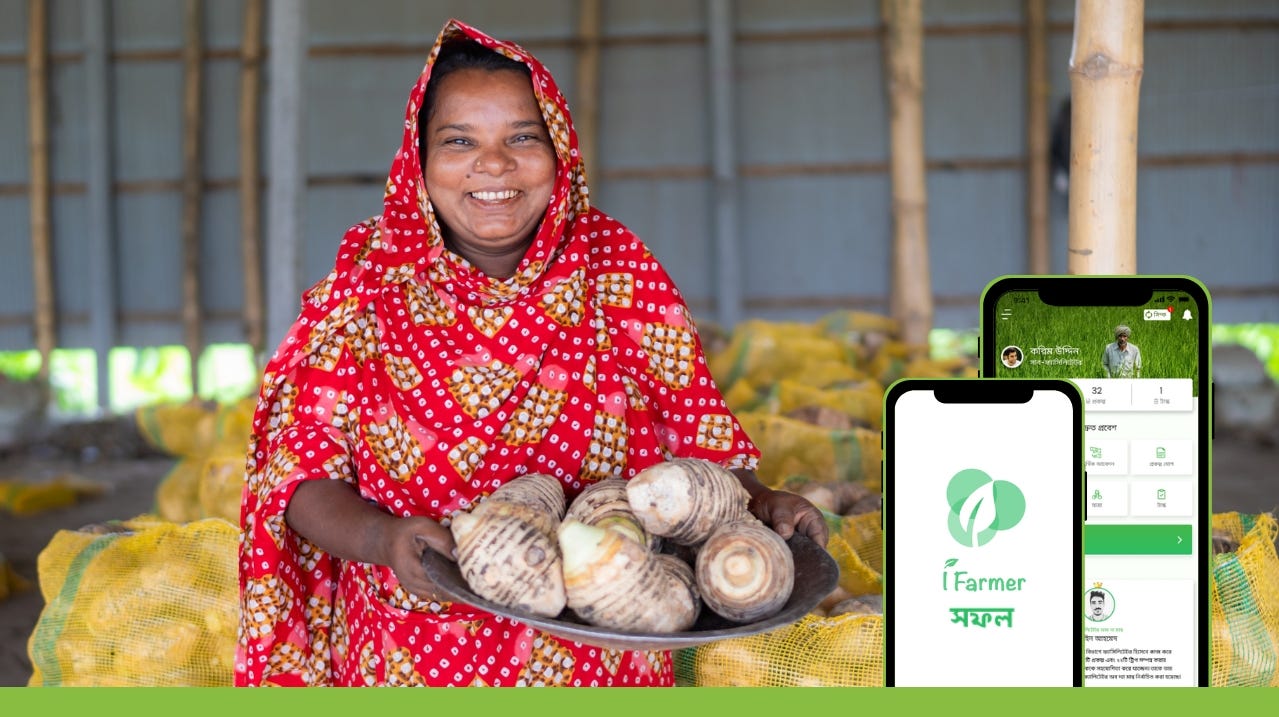
Photo credit: iFarmer
The company has expanded its digital tools in recent years. Its main farmer-facing solution is the Folon app, which provides personalised crop advice, connects farmers with agricultural experts, and gives access to loans. iFarmer also offers a dedicated retailer app that helps input dealers manage supply and orders, as well as an Investor app that connects funders directly to agricultural production cycles. The company leverages a network of more than 1,200 iFarmer Centers to provide services and digital support and onboarding through partnerships with agri-input retailers and traders that act as local service points for farmers.
Agriculture remains central to Bangladesh’s economy, representing an estimated USD 52 billion sector and employing around 40% of the national labour force. The country has roughly 20 million farmers, about 80% of whom are smallholders.
Why it matters
International investment into Bangladeshi agritech remains relatively limited, making Symbiotics’ backing of iFarmer an encouraging signal for the sector. Alongside earlier financing rounds involving Agroshift (USD 1.8 million pre-seed), WeGro (USD 2.8 million seed) and Fashol (USD 1 million pre-seed), the deal suggests gradually increasing external confidence in digital services supporting agricultural distribution, sourcing and finance for Bangladesh’s smallholder farming economy.
22/04/26
Kenya’s SokoFresh gets $500K to grow Cooling-as-a-Service model
Kenyan agritech company SokoFresh has secured KES 65 million (USD 500,000) in the form of a low-interest loan in local currency from the United Nations Capital Development Fund (UNCDF) under the Food Systems Innovation Finance Facility, backed by the Bayer Foundation.
The four-year financing will support expansion of its solar-powered cold storage and aggregation services, addressing the key challenge of post-harvest losses for smallholder farmers across horticulture and staple crop value chains. SokoFresh aims to reach 5,000 smallholders per year, contributing to a projected 10% increase in farmer incomes according to a note from Bayer Foundation.
The startup operates under a so-called Cooling-as-a-Service model whereby farmers store produce in mobile solar-powered cold rooms and pay per kilogram per day, lowering the barrier compared with owning refrigeration. At the back end, the company operates a digital market-linkage platform that aggregates volumes and connects farmers with exporters, supermarkets, and wholesalers.
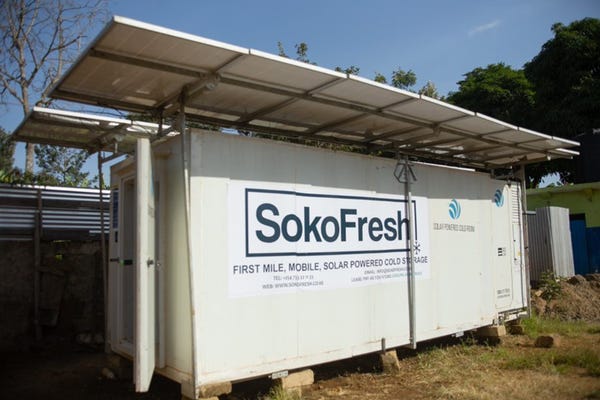
Photo credit: SokoFresh, SNV
Farmers typically access the service through nearby aggregation hubs and field agents, with coordination supported through SMS, enabling storage scheduling, delivery coordination, and participation in structured supply chains without requiring smartphone apps.
Why it matters
It is encouraging to see investment targeting first-mile cold-chain infrastructure, where refrigeration gaps continue to drive post-harvest losses across many markets. Looking ahead, models like SokoFresh (see other story about AkoFresh) could further strengthen their digital layer through deeper mobile-money integration, while also enabling downstream services such as traceability and warehouse-receipt finance.
29/04/26
India’s Prithu raises $1.2M to scale soil carbon MRV for smallholders
India-based climatetech agritech Prithu has raised USD 1.2 million in a seed funding round led by early stage investor Transition VC. The funding will be used to expand its farmer network across additional farming regions in India, strengthen its blockchain-based monitoring platform, and secure international buyers for the carbon credits it generates.
Founded in 2024, Prithu operates a full-stack carbon removal platform focused on nature-based solutions. . The company builds measurement, reporting and verification (MRV) systems that track how farming practices store carbon in soils and turn these results into verified carbon credits.
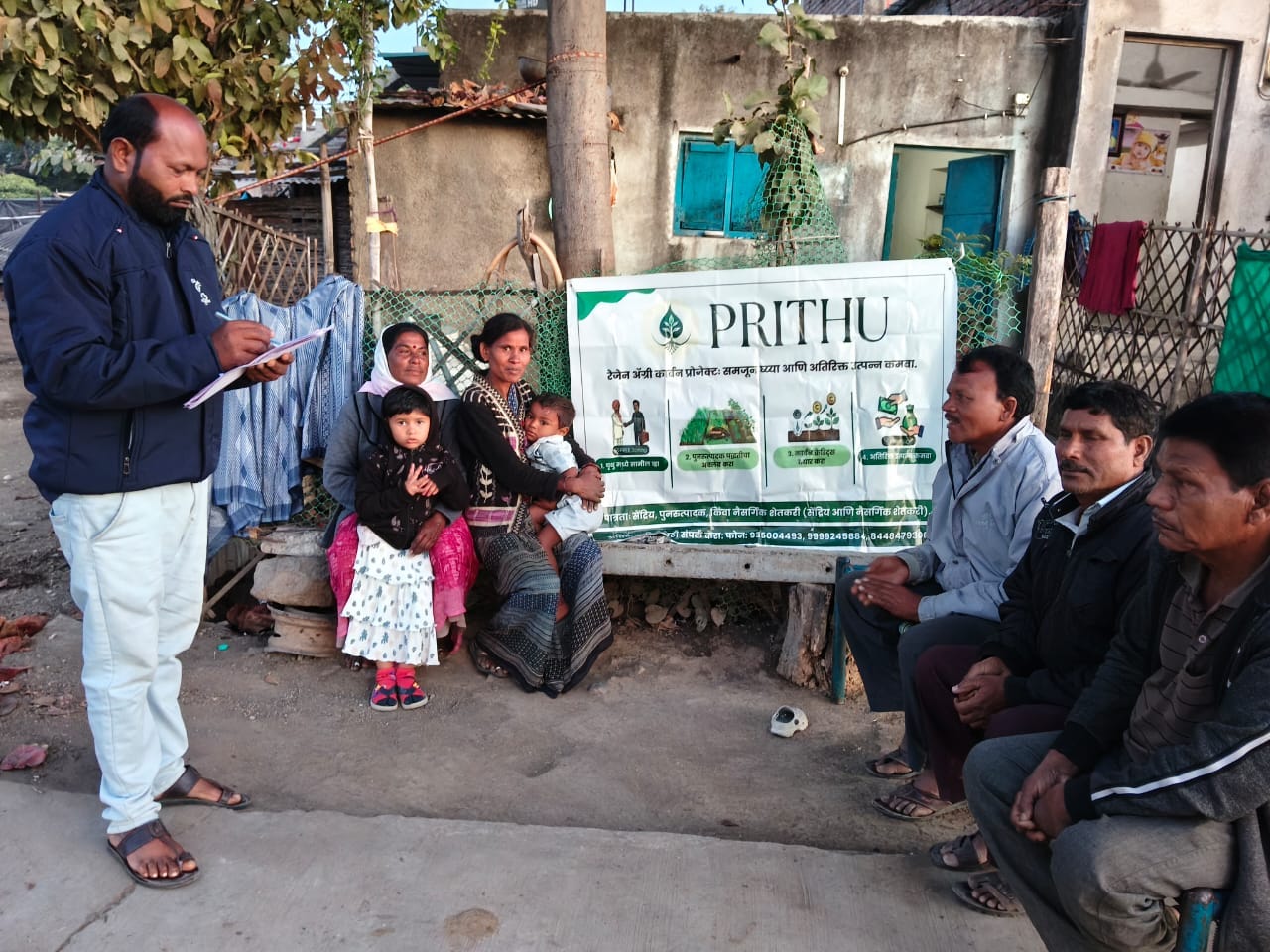
Photo credit: Prithu
Its solution combines satellite data, soil measurements, and digital monitoring tools to estimate soil organic carbon at farm level and help smallholder farmers participate in emerging carbon markets.
Why it matters
The investment reflects growing momentum around soil carbon MRV infrastructure in India, where Prithu works alongside climate techs like Boomitra and Varaha, which are already working with large numbers of smallholder farmers and issuing carbon credits. While these models have moved beyond pilot projects, the long-term scalability of soil carbon markets remains uncertain, particularly questions remain around measurement accuracy, how long carbon stays stored in soils, and stable demand from buyers.
29/04/26
Ghana’s AkoFresh launches mobile cold storage trailer to reduce post-harvest losses
Ghanaian agritech social enterprise AkoFresh has launched a mobile solar-powered cold storage trailer designed to bring cooling services directly to farmers in remote communities. The solution builds on the company’s off-grid cold storage model and aims to reduce spoilage at harvest, when losses are often highest.
According to the company, its solar cold storage systems can extend the shelf life of perishable produce from three to five days to up to 21 days, helping farmers improve prices and reduce waste. AkoFresh reports that its programmes have already reached more than 10,000 people, with farmer incomes increasing by up to 40% in some communities.
Why it matters
Mobile cold-chain solutions are emerging as a practical way to address one of the biggest constraints in African food systems: first-mile storage. Alongside models such as SokoFresh’s cooling-as-a-service platforms (see other story in this issue), solutions like AkoFresh’s suggest growing momentum behind distributed refrigeration infrastructure as a foundation for stronger market access and value-chain integration.
16/04/26
EAC and AGRA envision digital agriculture corridor for East Africa
The East African Community (EAC), a regional intergovernmental organisation, together with African agriculture development organisation AGRA, has launched an ambitious 10-year Regional Agri-Food Systems Investment Plan (RASIP) for 2026–2035. The USD 15 billion programme aims to strengthen food systems across a region of about 300 million people.
The USD 15 billion figure reflects a regional investment mobilisation target, with one key element of the plan being the creation of a regional corridor to improve farmers’ access to weather information, market prices, and advisory services across borders via mobile platforms.
The plan also includes cross-border agri-industrial parks, stronger seed systems, soil improvement programmes, and regional credit guarantees to attract private investment. It sets targets to reduce post-harvest losses from about 40% to 15%, increase regional agricultural trade by 50%, and support around 25 million farming households.
Rather than building separate national platforms, the corridor approach aims to connect advisory services, climate information, and market data across countries.
If implemented, this would represent one of the more ambitious attempts to develop shared regional digital infrastructure for agriculture in Africa, with similarities to emerging national approaches around agricultural digital public infrastructure (DPI). At the same time, translating regional coordination frameworks into operational cross-border services has historically proved difficult, and much will depend on implementation capacity at country level.
Why it matters
The shift from fragmented national pilots toward interoperable regional systems is a very welcome development. But the success of such corridor models will depend on whether they move beyond policy alignment to deliver shared data and infrastructure that farmers and service providers can actually use.
15/04/26
Good reads: GSMA report highlights role of mobile operators as scaling partners for agritech platforms
A recent report from GSMA provides new details on how partnerships between mobile operators and agritech startups are supporting the expansion of digital value-chain infrastructure across emerging markets. The report features case studies about Vitara in Ghana and Crop2X in Pakistan, showing how these startups are leveraging mobile operator APIs, distribution channels and mobile-money rails to strengthen their value proposition and reach farmers in the last-mile at scale.
In Ghana, Vitara partnered with MTN Ghana to integrate the telco’s mobile money service MoMo API into its TreeSyt platform, enabling real-time payments between buyers, agents and smallholder shea farmers alongside financial literacy training and rollout of mobile wallets.
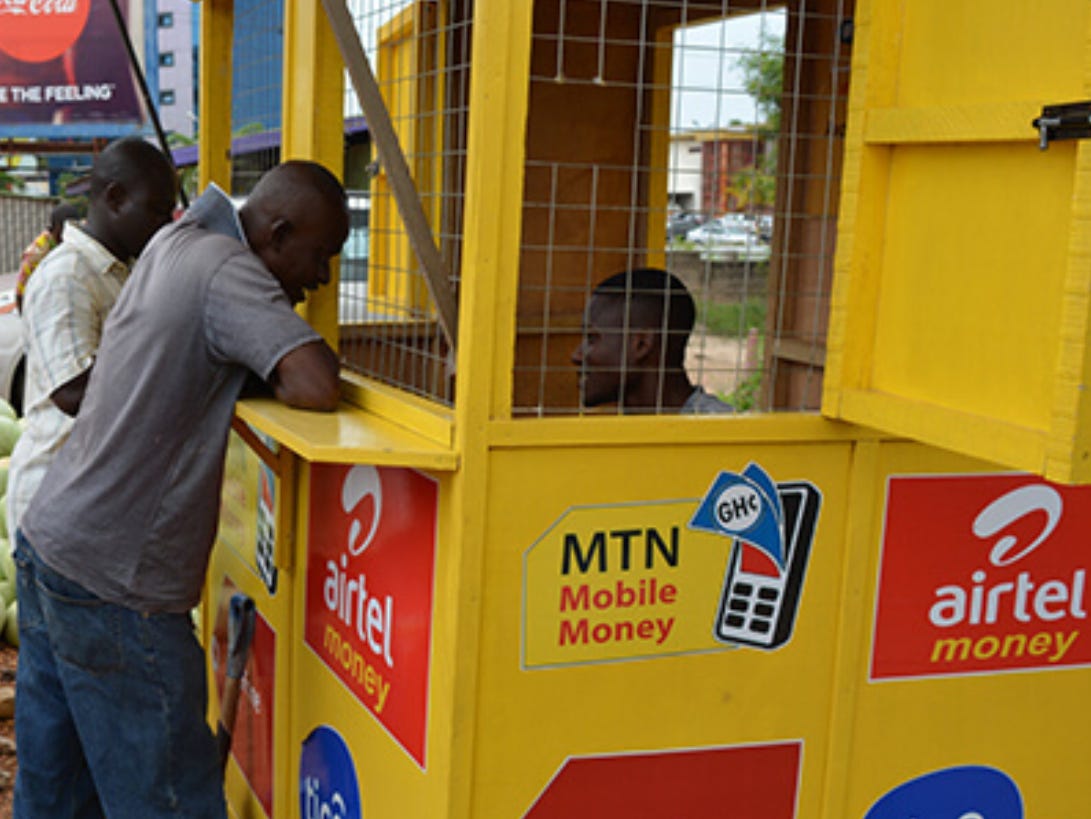
Image credit: AdomOnline.com
The report highlights that through the partnership Vitara was able to support digital payments, savings and offer microloans for women farmers who make up for 90% of the suppliers. Through the partnership 54,000 additional users were onboarded.
In Pakistan, Crop2X partnered with Telenor Pakistan to deliver satellite-based crop advisory services via SMS, allowing farmers to access recommendations without standalone apps. The partnership helped Crop2X more than triple its user base within months, while giving Telenor a data-driven agricultural service to strengthen engagement across its rural customer base.
Founded in 2020, Vitara digitises shea sourcing through agent-enabled farmer registration, transaction capture and traceability for international buyers, and is backed by impact investor Acumen. Founded in 2021, Crop2X provides remote-sensing-based insights on crop health, soil conditions and yield optimisation delivered through mobile interfaces. Both startups are former grantees of the GSMA Innovation Fund for Climate Resilience and Adaptation 2.0.
Why it matters:
Several mobile operators globally, from Telenor to Safaricom to Dialog Axiata, have long delivered agricultural value-added services to rural customers, either directly or through partnerships with agritech providers. While there is no single recipe for success, the benefits of these collaborations are increasingly evident. This new evidence helps strengthen the case for operators seeking to grow their rural customer base and loyalty through deeper engagement in agritech services.