

11/05/26
Apollo Agriculture and Kaleidofin mark breakthrough in smallholder agritech finance
Apollo Agriculture, an agri-fintech operating in Kenya and other African markets, and fintech Kaleidofin have completed Kenya’s first private-sector local-currency securitisation in smallholder agriculture. This is a financing structure that bundles thousands of smallholder farmer loans into an investable product for external investors, denominated in Kenyan shillings rather than foreign currency.
The initiative has mobilised KES 276 million (approximately USD 2.1 million) in financing across a portfolio of 23,839 smallholder farmers, 51% of whom are women and 22% first-time borrowers. It is backed by the IDH Farmfit Fund as anchor investor. Supporting partners include FSD Africa, the MOBILIST programme, and British International Investment (BII), which provided technical assistance to Apollo Agriculture through BII Plus.
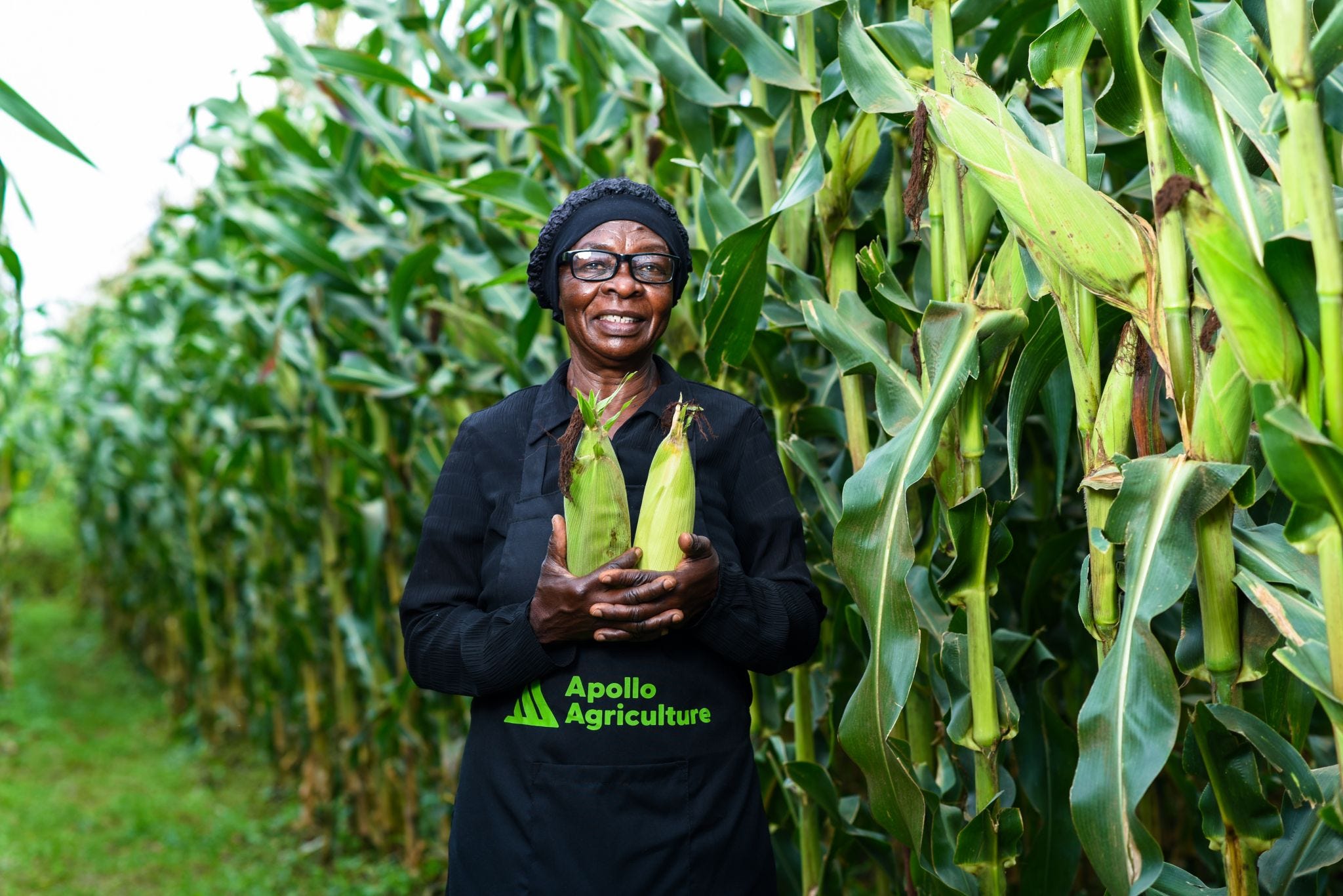
Photo credit: Apollo Agriculture
The transaction was enabled through Kaleidofin’s financing platform, which uses AI-driven risk analysis and farmer data to help structure and assess agricultural loan portfolios. The financing was provided in Kenyan shillings rather than dollars, helping protect farmers from currency fluctuations that can increase repayment costs.
The deal is the first step in a multi-year securitisation programme eventually targeting KES 2.37 billion (USD 18.3 million) in mobilised financing and more than 130,000 farmers over time. Interestingly, Pan-African Rating Agency Agusto & Co assigned an investment-grade BBB rating to the issuance, marking an important milestone in demonstrating the creditworthiness of smallholder agriculture as an asset class.
Apollo is one of the agritech “scaleups” in Africa. Established in 2016, the company has served over 400,000 farmers. To date, Apollo has raised a total of approximately USD 67.8 million across multiple funding rounds.
Why it matters
This is a one-of-a-kind example in Africa of an agritech scaleup now working with partners to convert smallholder farmer loans into a rated investment product for external investors. It presents a new pathway for scaling inclusive smallholder finance through technology-driven risk analysis, backed by deep agricultural value-chain expertise with investor confidence.
13/05/26
FarmRise hits 5 million users as Bayer scales phygital agriculture
A recent article by The Economic Times of India highlights the latest milestones in Bayer’s digital agriculture strategy, with its FarmRise app now reaching more than 5 million registered farmers across India. The app brings together agronomy advice, local weather updates, mandi (middleman) prices, government schemes and crop-specific content through a platform available in more than nine Indian languages, designed for accessibility and ease of use.
The app embeds an AI chatbot launched in 2025 that provides instant responses to crop- and farm-related queries in simple language. Its anti-counterfeit scanning capability has recorded more than 10 million scans, allowing farmers to verify product authenticity directly through the app. In addition, Bayer leverages a tool called Alivio to deliver plot-level insights and weather risk protection for farmers.
At the centre of Bayer’s strategy is its “phygital” Direct2Farmer (D2F) ecosystem, combining digital services with on-the-ground engagement. The model includes FarmRise One, a marketplace integrated with field operations that supports more than 500 Farmer Producer Organisations (FPOs) and over 200,000 farmers, connecting users to agricultural inputs, credit services and market access opportunities. The approach reflects a broader agritech shift where scale increasingly depends on combining digital capabilities with trusted field networks.
FarmRise One Ecosystem
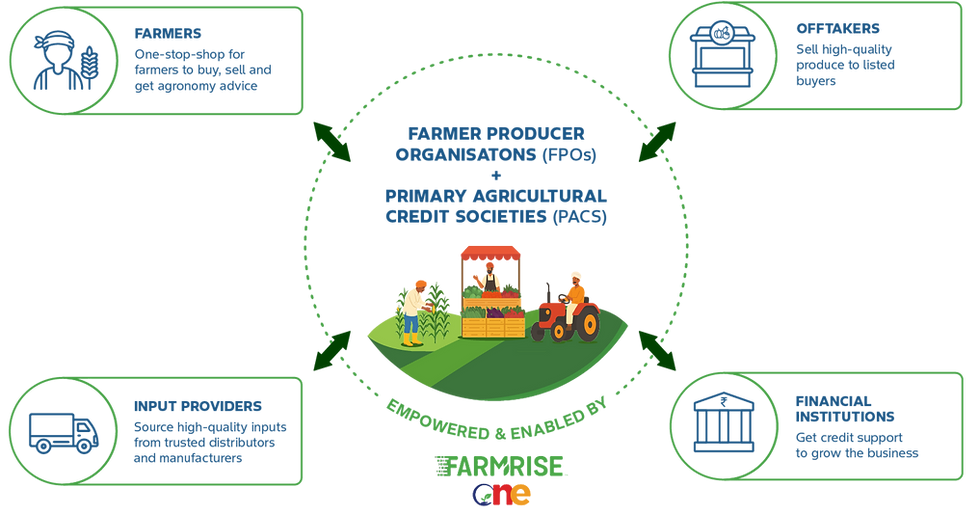
Image credit: Bayer AG
Why it matters
FarmRise reinforces the growing importance of “phygital” models, where digital tools and field engagement work together to drive adoption at scale. It also raises an important question: how will large private-sector ecosystems coexist with emerging national agricultural digital public infrastructure (Agri-DPI) initiatives?
Wadhwani AI expands into agroforestry with new AI partnership in India
Indian nonprofit Wadhwani AI has signed an MoU with India’s Central Agroforestry Research Institute (ICAR-CAFRI) to explore the use of AI for sustainable agroforestry across the country’s different agro-climatic zones. The partnership will focus on developing AI-powered tools to support monitoring, planning and field interventions related to agroforestry and natural resource management.
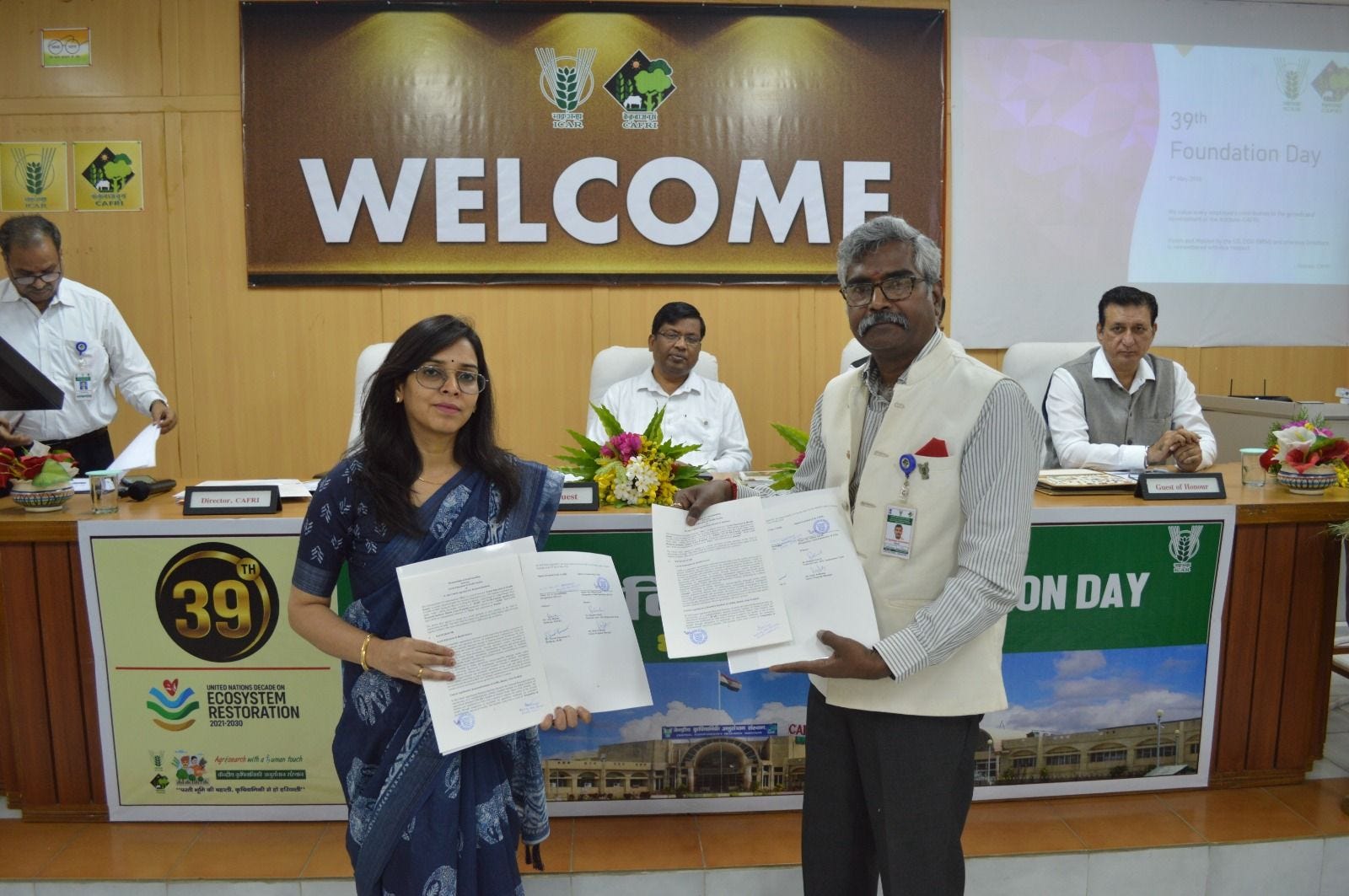
Photo credit: Wadhwani AI
The initiative expands Wadhwani AI’s agriculture portfolio beyond crop advisory and pest management into broader land and ecosystem management use cases. The organisation has previously developed specialised tools like CottonAce, an AI-powered pest detection solution for cotton farmers, and more recently AgriVaani, a multilingual advisory chatbot for farmers and extension workers. Across its agriculture solutions, Wadhwani AI reports reaching more than 1 million farmers, while its Krishi Saathi platform has resolved over 279,000 farmer queries across multiple states.
The move reflects a broader shift in agricultural AI, from farm-level productivity and advisory use cases toward applications supporting climate resilience, land management and ecosystem planning.
Why it matters
The announcement highlights the growing importance of AI tools focused on ecosystem management and climate resilience, expanding beyond traditional crop advisory use cases. It also reinforces the increasing role of locally trained AI systems embedded within research institutions and national agricultural ecosystems.
13/05/26
VunaPay shares impact figures after 3 years of operations
VunaPay, a Kenyan agritech-fintech focused on cooperative digitisation and farmer payments, has shared new impact figures as it marks three years of operations. The company says it has onboarded 197 agricultural cooperatives, impacted more than 130,000 smallholder farmers and accelerated over KES 1.3 billion (approximately USD 10 million) in payouts since launch.
The figures highlight momentum around embedded fintech infrastructure models in African agriculture, particularly those focused on digitising cooperative operations and accelerating farmer payments. Delayed payouts and inefficient cooperative processes remain major operational challenges across many agricultural value chains in Africa, directly affecting farmer liquidity and cash flow.
Why it matters
VunaPay’s trajectory highlights the growing importance of embedded fintech in African agriculture. As agritech matures, some of the strongest scaling opportunities are increasingly around payments, liquidity and cooperative digitisation.
11/05/26
Good Reads: GSMA identifies AI use cases with potential to scale among Indonesia’s farmers
A new GSMA report examines how AI is improving agricultural advisory services, financial inclusion and market access for smallholder farmers in Indonesia. Based on 200 interviews and field testing across Jakarta, Yogyakarta, Aceh and Bali, the study identifies three AI applications combining the strongest impact potential with near-term scalability: conversational agricultural advisory, AI-enabled alternative credit scoring and AI-driven price prediction and market intelligence.
The findings suggest that digital advisory delivered through familiar channels such as WhatsApp, alongside AI-enabled financial inclusion models, offers one of the clearest pathways for investment and scale. Digital farm management and agri e-commerce platforms also create value, particularly around farmgate pricing and market forecasting, although standalone apps and web interfaces continue to face adoption barriers linked to trust and usability.
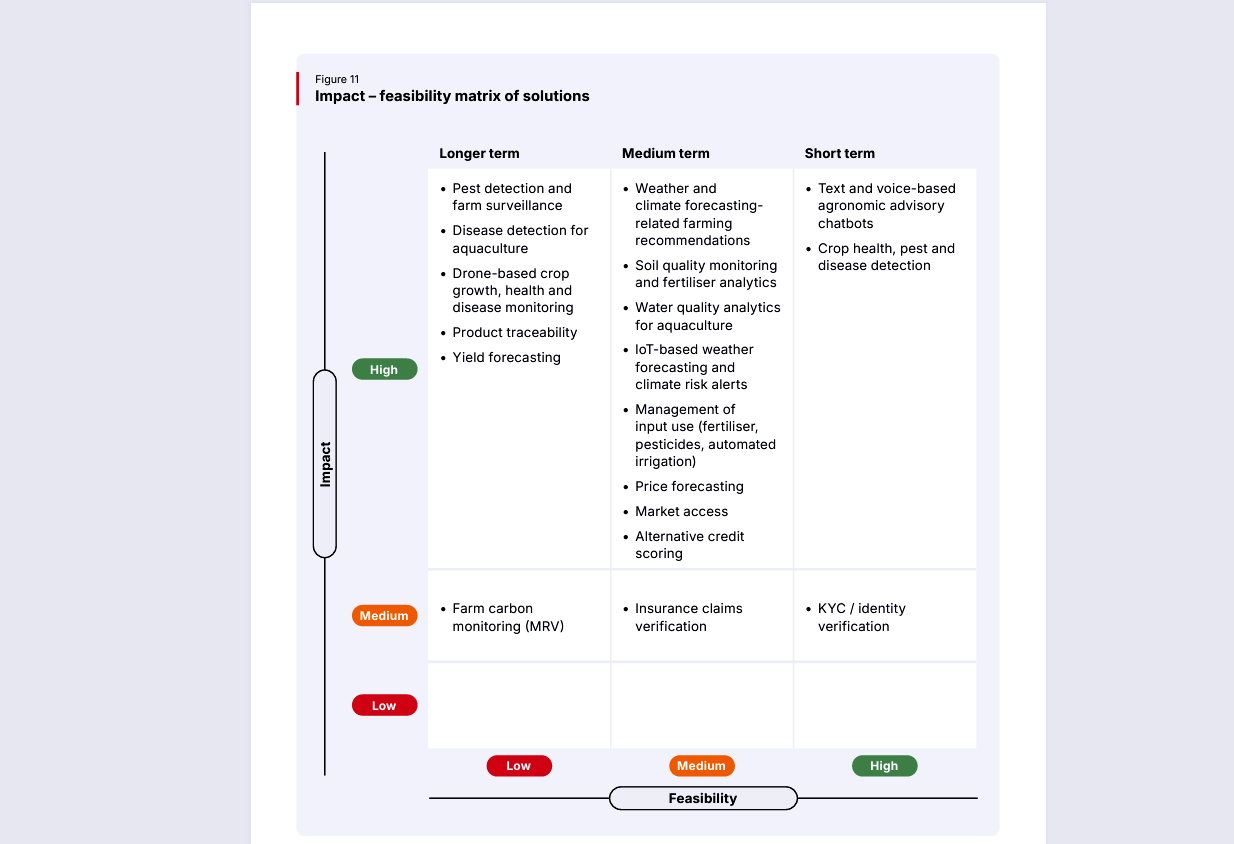
Image credit: GSMA Mobile for Development
The report also highlights emerging opportunities in carbon monitoring, reporting and verification (MRV), product traceability, increasingly driven by European Union Deforestation Regulation (EUDR) requirements, and drone-enabled precision agriculture. However, weak data infrastructure, limited institutional support and high capital requirements continue to constrain adoption, with investment needs often exceeding what startups and smallholder ecosystems can absorb without external financing.
Indonesia’s agritech ecosystem remains highly active, with startups, academia and public-sector initiatives continuing to experiment with digital agriculture models. Companies including Elevarm, Eratani, Pandawa Agri, JALA, Banyu and Rize, many with AI-enabled offerings, have recently attracted investment.
Smallholder farmers account for an estimated 25.6 million households, representing 90% of Indonesia’s 28.4 million agricultural households, while agriculture contributes around 14% of national GDP.
12/05/26
Good Reads: AgriTech a leading focus for Africa’s angel investors, new ABAN survey finds
The new 2025 Angel Investment Survey Report published by the African Business Angel Network (ABAN) in partnership with market intelligence firm Briter Intelligence highlights agriculture and agritech as increasingly prominent investment priorities across Africa’s early-stage funding landscape. Agritech ranks as the top sector choice for angel networks (20%) and the second most popular for individual angel investors (13%).
The report provides a data-driven snapshot of how early-stage capital is shaping Africa’s innovation ecosystem and finds that both angel networks and individual investors continue to maintain largely sector-agnostic portfolios. However, impact-oriented sectors, and agritech in particular, are increasingly emerging as preferred investment areas, reflecting growing interest in ventures that combine commercial potential with measurable development outcomes.
This shift is also driving the creation of more specialised investment communities. One example is the Climate Smart Agriculture Network established by ABAN, designed to strengthen investor expertise and improve support for early-stage startups operating in agriculture and climate-related sectors.
The report also highlights the expanding role of smaller early-stage transactions. While funding rounds between USD 1 million and USD 20 million continue to represent a substantial share of deployed capital, deals below USD 1 million have grown steadily since 2019. These smaller transactions are often driven by individual angel investors and angel networks willing to back higher-risk opportunities at earlier stages, frequently working alongside venture capital funds, accelerators, incubators and venture studios to help build the next generation of African startups.