

ArisTechia is back after the summer break with a selection of the key digital agriculture developments from the past 30 days.
Asia
15/07/26
Rize raises $31M to scale low-emission rice farming across Southeast Asia
Singapore-based agritech company Rize has raised USD 31 million in Series B funding to expand its low-emission rice operations across Southeast Asia. The round comprises USD 20 million in equity, led by BNP Paribas Asset Management Alts, and USD 11 million in debt financing.
Since raising USD 14 million in Series A funding in 2024, Rize has scaled its operations more than tenfold and now works with around 17,000 smallholder farmers across more than 50,000 hectares in Vietnam and Indonesia. The company is targeting more than 150,000 smallholder farmers and 300,000 hectares by 2030.

Photo credit: Rize
Rize promotes Alternate Wetting and Drying (AWD), a rice irrigation practice that the company says can reduce methane emissions by up to 50%, cut water consumption by 20–30% and increase farmer incomes by up to 30% without reducing yields.
Digital technology remains central to Rize’s expansion. The new funding will support AI-powered tools for farmers and field teams, as well as greater field-to-buyer traceability. Rize says its low-emission rice can already be traced to field level, with 1,500 tonnes shipped to buyers in Europe, Canada, Australia and Singapore.
The company is also developing the carbon-finance component of its model. Its emissions reductions are independently verified, while its sustainable rice project is progressing through Gold Standard certification and is forecast to generate more than one million carbon credits over the next five years.
07/08/26
Mitti Labs raises $9.5M to expand water-efficient rice farming across Asia
Climate-tech startup Mitti Labs has raised USD 9.5 million in a Series A round led by Aramco Ventures, with participation from Godrej Industries Group, Cisco Foundation, Volta Circle and existing investor Lightspeed India. The US-based company will use the funding to scale in India and launch projects in the Philippines and Indonesia.
Founded in 2023, Mitti Labs works primarily with smallholder rice farmers, using digital technology to support climate-smart farming practices that reduce water consumption and methane emissions.
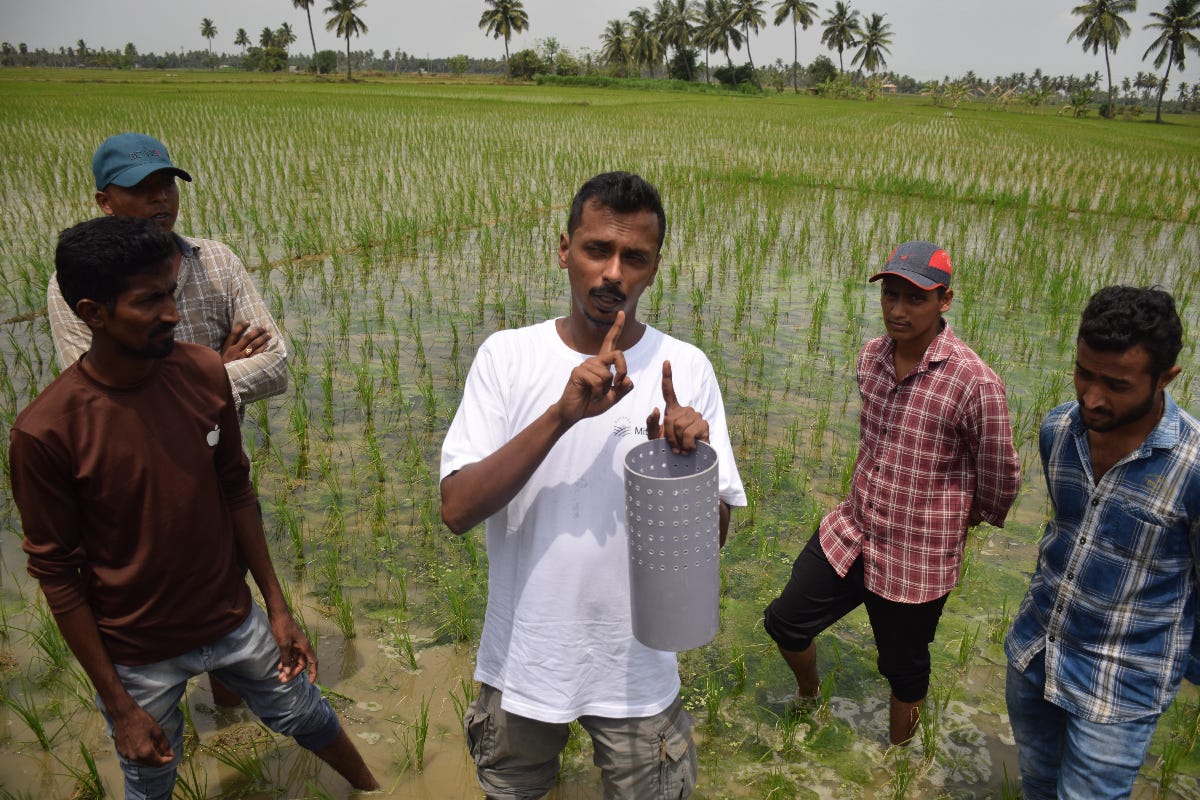
Photo credit: Mitti Labs
Its digital monitoring, reporting and verification (dMRV) platform combines satellite remote sensing, AI, crop modelling and field-level data. Synthetic Aperture Radar (SAR) imagery is used to monitor individual rice fields, alongside data collected through smartphones and IoT devices, enabling the company to track farming practices and their environmental impact at scale.
Verified reductions in methane emissions can then be converted into carbon credits, with participating farmers receiving a share of the revenues. Mitti Labs says its programmes have delivered water savings of around 40% and increased farmer incomes by 20% through carbon-credit revenue sharing. The company reportedly reached around 69,000 farmers in India during the 2025-26 crop seasons.
Why it matters
Both Mitti Labs and Rize are combining lower-emission rice practices with digital tools to measure environmental outcomes and connect smallholders to new sources of value, including carbon markets. Remote sensing, AI and digital traceability can make monitoring viable across fragmented small farms. Their expansion across Asia suggests low-emission rice is moving beyond pilots, although the key test will be whether these models scale while delivering meaningful economic value to farmers.
10/08/26
Beanstalk launches Monsoon Ventures to scale Southeast Asian agritech
Consulting firm and catalyst Beanstalk AgTech launched Monsoon Ventures on 10 August, a Singapore-based venture studio backed by Enterprise Singapore and Rabo Foundation to support the commercialisation of agricultural technologies across Southeast Asia. The studio will initially operate across Vietnam, Indonesia, Thailand, Malaysia, the Philippines and Singapore.
Monsoon Ventures is launching with around USD 940,000 in initial funding and aims to support eight ventures during its first two years and more than 30 within five years. It will combine investment with commercial expertise, value-chain mapping and connections to investors and strategic partners to help technologies move from proof-of-concept to commercial deployment.
Why it matters
The launch follows research published by Beanstalk and market intelligence firm Briter earlier this year highlighting a widening gap between agritech’s potential and investment across South and Southeast Asia, including a funding bottleneck between Seed and Series A and difficulties scaling across fragmented national markets. Monsoon Ventures represents an attempt to address that commercialisation gap through hands-on venture building and country-specific market support.
17/08/26
India’s AgriStack surpasses 100 million digital Farmer IDs
India has created more than 103 million digital Farmer IDs under AgriStack, marking a major milestone in the rollout of the country’s Digital Agriculture Mission. As of 3 August, the government had also conducted its Digital Crop Survey across 648 districts, covering more than 313 million plots during the 2025-26 Rabi season.
AgriStack is India’s digital public infrastructure (DPI) for agriculture, bringing together a Farmer Registry, geo-referenced village maps and a Crop Sown Registry. Farmer IDs link farmers’ details with digitised land records to create a digital identity that can be used to access agricultural services.
The Farmer Registry is being integrated with services including agricultural credit, crop insurance, weather advisories and minimum-support-price procurement. The government says AgriStack is built using a federated architecture, with states retaining ownership of the data and farmer consent required for data sharing.
Why it matters
Crossing 100 million Farmer IDs shows the scale at which agricultural DPI is now being deployed in India. The key test will be whether this infrastructure can translate digital identity and farm-level data into easier access to services for farmers, while maintaining inclusion, consent and effective data governance.
Africa
27/07/26
Nigeria’s Fishcluster secures $1M in commitments for AI-powered aquaculture technology
Nigerian aquatech startup Fishcluster has secured around USD 1 million in commercial commitments for its AI and robotics system for fish farms, as it begins piloting the technology with large-scale aquaculture operators.
Fishcluster combines underwater sensors, computer vision, automated feeding and AI to monitor fish behaviour and water conditions and optimise feeding. Feed accounts for around 75% of the cost of operating a commercial fish pond in Nigeria. The full Fishcluster system costs around NGN 1.5 million (USD 1,100) per unit, with commitments for around 1,000 units from three large-scale operators.

Image credit: Fishcluster
While its initial customers are larger farms, Nigeria has a substantial small-scale aquaculture sector. FAO estimates the country has around 285,000 catfish producers, about 60% of whom are small-scale, alongside established producer clusters and cooperatives. The Eriwe fish farming cluster, for example, brings together nearly 600 producers.
Why it matters
Aquatech is gaining traction in Africa after expanding rapidly in Asian markets. But at around USD 1,100 per unit, Fishcluster’s technology remains expensive for many small producers. The bigger opportunity may be reaching them indirectly through cooperatives, financing, leasing or other value-chain models, turning technology developed for commercial farms into shared infrastructure for small-scale aquaculture.
30/07/26
Digital dairy cooperatives open new routes to finance in Kenya
NGO Heifer International, Mastercard, KCB Foundation and KCB Bank Kenya have launched a nine-month initiative targeting 30,000 smallholder dairy farmers across 60 cooperatives and farmer organisations in Kenya.
The project will digitise milk deliveries, payments, savings and input purchases, creating transaction histories that can support access to formal credit and other financial services. Mastercard’s Farm Pass will provide digital farmer profiles and transaction records, while KCB will provide accounts, digital payments and financial services.
Why it matters
This is the second major initiative this year using Kenya’s dairy cooperatives to build digital farmer and transaction records. In February, KNCCI, Africa Guarantee Fund and Space AI launched a similar programme combining farmer profiling, milk data capture and automated payments. The two initiatives point to a broader shift towards using dairy cooperatives as a digital data layer through which lenders and other service providers can reach smallholder farmers.
17/08/26
Lersha and Dashen Bank launch digital financing initiative for Ethiopian agro-dealers
Ethiopian agritech company Lersha and Dashen Bank have launched a digital financing initiative aimed at improving agro-dealers’ access to working capital and strengthening the supply of agricultural inputs to smallholder farmers.
The project is part of the Advancing Inclusive Rural & Agriculture Digital Ecosystems (AIRADE) initiative, led by the United Nations Capital Development Fund (UNCDF) alongside Ethiopia’s Ministry of Agriculture, the Ethiopian Agricultural Transformation Institute (ATI) and the Gates Foundation. Lersha will digitise agro-dealer inventory and transaction data to support credit scoring, while Dashen Bank will finance inputs by paying wholesalers directly, with participating agro-dealers repaying the loans from sales proceeds.
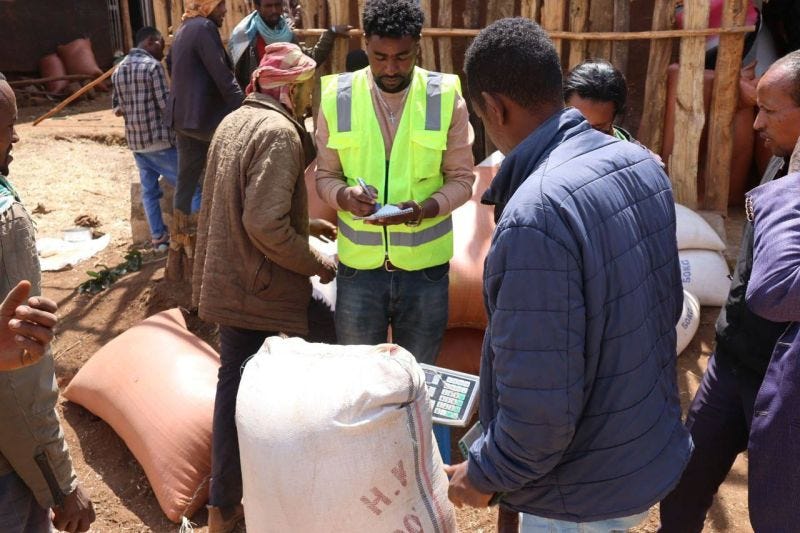
Photo credit: Dashen Bank
According to Lersha, the initiative aims to digitise 108 agro-dealers and indirectly reach more than 54,000 smallholder farmers across 36 woredas in Oromia, Sidama, Amhara and Central Ethiopia.
The initiative builds on Lersha’s wider use of digital profiles and credit scoring to expand agricultural finance in Ethiopia. Its platform combines digital services with a network of local agents to connect smallholders with inputs, finance, advisory services and markets.
Why it matters
Rather than focusing digital credit assessment on individual farmers, the model targets agro-dealers as a financing bottleneck in the agricultural input chain. Turning cash-based inventory and transactions into digital records could help lenders assess rural businesses without conventional credit histories, while improving smallholder access to agricultural inputs.