

Africa
25/08/26
ThriveAgric raises $4m to finance agri commodity purchases in Nigeria
Nigerian agritech ThriveAgric has raised ₦5.3 billion (approximately USD 4 million) through its debut commercial paper issuance, exceeding its initial ₦5 billion target. The issuance is the first under a ₦50 billion commercial paper programme, giving the company a new source of short-term financing to support its agricultural operations.
The capital will primarily fund ThriveAgric’s commodity aggregation activities, providing working capital to purchase crops from its network of smallholder farmers, consolidate volumes and sell them to food processors and other large commercial buyers. The funding helps bridge a key financing gap between when farmers need to be paid for their produce and when payments from offtakers are received.
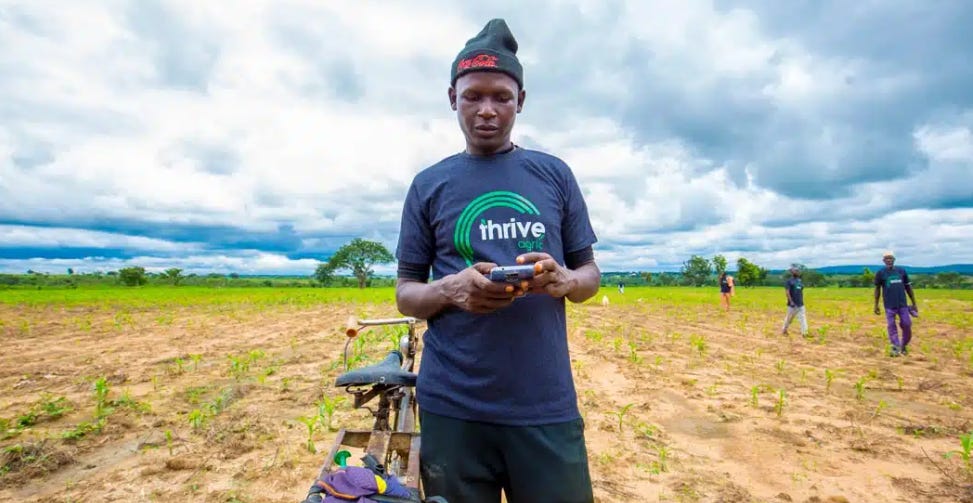
Photo credit: Techpoint Africa
Founded in 2017, ThriveAgric operates a technology-enabled platform connecting farmers with finance, inputs and markets, and has worked with more than one million farmers across Africa. Following its 2022 funding round, the company announced plans in 2023 to raise a further USD 30 million, with a focus on debt financing, to support expansion in Nigeria and other African markets. ThriveAgric now operates in Nigeria, Ghana, Kenya, Uganda and Rwanda, although Nigeria still accounts for around 90% of its business.
Why it matters
Being an agritech is ultimately as much about being an agribusiness in the value chains as it is about technology. As ThriveAgric moves larger volumes of produce between farmers and offtakers, it needs significant working capital to purchase and aggregate commodities.
Commercial paper gives the company access to potentially cheaper short-term debt that is well suited to this cycle. The raise shows that scaling agritech is not only about technology, but also about building the financial and operational infrastructure needed to move agricultural products at scale.
25/08/26
FCMB expands agritech strategy with AI, data-driven finance and African expansion
Nigeria’s First City Monument Bank (FCMB) is expanding its agritech strategy, with plans to use AI, agricultural data and digital tools to improve access to finance and services for smallholder farmers. The plans are outlined in its Agritech Alumni Impact Report, covering the programme’s evolution between 2018 and 2026.
New initiatives include AI-powered platforms providing real-time advisory services in local languages including Hausa, Yoruba and Igbo, alongside lending models using weather and soil data. FCMB is also exploring using USSD-based technologies to reach farmers without smartphones or reliable internet access in the last mile. Other areas include climate-resilient agricultural finance, bundled insurance and animal healthcare solutions.
The strategy builds on an agritech programme launched in 2018 that has evolved from a startup competition into a broader ecosystem connecting agritechs with finance, investors and development partners. Supported companies include Crop2Cash, whose USSD platform helps smallholder farmers access financial services. FCMB has also worked with partners including FMO, UNDP and the Mastercard Foundation, while its wider agricultural finance activities include working-capital, equipment and commodity finance.
FCMB is now looking beyond Nigeria, with plans to support Nigerian agritechs expanding into other African markets, including Ghana, Uganda, Côte d’Ivoire, Ethiopia and Kenya. IFC estimates the financing gap for smallholder farmers and agricultural SMEs in sub-Saharan Africa at USD 117 billion.
Why it matters
The bigger story is the centrality of AI for both advisories and financing. Smallholder farmers often lack the collateral, credit histories and formal records required by conventional lenders. Digital agriculture tools can help fill this gap by generating alternative data on farmers, transactions, soils and weather, enabling financial institutions to assess agricultural risks differently. FCMB’s approach points to a broader shift from banks simply financing agritechs to using agritech as infrastructure for agricultural finance.
31/08/26
SunCulture launches employee-wide ownership programme
Kenyan agritech SunCulture has launched RainDrops, a new programme giving all full-time employees the opportunity to share financially in the company’s future success. The scheme extends across the workforce, from employees installing and servicing systems in the field to office-based roles.
Employees will accumulate RainDrops over time, reflecting their contribution to the company. In the event of a future liquidity event, employees will be eligible for a financial reward based on the RainDrops they have accumulated.
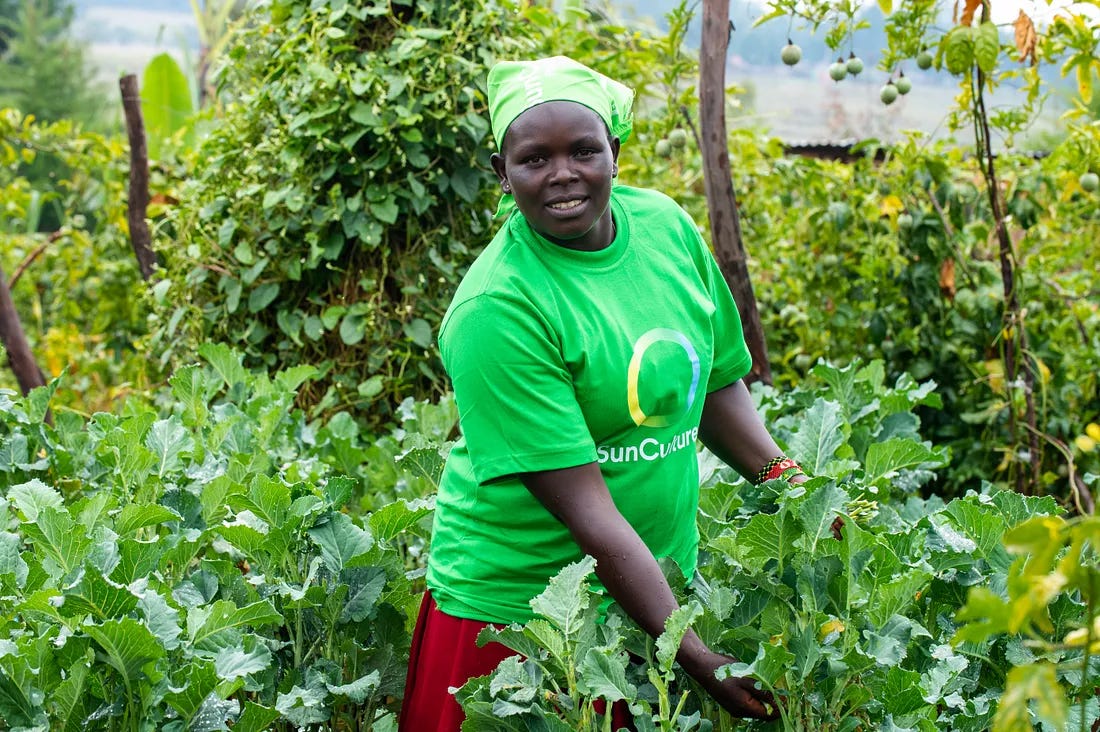
Photo credit: SunCulture
Founded in 2013, SunCulture provides solar-powered irrigation systems alongside financing, installation, maintenance and advisory services to smallholder farmers. The company raised an oversubscribed USD 27.5 million Series B in 2024 and has continued to attract institutional and impact capital, including a USD 5 million investment from WaterEquity in 2025 to support its expansion.
Why it matters
RainDrops is another sign of SunCulture’s evolution from agritech startup into a more mature business. Having raised significant growth capital and expanded its operations, the company is now extending participation in its future value across its workforce.
For an agritech like SunCulture, scaling is not only about technology (see also the ThriveAgric story in this issue). It also depends on the people selling, installing and servicing that technology in the field. Broadening employee participation can help align and retain the workforce needed to support that growth.
Asia
01/09/26
NABARD and Met Dept. add weather intelligence to India’s open climate agriculture platform
India’s National Bank for Agriculture and Rural Development (NABARD) has partnered with the India Meteorological Department (IMD) to integrate official weather and agro-meteorological data into DiCRA, the country’s open digital platform for climate-resilient agriculture.
Under the agreement, IMD will provide district- and block-level weather forecasts, agricultural advisories, ground observations and weather alerts. A new Weather Portal will combine these with DiCRA’s existing geospatial data on soil moisture, vegetation health, crop conditions and climate vulnerability, providing more localised information for farmers and other agricultural stakeholders.
DiCRA was originally developed through UNDP Accelerator Lab India and was recognised as a Digital Public Good in 2022. NABARD now hosts the platform with technical support from UNDP. Its open data infrastructure already includes more than 30 geospatial layers, alongside tools covering areas such as climate vulnerability, livestock and crop-yield estimation.
The new weather intelligence will be available through DiCRA’s web and mobile interfaces, while open APIs will allow the data to be integrated into other digital services. Beyond farmers, the information is intended for financial institutions, policymakers and researchers, with potential applications including agri advisory, climate-risk assessment and rural finance.
Why it matters
DiCRA is an interesting example of DPI for agriculture, moving beyond individual farmer-facing applications towards an open data layer on which multiple services can be built. Open APIs allow agritechs and other service providers to use this shared infrastructure to develop their own solutions.
Integrating official weather forecasts with satellite and other agricultural data makes this infrastructure more useful and climate intelligence more actionable. It can support more localised advisory services and help farmers make better-informed decisions as weather patterns become increasingly unpredictable.
Opinion
31/08/26
Africa Food Systems Forum: AGRA calls for shift from productivity to farmer prosperity
At the Africa Food Systems Forum, currently taking place in Kigali, AGRA is calling for a rethink of agricultural transformation in Africa. The central argument is a compelling one: progress in production has not translated sufficiently into farmer prosperity. The call comes as AGRA marks its 20th anniversary and announces findings from its forthcoming Impact, Learning and Foresight Report 2026.
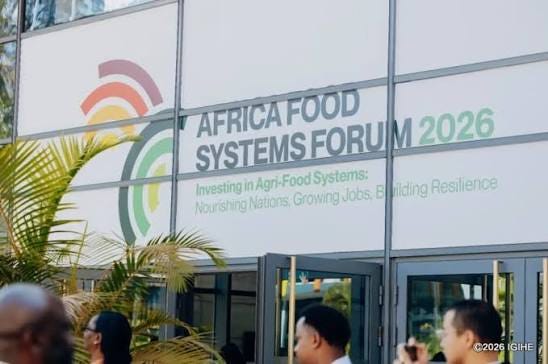
Photo credit: IGIHE News
The assessment presents a substantial but incomplete record. Agricultural output has doubled in real terms, local seed industries have expanded, and more than 25,000 agro-dealers and 33,000 community extensionists now connect farmers with inputs, knowledge and advisory services. But yields remain below the levels the region needs, productivity gaps persist and farmer incomes remain well below global averages. Hunger has also risen, while many farmers struggle to turn higher production into dependable incomes and agrifood businesses and institutions are not developing at the scale required. AGRA warns that, on its current trajectory, Africa will not meet the Kampala Declaration and CAADP targets for 2035.
What I find particularly useful is AGRA’s framing of the problem around three interconnected “traps”. A productivity trap limits reliable and resilient agricultural production; a value trap prevents increased output from consistently translating into farmer income, jobs, processing and trade; and a capability trap constrains the institutions, finance, data and accountability needed to sustain agricultural transformation.
The important point is that these problems cannot really be addressed in isolation. Better seeds, advisory services or technologies can increase production, but that progress means relatively little if farmers cannot reach markets, capture more value from what they produce or operate within institutions and value chains that work effectively. AGRA is therefore calling for a move away from isolated interventions towards more integrated food systems.
As more than 5,000 delegates from over 50 countries gather in Kigali for the 20th Africa Food Systems Forum, AGRA’s assessment offers a sobering backdrop: two decades of agricultural progress have still not solved the fundamental question of how farmers capture more value from what they produce.