

01/07/26
Innoterra’s Indian subsidiary files for IPO
Swiss agritech company Innoterra has filed draft papers for an initial public offering (IPO) of its Indian subsidiary. The company plans to use the proceeds to expand its dairy collection network, fund working capital and pursue acquisitions. Part of the proceeds will be used to establish new bulk milk collection centres and upgrade existing cooling infrastructure.
Launched in 2020, Innoterra has built India’s largest B2B milk procurement platform by volume procured. Through its MilkLane solution, the company sources aflatoxin safe and antibiotic safe raw milk from farmers for institutional customers, while also supplying cattle nutrition products under the MilkLane Aayush brand. As of 31 December 2025, the company operated 122 bulk milk collection centres across India.
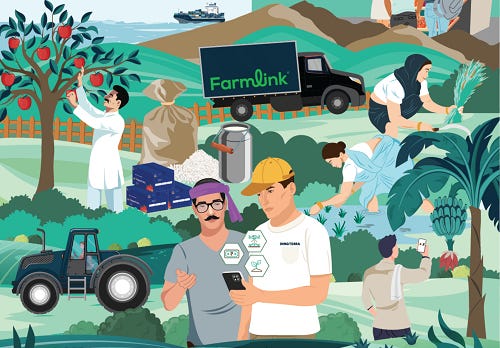
Image credit: Innoterra
Alongside its dairy business, Innoterra operates Farmlink, a B2B marketplace that enables retailers and wholesalers to source fresh fruit and staple crops directly from farmers and farmer producer organisations (FPOs). In 2024, the company strengthened its fresh produce business through the acquisition of Fasal’s distribution network, adding access to around 85,000 acres of farmers while allowing Fasal to focus on its AI powered precision agriculture platform.
Why it matters
While Innoterra has attracted less attention than some of India’s better known agritech startups, its proposed IPO reflects growing confidence in digital platforms serving one of the country’s most strategic sectors. Rather than focusing on technologies used on the farm, the company digitises agricultural procurement, market linkages and dairy collection, all critical functions in India’s fragmented food system. Its IPO suggests investors increasingly recognise the value of platforms that modernise agricultural supply chains and strengthen links between farmers, FPOs, processors and retailers.
06/07/26
Madagascar rolls out national digital agriculture infrastructure
Madagascar has launched a national digital agriculture platform and three new digital services designed to improve farm productivity, strengthen climate resilience and expand farmers’ access to market information. The initiative forms part of the country’s broader digital agriculture roadmap and is being implemented by the ministries responsible for agriculture, livestock and digital development, with support from the World Bank through the Korea–World Bank Partnership Facility (KWPF).
The new digital ecosystem includes a national farmer registry, a market information and weather alert service, and a digital advisory platform providing location-specific recommendations based on crops, climate and farming conditions. The programme also includes digital innovations for the livestock sector, including smart beehive monitoring and digital animal health surveillance tools.
The initiative builds on a national digital agriculture roadmap developed with support from the World Bank and FAO, prioritising data sovereignty while enabling data sharing across public and private sector platforms.
Agriculture plays a pivotal role in Madagascar’s economy. According to the World Bank, the sector accounts for almost 30% of GDP, generates around 40% of export revenues, and supports the livelihoods of nearly 70% of the country’s workforce.
Why it matters
Madagascar’s initiative illustrates how digital agriculture is moving beyond Africa’s leading technology markets. The rollout of national digital infrastructure in a lower-income economy underlines the growing recognition that digital tools are becoming an essential component of agricultural productivity, climate resilience and food security.
06/07/26
Vietnam launches programme to train 750,000 digital farmers by 2030
Vietnam’s Ministry of Agriculture and Environment has announced plans to train approximately 750,000 agricultural workers between 2026 and 2030 as part of a national programme to build a more digitally skilled farming workforce.
The curriculum will extend beyond agricultural production to include digital transformation, e-commerce, agricultural economics, sustainable farming practices and climate change adaptation. The initiative forms part of Vietnam’s broader strategy to professionalise agriculture and strengthen farmers’ ability to use digital technologies throughout the value chain.
The programme comes as digital tools become increasingly common in Vietnamese agriculture. In Vĩnh Long Province, for example, farmers are already using drones and satellite imagery to identify nutrient-deficient areas and apply fertiliser more precisely, reducing input use while improving resource efficiency.
Why it matters
The initiative reflects a growing recognition that the successful adoption of digital agriculture depends not only on access to technology but also on farmers’ ability to use digital tools effectively. If implemented at scale, Vietnam’s programme will be one of the largest agricultural digital skills initiatives in Southeast Asia.
13/07/26
MTN shares results of cocoa value chain digitalisation efforts in Ghana
Mobile operator MTN Ghana has shared some interesting results from its work to digitise payments for smallholder farmers in the cocoa value chain. The initiative replaced cash-based transactions with mobile money payments, enabling farmers and labourers to receive payments directly into their mobile money wallets.
MTN and its partner Cargill Kokoo Sourcing onboarded more than 60,000 smallholder farmers across 20 districts in the Eastern, Western, Western North, Ashanti and Ahafo regions, alongside more than 800 casual workers supporting the value chain.
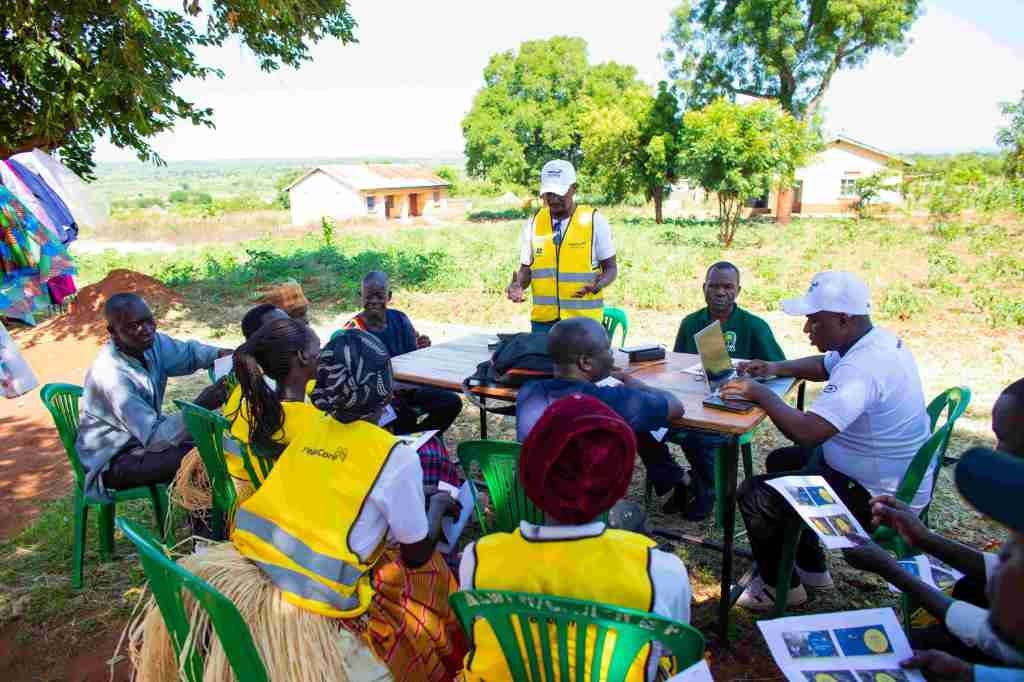
Photo credit: MTN Ghana
For smallholder farmers and seasonal workers, cash payments increase risk, reduce transparency and limit access to formal financial services. MTN said that, for many participants, receiving income digitally represented their first entry point into the formal financial ecosystem.
Cargill Kokoo Sourcing is a licensed buying company (LBC). Incorporating digital payments allows it, as part of a broader effort by the agribusiness, to digitise the value chain through a standardised management system that maintains full farm-to-fork visibility, supporting traceability, reducing inefficiencies and increasing transparency.
Ghana is the world’s second-largest cocoa producer (after Ivory Coast), accounting for roughly 20-25% of global supply. The crop employs about 800,000 smallholder farm families, generates roughly USD 2 billion in annual foreign exchange, and accounts for about 7% of the nation’s GDP.
29/06/26
Good reads: ILRI digital advisory services reach 1.5 million farmers and livestock keepers
Digital advisory services supported by the International Livestock Research Institute (ILRI) have now reached 1.5 million farmers and livestock keepers across Ethiopia, Kenya and Senegal, with almost one third of users being women. The milestone, highlighted in ILRI’s 2026 Corporate Report, reflects the growing use of digital climate information and decision support tools to strengthen the resilience of livestock-based farming systems.
In Ethiopia, ILRI and its partners are supporting the Ethiopian Digital Agro Climate Advisory Platform, working with agritech company Lersha to deliver climate information and livestock advice through radio programmes, mobile voice messages in local languages and toll-free advisory services. More than 130,000 farmers and extension agents have already received guidance on climate smart feed and forage management through the initiative.
Why it matters
ILRI’s work demonstrates that some of the most scalable digital advisory services continue to rely on voice-based communication and local languages, rather than smartphone apps alone. Delivering climate information and farming advice in formats that are accessible and familiar to farmers can significantly broaden uptake, particularly among smallholders with limited digital literacy or internet access.
06/07/27
Good Reads: Why AI at the edge could transform digital agriculture
Artificial intelligence is often associated with massive cloud data centres. Yet “Beyond the Cloud: Edge AI for LMICs”, a new report from GSMA Mobile for Development, argues that the future of AI in low- and middle-income countries may look very different.
Rather than relying entirely on distant cloud infrastructure, many AI applications are expected to process information directly on smartphones, sensors and other connected devices. For agriculture, this means farmers could increasingly access crop diagnostics, pest identification and advisory services even where connectivity is unreliable.
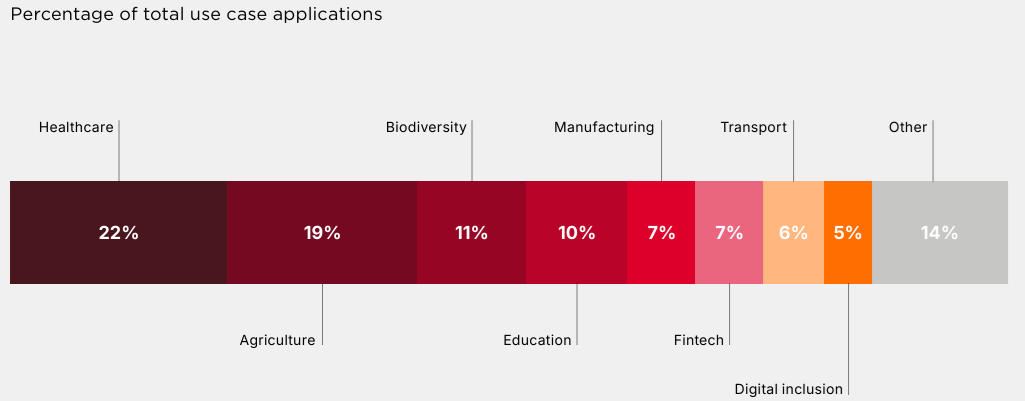
Edge AI: Use cases by sector
Source: GSMA Mobile for Development
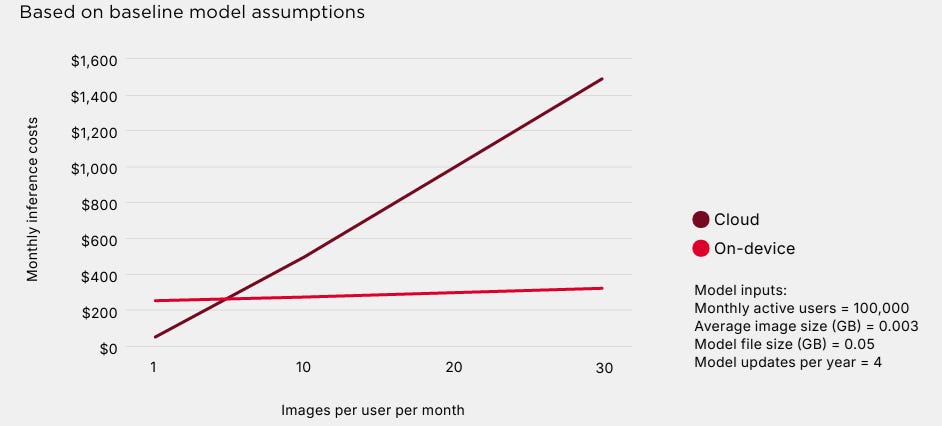
The report also challenges the assumption that bigger AI infrastructure is always better. Instead, it advocates matching computing power to the task at hand. A crop disease model running on a farmer’s smartphone, for example, may be far more practical and cost-effective than sending every image to a remote server. Cloud computing will remain important, particularly for training models, but day to day decision support is likely to become far more distributed.
Crop disease detection: on-device vs cloud inference cost
Source: GSMA Intelligence
Another important insight is that smartphones are becoming more than communication devices. As AI capable handsets become more common, they are evolving into the delivery platform for intelligent agricultural services across emerging markets. At the same time, they also become valuable sources of field data, helping improve future AI models through images and observations collected by farmers themselves.
For readers interested in digital agriculture, the report is a timely reminder that in emerging markets successful AI deployment will depend less on the largest models and more on designing solutions for local realities: affordable devices, intermittent connectivity and practical farmer needs. In emerging markets, the next wave of agricultural AI may be built not in hyperscale data centres, but in millions of smartphones already in farmers’ pockets.