

23/06/26
India’s Unnati Agri secures debt financing for post-merger expansion
Indian agritech Unnati Agri has secured INR 170 million (USD ~2 million) in debt financing from Recur Club, a debt facility focused on impact-driven startups ans SMEs In India. The funding will finance seasonal working capital requirements and support the expansion of the company’s distribution network. It will be used to procure inventory, strengthen distribution capabilities and help meet growing demand across India’s agricultural input market.
Founded in 2010, Unnati operates an integrated platform that enables farmers to purchase agricultural inputs, access credit and sell produce directly to agribusinesses. The company has on-ground partner stores in 48 districts in India.
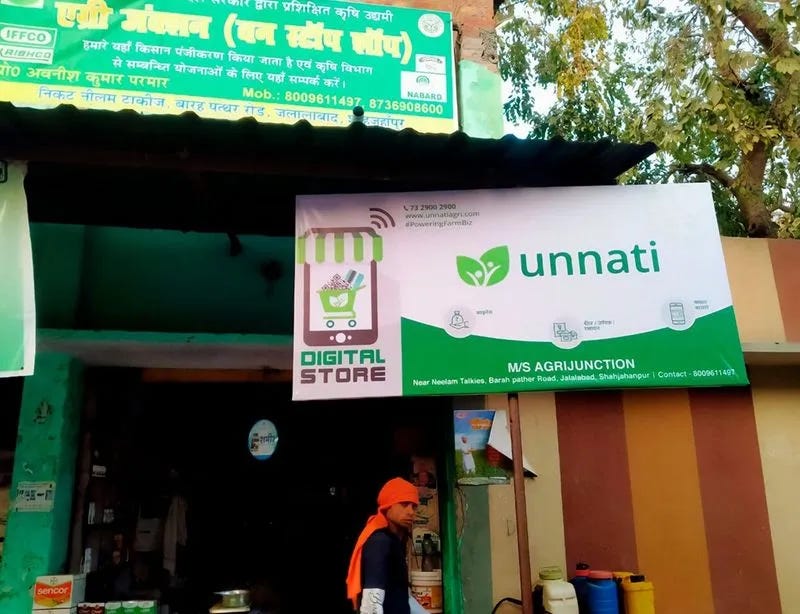
Photo credit: Unnati
The latest funding follows the company’s acquisition of fellow agritech Gramophone earlier this year, creating a broader solution that combines agronomic advisory services, digital input distribution and embedded finance. According to the company, it is also preparing to raise USD 30–35 million in equity funding later this year to support its next phase of growth, with an IPO targeted within the next three to four years.
Why it matters
The funding reflects the growing financial maturity of India’s most established agritechs. As businesses scale, debt can provide a more efficient way to finance seasonal working capital than repeated equity rounds, allowing founders to limit shareholder dilution. At the same time, greater reliance on debt introduces new financial disciplines, requiring companies to carefully manage cash flows, inventory and repayment obligations as they expand.
23/06/26
Tunisia’s RoboCare gets investment to expand AI-powered precision agriculture
Tunisian agritech RoboCare has secured new investment from VC firm 216 Capital to accelerate its expansion across Africa and the Middle East. Founded in 2020, the company has developed an AI-powered farm management platform that combines satellite imagery, drones, field sensors, weather data and agronomic expertise to monitor crop health, optimise irrigation and improve the use of agricultural inputs.
According to the company, trials with customers across North Africa have shown up to 35% reductions in water consumption, 25% lower input use and 20% productivity gains. RoboCare is currently focusing on strategic regional crops including olives, cereals and industrial tomatoes, with AI models tailored to local soil and climate conditions. The new investment will support commercial expansion and the development of crop models for additional agricultural environments.
Why it matters
Back in 2021, I wrote a blog about water scarcity becoming one of the defining drivers of digital agriculture innovation in the Middle East and North Africa. RoboCare is a good example of that trend in action. In this context, the value of AI should be judged by the outcomes it delivers, not simply by the fact that it uses AI. In a region where agriculture accounts for the vast majority of freshwater withdrawals, technologies that help farmers produce more with less water are likely to become increasingly important as climate pressures intensify.
24/06/26
Sri Lanka’s Agrithmics digitises state-owned tea plantations
Sri Lankan agritech Agrithmics, which rebranded as Cultive8 in 2023, has deployed its digital estate management solution “Agrigen” at Goomera Estate, the first government-owned tea estate in Sri Lanka to adopt end-to-end digital operations.
The Agrigen solution replaces manual record-keeping across estate operations, digitising workforce management, field activities and operational reporting. Workers receive accurate and timely wages through automated payroll calculations, reducing the risk of manual errors, while field officers can capture attendance and tea plucking data in real time using mobile applications and digital scales, eliminating paper-based processes and reducing administrative workloads.
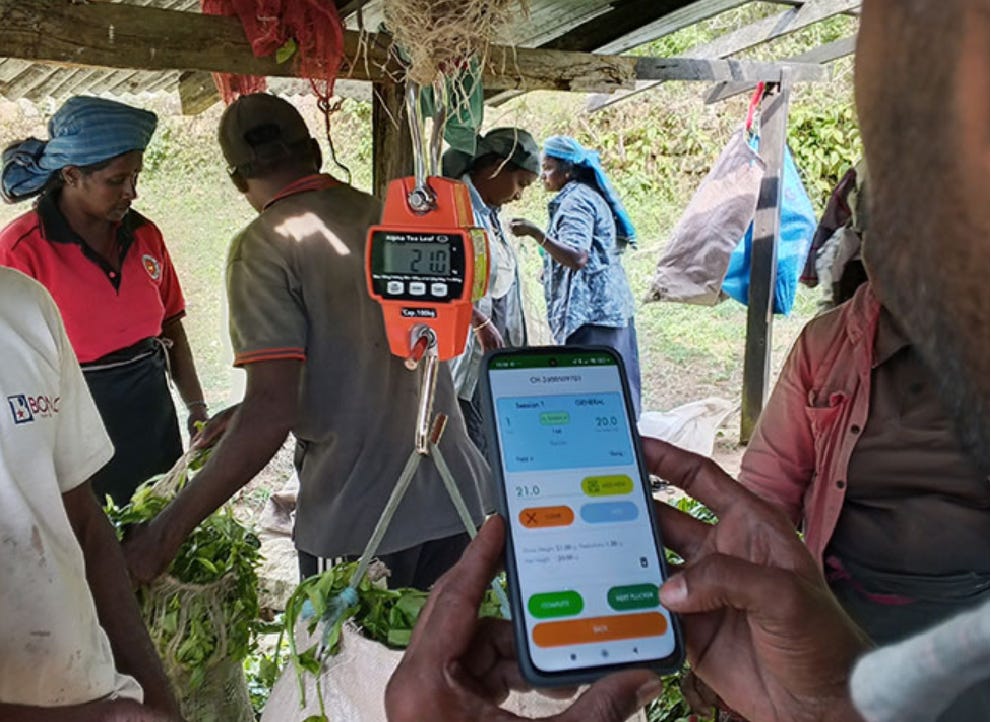
Photo credit: Sunday Island
Following the Goomera deployment, the State Plantation Corporation plans to roll out the platform across all of its estates.
The announcement follows Agrithmics’ recent expansion. In January, the company secured USD 650,000 from Hatch Fund Singapore to support regional growth, building on its USD 1.75 million Pre-Series A round completed in 2023. Since rebranding as Cultive8, the company has established its headquarters in Singapore while expanding operations across Sri Lanka, Bangladesh and India.
Why it matters
An interesting government partnership, showing that B2G can be a scalable model for agritech companies in countries where governments are actively embracing digital agriculture. In this case, we are not talking about smallholder farming but large-scale plantation management. However, from an impact perspective, these types of solutions can still deliver significant benefits for rural livelihoods, particularly when they help build digital payment histories and make agricultural workers more bankable.
15/06/26
Analysis: Vodacom highlights growth of digital agriculture portfolio across Africa
Vodacom Group, one of Africa’s largest telecommunications companies, has published its ESG report for the period 1 April 2025 to 31 March 2026, detailing its achievements across a broad portfolio of digital agriculture solutions supporting farmers and agribusinesses.
The group now serves more than 9.9 million registered users, up from 9.6 million a year earlier, through digital agriculture solutions n South Africa, Tanzania, Kenya and the Democratic Republic of Congo (DRC). Together, these solutions support agricultural productivity by improving access to advisory services, finance, insurance, digital payments, markets and agricultural inputs.
At the core of the portfolio is eVuna (formerly Connected Farmer), a B2B2C platform that enables agribusinesses, financial institutions and governments to digitally engage with smallholder farmers. The platform supports farmer registration, advisory services, insurance, market linkages, e-vouchers and specialised applications including dairy management and digital produce reconciliation.
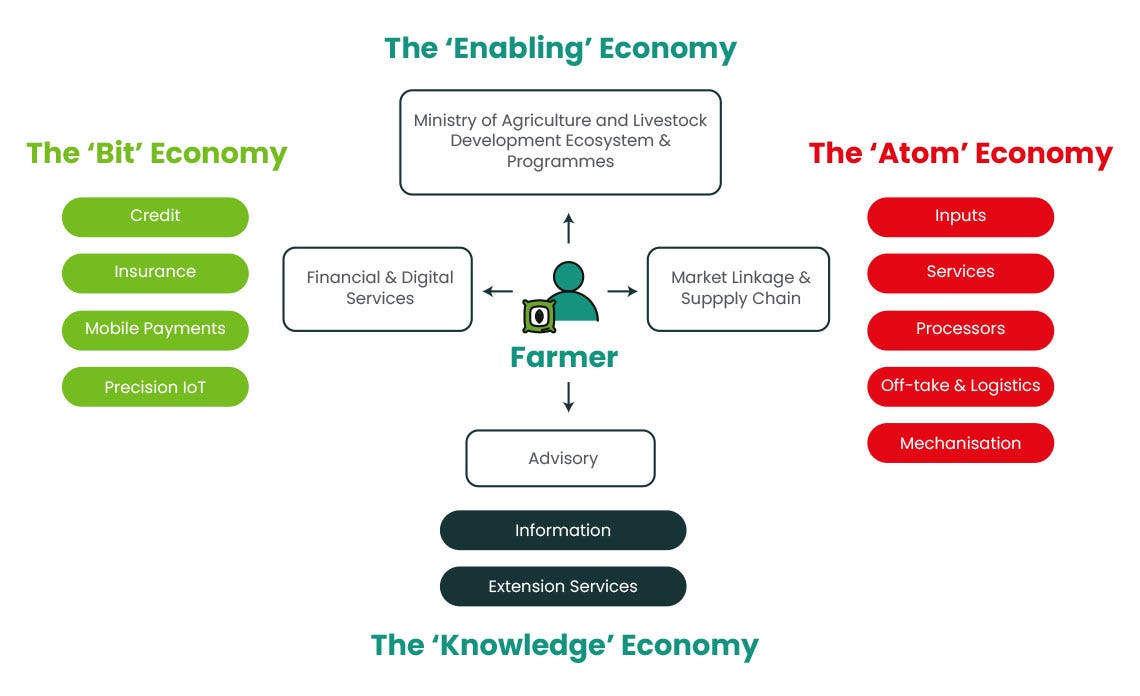
Image credit: Vodacom/Mezzanine
In Tanzania, M-Kulima allows agribusinesses to register farmers digitally, deliver advisory services and make payments through M-Pesa, while partnerships with agricultural cooperatives extend the platform’s reach to rural communities.
The report places particular emphasis on Moloni in the DRC. This is a free service, which provides weather forecasts, sustainable farming advice and a digital marketplace. Vodacom completed a pilot reaching around 10,000 farmers and is now moving into large-scale implementation. As part of a new food security programme in the conflict-affected Kasai region, farmers receive seeds and farming tools through an e-vouchering system before being connected to Moloni to access agronomic advice, climate information and market opportunities. Integration with M-Pesa loans aims to improve financial inclusion, while partnerships with local organisations are expected to support wider adoption of the platform.
Vodacom also offers M-Koba in Tanzania, a digital platform that digitises rural community savings groups. During FY2026, active groups increased from 213,000 to almost 300,000, while total savings grew by 81%. Women account for most participants, underlining the platform’s contribution to financial inclusion.
Why it matters
Vodacom’s results show that digital agriculture can be a long-term strategic capability for telcos, not just a CSR initiative. Through eVuna, M-Kulima and AgriTech Moloni, Vodacom has built a portfolio of agriculture-specific services combining connectivity, mobile money, digital platforms and partnerships.
Its scale, almost 10 million registered users across several African markets, shows the role telcos can play beyond connectivity, especially given their rural reach, trusted brands and payment infrastructure. Vodacom’s early investment in Mezzanine, whose agriculture platform evolved into eVuna, also shows the value of building in-house capabilities rather than relying only on third-party startups.
This model is especially important in more vulnerable countries such as the DRC, where startup ecosystems are less mature and telcos can play a broader role as providers of national digital infrastructure and digital services.
Other news:
17/06/26
Kenya places digital agriculture at the heart of $11.4bn AgriConnect Compact
Kenya’s Agriculture and Livestock Cabinet Secretary, Mutahi Kagwe, has unveiled the AgriConnect Compact (2025–2030), a national agricultural transformation platform designed to modernise the country’s food system through digital technologies, public investment and private sector participation. Backed by a planned USD 11.4 billion investment package, including USD 3.8 billion in public funding and USD 7.6 billion from private investors, the initiative aims to strengthen agricultural value chains, improve food security and create 2.48 million jobs by 2030.
Digital agriculture sits at the heart of the strategy. Planned investments include digital extension services, farmer registries, e-vouchers, digital agriculture platforms for market traceability, digital marketplaces and digital supply chains, alongside irrigation, processing and logistics infrastructure designed to reduce post-harvest losses. The Compact also seeks to use public funding to de-risk agricultural investment and attract private capital, with support from development partners including the World Bank, IFAD, the African Development Bank and AGRA.
22/06/26
Indonesia’s agritech sector faces new setback following TaniHub investment ruling
Indonesia’s agritech ecosystem has suffered another blow after four former executives from state-backed venture capital funds were sentenced to prison over their investment in failed agritech startup TaniHub, once one of the country’s leading digital agriculture companies. TaniHub raised more than US$90 million before collapsing in 2022. Prosecutors argued that inadequate due diligence resulted in losses to the state, despite no allegations that the investors personally benefited from the investment. The ruling has sparked debate over where the line should be drawn between a failed venture investment and a criminal act, with industry observers warning that state-backed investors could become significantly more cautious about backing innovative but inherently risky startups.
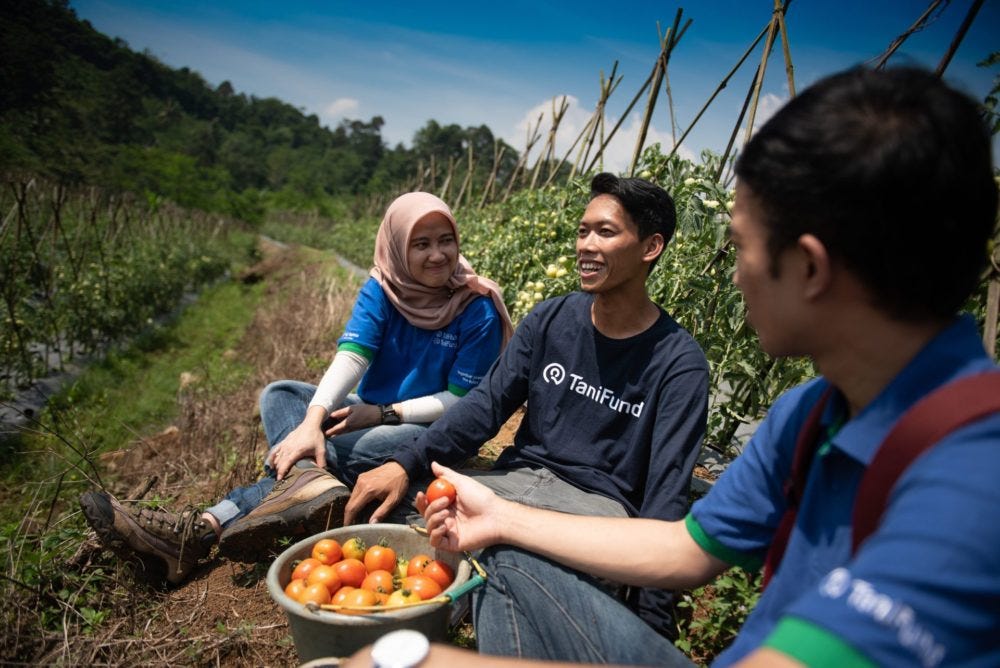
Image credit: TaniHub Group
The case comes only months after former eFishery CEO Gibran Huzaifah was sentenced to nine years in prison over accounting fraud at Indonesia’s former agritech unicorn. Together, the two cases mark a sharp reversal for what was once regarded as one of Southeast Asia’s most vibrant agritech markets, raising fresh questions about governance, investor confidence and the future flow of capital into the sector.
Why it matters
Delivering value to farmers more often than not requires investment in physical infrastructure, logistics, procurement and field operations alongside digital platforms. The challenge is ensuring these increasingly complex businesses remain financially and operationally under control as they scale. In highly capital-intensive models, the pressure to grow quickly and satisfy investor expectations can expose weaknesses in governance, financial controls and reporting long before the underlying business model has fully matured. The Indonesian cases also highlight the need to distinguish between genuine business risk and criminal misconduct, an important consideration if governments want public capital to continue supporting innovation in sectors such as digital agriculture.
25/06/26
World Bank-backed programme to boost Cameroon’s digital agriculture ecosystem
Cameroon is not a country that gets the spotlight in digital agriculture news, making a recent World Bank featured story quite noteworthy. The story highlights how the country is scaling up investment in the sector through a World Bank-backed Digital Transformation Acceleration Project (PATNUC), combining startup support, digital infrastructure and farmer subsidies to drive adoption at scale. Agriculture employs almost 60% of the country’s population. The programme wants to tackle longstanding constraints around market access, inputs and productivity through locally developed digital solutions. Around 35,000 smallholder farmers are expected to receive agricultural inputs through a digital e-voucher system, while USD 4.4 million in matching grants will subsidise the adoption of agritech services by farmer groups. The initiative also aims to create 200 partnerships between agritech startups and producer organisations.
PATNUC is emerging as a key driver of Cameroon’s digital agriculture ecosystem. Beyond supporting individual startups, the programme combines digital infrastructure, startup acceleration and farmer incentives to help local agritech companies scale and accelerate technology adoption.