

25/03/26
Zambia launches national climate advisory service with support from TomorrowNow
Zambia has launched a national Digital Climate Advisory Service (DCAS), led by the Zambia Meteorological Department (ZMD) in collaboration with the Ministry of Agriculture and partners including TomorrowNow, the non-profit climatetech originating from software company Tomorrow.io, and the Kenya Agricultural and Livestock Research Organization (KALRO).

DCAS marks a shift from forecasts toward decision-oriented climate guidance supporting farm-level decisions such as planting timing, crop management and responses to increasingly variable rainfall. As of March 2026, more than 34,000 smallholder farmers are already receiving twice weekly advisories.
ZMD is leading development and delivery of the service, putting in place the data pipelines, delivery channels and partnerships needed to expand climate advisory support over time.
TomorrowNow is supporting this work by translating weather and agricultural data into decision ready guidance embedded within national systems. The company also leverages its partnership with Google.org, including integration of Google DeepMind’s WeatherNext models, to generate localised forecasts for farm level advisories.
Why it matters: Another encouraging signal of collaboration between weather intelligence providers and national meteorological agencies to build local capacity and integrate climate advisory services into national delivery systems.
26/03/26
Kenya publishes draft policy to coordinate national digital agriculture infrastructure
Kenya has released a draft Agricultural Data, Information and Digital Policy under the Ministry of Agriculture and Livestock Development to strengthen coordination of agricultural data systems and digital service delivery across the sector.
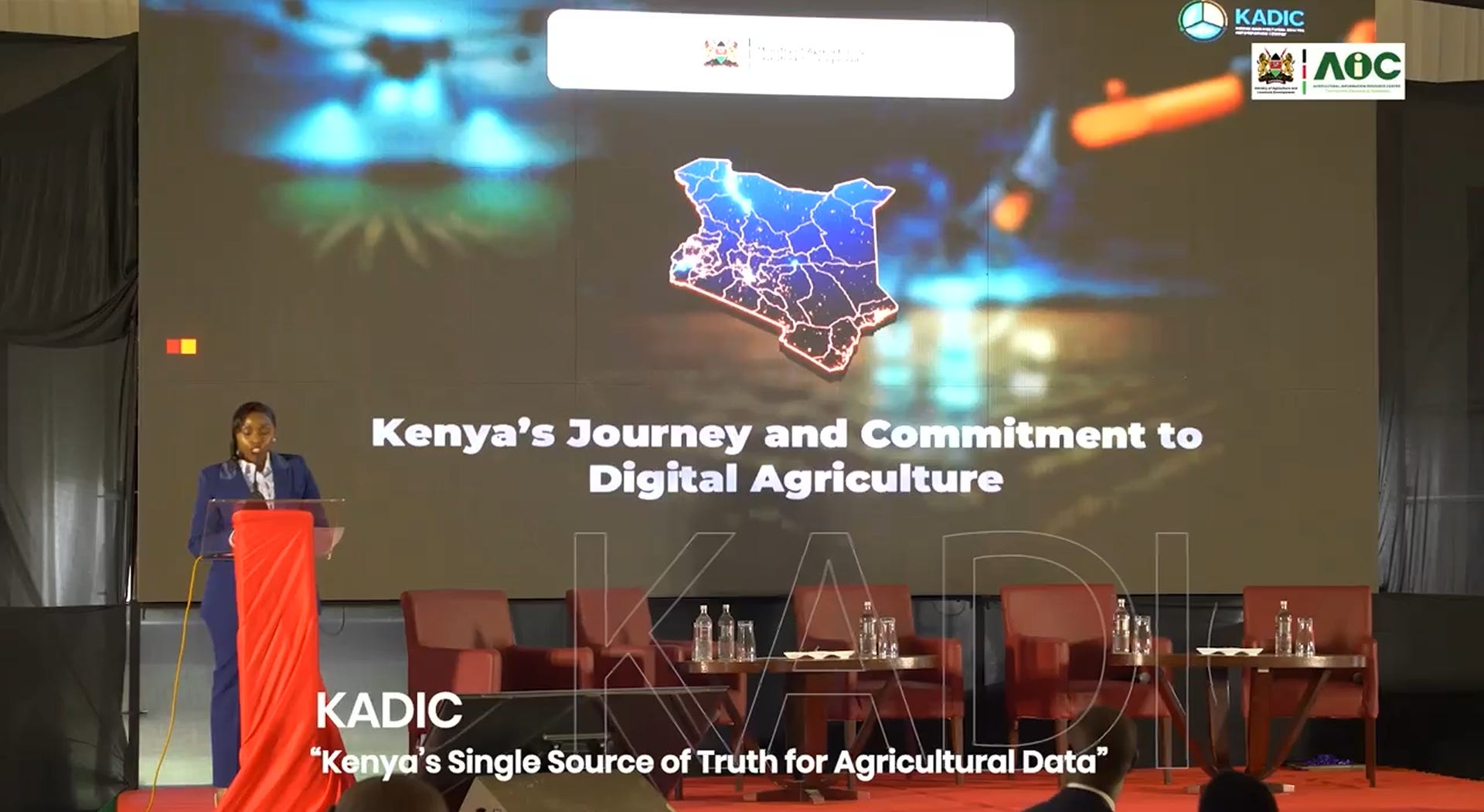
Source: KADIC (LinkedIn video)
A central component of the framework is the proposed establishment of the Kenya Agricultural Digital Information Centre (KADIC), which would oversee sector data governance, coordinate digital agriculture programmes and support innovation across national and county governments.
The policy builds on the Kenya Integrated Agriculture Management Information System (KIAMIS), a national digital public infrastructure initiated in 2019 and formally handed over by the Food and Agriculture Organization to the Government of Kenya in November 2025. KIAMIS had registered more than 6.5 million farmers by mid-2025 and over 7.2 million by 2026, supporting delivery of input subsidy programmes as well as access to advisory services, markets and finance.
The draft framework proposes stronger interoperability between farmer registries, extension platforms, market information systems and geospatial monitoring tools, and encourages the use of artificial intelligence, Internet of Things sensors, drones and blockchain to support traceability, productivity and farm level decision making. It also places digital public infrastructure at the centre of efforts to integrate agricultural datasets held by public agencies, research institutions and private service providers.
Agriculture contributes around 22 percent of Kenya’s GDP and supports more than 70 percent of rural livelihoods.
Why it matters
The proposed creation of KADIC signals a shift toward institutional coordination of digital agriculture systems at national level, positioning farmer registries and advisory platforms as core components of agricultural digital public infrastructure.
31/03/26
IFC backs Ethiopia’s Lersha with $1M to scale agrifinance services
Ethiopian agritech Lersha has secured USD 1 million from the International Finance Corporation (IFC) through a convertible loan, its first institutional investment.
The funding will support the expansion of Lersha’s agrifinance model, enabling the company to scale bundled access to inputs, mechanisation and advisory services alongside seasonal credit for smallholders.
Convertible loans are typically structured as short-term debt that can later convert into equity, allowing investors to provide growth capital while retaining the option to participate in the company’s future upside.
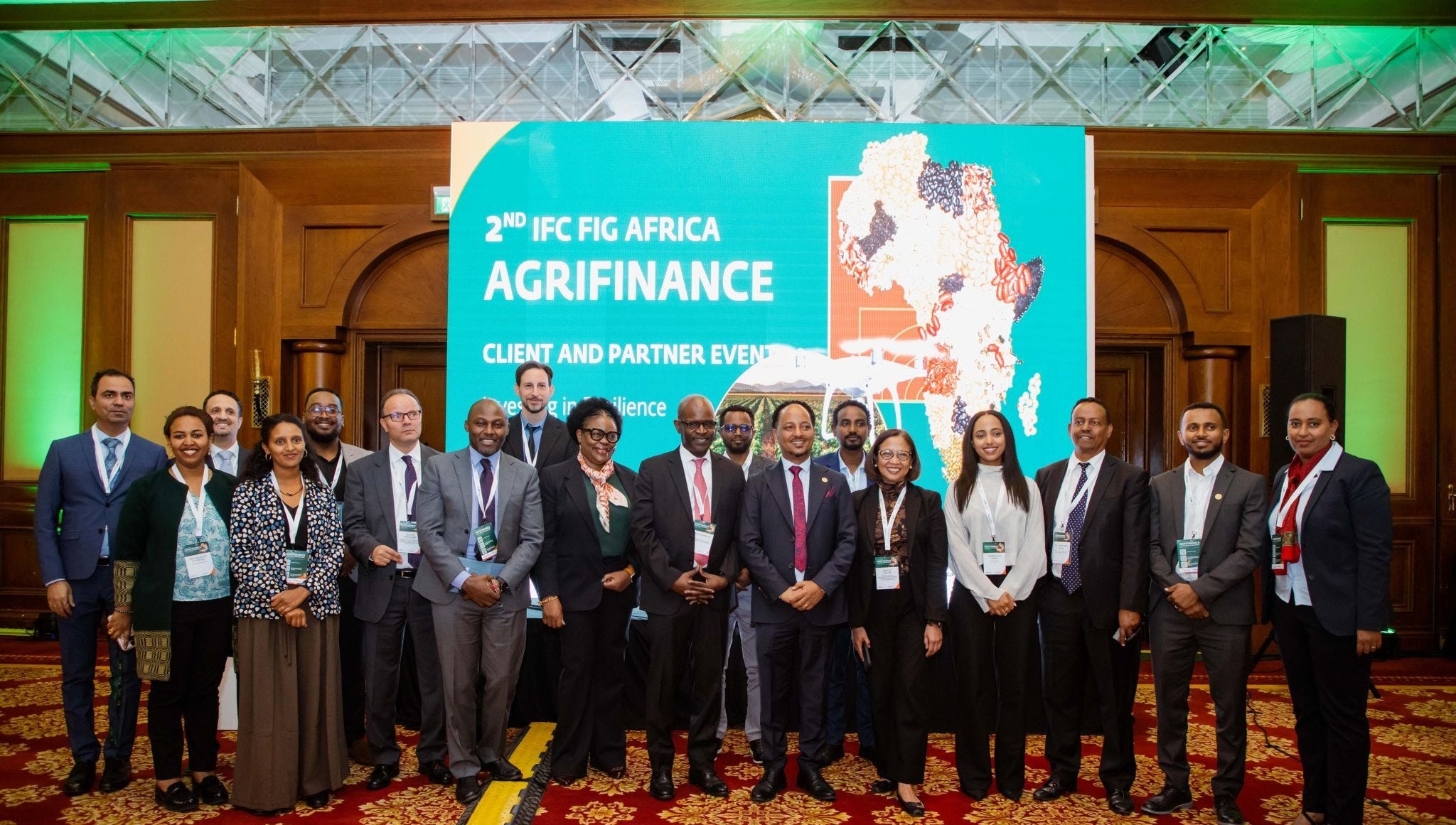
Photo credit: Lersha
Founded in 2018, Lersha operates a phy-gital service platform that has reached more than 300,000 farmers and plans to expand its reach to one million by 2030. The company combines digital farmer profiling with agent-led service delivery and works with national partners, including the Agricultural Transformation Institute (ATI) and the Ethiopian Agricultural Businesses Corporation (EABC), to support fertiliser recommendations, mechanisation access and integrated input distribution.
Why it matters: This investment is another signal of the shift in African agritech funding toward platforms that have finance at the core alongside inputs, mechanisation and advisory services. As highlighted by recent Briter analysis, companies integrating financial services account for over 60% of sector funding despite representing only about a quarter of firms. In Ethiopia, Lersha is emerging as a key enabler linking farmer profiling with credit, inputs and mechanisation delivery at scale.
In other news:
20/03/2026
India issues 91.7 million farmer IDs under Digital Agriculture Mission
India has generated more than 91.7 million farmer IDs under its Digital Agriculture Mission as of March 2026, marking continued rollout of AgriStack as a national digital public infrastructure for agriculture built on three foundational registries: geo-referenced village maps, crop sown registry and the farmers registry.
Approved in September 2024 with a budget of INR28.17 billion (approximately USD 298 million at current exchange rates), the mission is building interoperable registries linking farmers, crops and georeferenced village maps as a unified reference system supporting subsidy delivery, insurance and advisory services.
The Digital Crop Survey has already mapped more than 285 million agricultural plots across 604 districts during the Kharif 2025 season, strengthening visibility of cropping patterns for procurement planning, production estimates and input logistics.
The programme also includes the Krishi Decision Support System (Krishi DSS), which integrates satellite imagery, soil, crop and weather data into a national geospatial advisory platform, alongside a nationwide soil resource mapping effort covering 39.1 million hectares.
Why it matters
Following earlier policy approvals in 2024 and the Digital Agriculture Mission 2.0 roadmap released in 2025, the scale of farmer ID issuance and plot-level crop mapping suggests India’s agricultural data infrastructure is moving from strategy toward operational deployment at national scale.
30/03/26
AfDB commits $8.5M to Breega Africa Seed I fund targeting early-stage agritech startups
The African Development Bank Group has committed USD 8.5 million to the Breega Africa Seed I Fund, which invests in early-stage startups across sectors including agritech, climate tech, fintech and logistics.
The commitment includes USD 5.7 million in equity and USD 2.8 million in first-loss capital under the Boost Africa initiative, helping de-risk seed-stage investment across African markets.
The fund will invest pre-seed and seed tickets of USD 100,000 to USD 2 million across key markets such as Nigeria, Kenya, Egypt, South Africa and Francophone Africa.
Why it matters
The investment highlights the growing role of development finance institutions in supporting early-stage agritech pipelines through venture funds, particularly as private capital for smallholder-focused agritech (“on-farm solutions”) continues to decline.