

Featured stories
07/10/25
Safaricom reports DigiFarm progress: 169,000 farmer loans in 2025
In its latest Sustainability Report (FY 2025), Kenyan mobile operator Safaricom shared updates on its flagship digital agriculture platform, DigiFarm. Established in 2018, DigiFarm provides smallholder farmers with agronomic information, input financing, and market linkages through Safaricom’s mobile and data networks.
Although DigiFarm has kept a relatively low public profile, the latest figures indicate progress and measurable impact. To date, more than 980,000 farmers have registered on the platform. In FY 2025 , DigiFarm disbursed KSh 945 million (USD 7.3 million) in credit through 169,000 loans, helping farmers purchase inputs and manage cash flow. Of these loans, 36 percent went to women and 17 percent to youth.
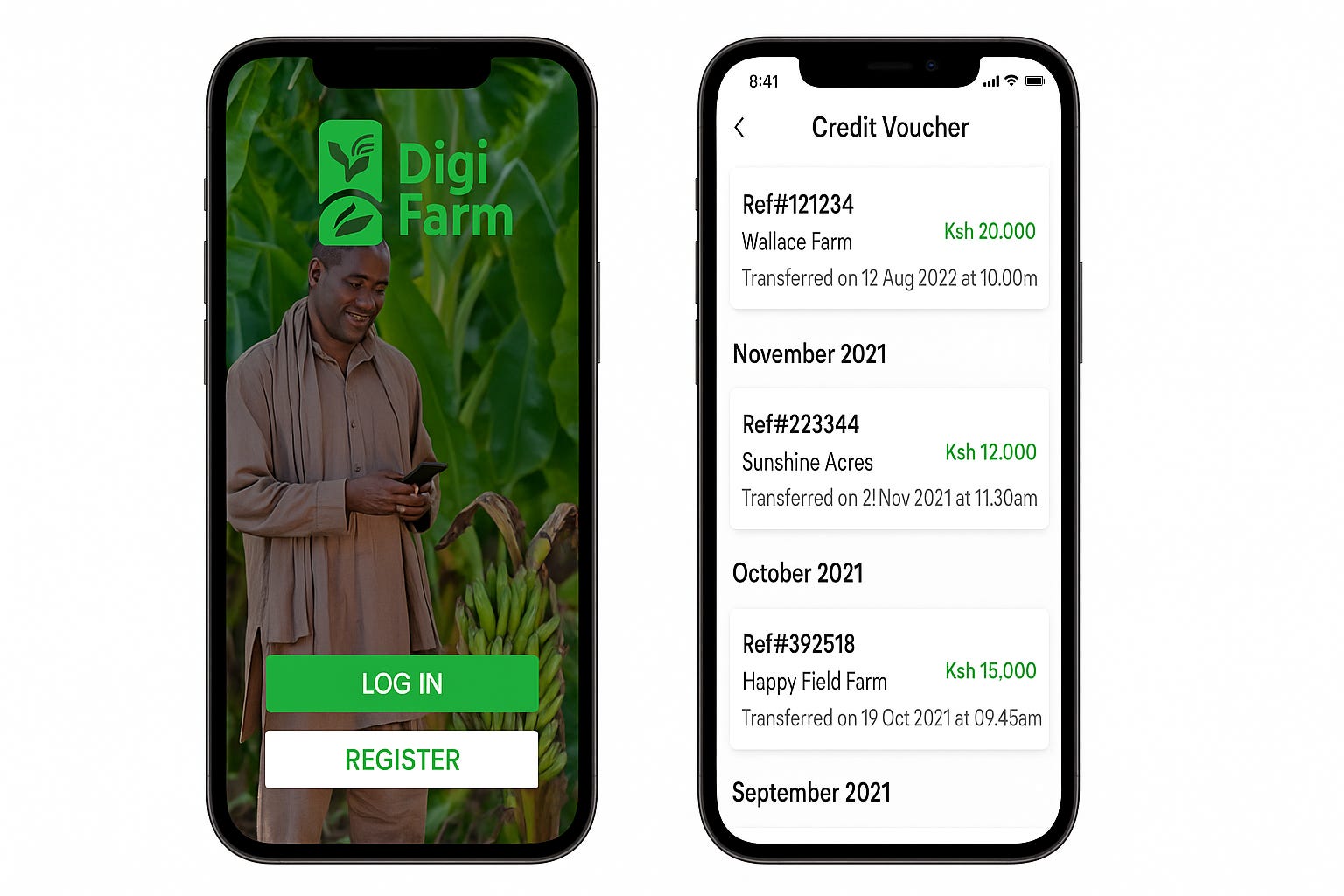
Photo credit: Safaricom
DigiFarm applies data analytics and mobile money records to assess creditworthiness and manage risk. Its farmer credit scoring system identifies eligible borrowers, while an input credit scorecard integrates crop yield prediction, climate-risk modelling, and weather forecasting. A cash credit scorecard combines buyer-linked payments data with M-PESA and GSM usage patterns to determine credit limits. The platform also supports farmer onboarding, linking users to advisory services, input suppliers, and buyers.
Looking ahead, Safaricom plans to onboard more buyers, expand into new regions and value chains, and enhance its farmer financing solutions. Future developments include an AI-powered advisory chatbot and a credit scorecard initiative for farmers and MSMEs, alongside an expanded cash advance facility.
In February 2025, as reported by Aristechia, Safaricom launched FarmerAI, a co-branded chatbot developed with NGO Opportunity International. Accessible via SMS, WhatsApp, and the DigiFarm platform, the tool provides farmers with real-time guidance on crops, weather, and financing.
10/10/25
Ethiopia to introduce PayGo mechanisation with Hello Tractor
Ethiopia has launched a new pay-as-you-go (PayGo) tractor financing initiative to expand access to mechanisation for smallholder farmers and rural entrepreneurs. Led by agritech Hello Tractor, in partnership with the Ministry of Agriculture and supported by NGO Heifer International, the programme introduces a flexible scheme tied to revenues generated through mechanisation services rather than through conventional collateral-based lending. Using Hello Tractor’s digital platform, owners and operators are connected through GPS and mobile technology, allowing for transparent tracking, maintenance, and payment management.
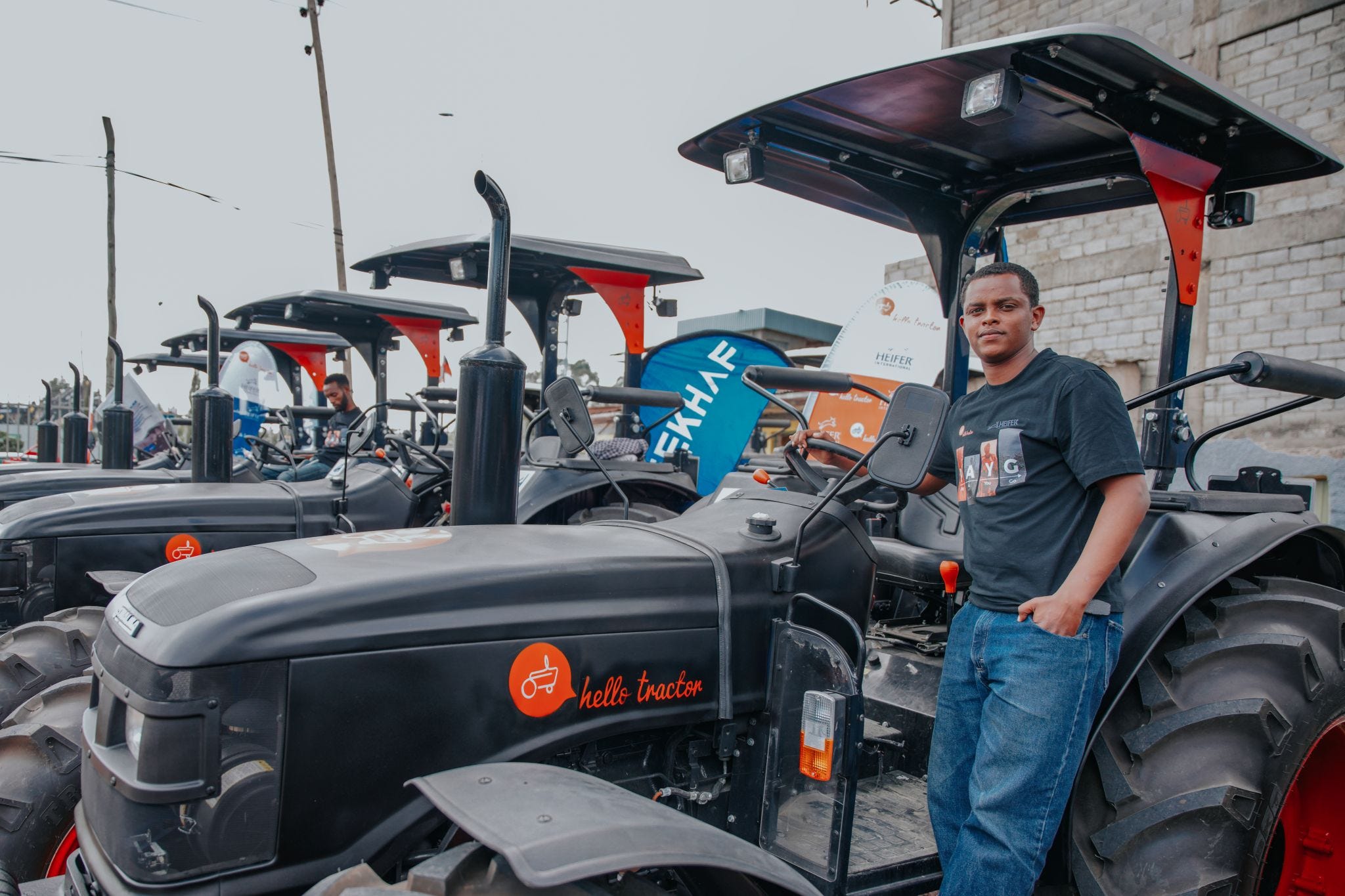
Photo credit: Hello Tractor
The pilot phase has deployed ten tractors to youth-led enterprises across five regions (Oromia, Amhara, Central Ethiopia, Sidama, and Somali) with repayment flows reinvested to fund future participants. The approach builds on Hello Tractor’s experience in other African markets, where similar 60-month financing schemes have achieved repayment rates of about 95 percent, indicating potential for scale across Ethiopia’s rural economy.
In Ethiopia, agriculture accounts for roughly one-third of Ethiopia’s GDP and employs more than 60 percent of its population. The share of farmland ploughed by tractors has increased from 5.7 percent in 2020 to 25 percent in 2025, however the mechanisation deficit remains steep.
Hello Tractor estimates the country would need up to 400,000 tractors to meet current demand. Of the 6,000 tractors currently on Hello Tractor’s digital platform across Africa, around 800 are active in Ethiopia.
Other news
10/10/25
Nile redesigns inputs marketplace with farmer feedback
South African agritech company Nile has redesigned its agri inputs marketplace to reflect how farmers purchase supplies. The update adds features such as quote requests, estimated delivery times, and a credit module, based on direct input from users.
Founded in 2021, Nile runs a real-time marketplace for fruits and vegetables across South Africa, Botswana, Namibia, Eswatini, and Mozambique. In June 2024, the company raised USD 11.3 million from the Cathay AfricInvest Innovation Fund, with FMO (the Dutch Entrepreneurial Development Bank) to expand into Eastern and Western Africa. The redesign supports efforts to make agricultural trade more accessible to smallholder farmers across the region.
14/10/25
IFAD targets 70M smallholders with new AgriConnect initiative
At the 2025 World Bank Annual Meetings, the International Fund for Agricultural Development (IFAD) announced a commitment to leverage its new AgriConnect initiative to reach at least 70 million smallholder farmers in rural and fragile regions by 2030.
AgriConnect brings together IFAD, the World Bank, and other multilateral development banks along with private sector partners. Its core strategy includes de-risking agribusiness investment, building infrastructure and enabling policy, and embedding digital technologies across agricultural systems to connect producers to markets, data, and financing.
IFAD’s announcement cites results from recent projects. Between 2022 and 2024, smallholder farmers involved in IFAD-supported interventions reportedly achieved average gains of 34 % in income, 35 % in productivity, and 34 % in access to markets. Some projects have delivered up to 50 % income growth for participants, according to IFAD.
06/10/10
Good reads: GSMA AgriTech Accelerator shares UX design lessons on digital agriculture
The GSMA has published the AgriTech UX Design Guidebook, a publication emerging from the GSMA AgriTech Accelerator commissioned by the German Development Agency (GIZ) as part of the Fund for the Promotion of Innovation in Agriculture (i4Ag).
The guidebook draws on lessons from the two-year Accelerator, which brought together ten agritech ventures across Africa and Asia and hosted more than twenty product iteration workshops, leading to the development of agritech solutions for smallholder farmers.
The guide emphasises the importance of ease of use in digital agriculture solutions. It calls for simple, well-structured interfaces, clear data entry forms and timely reminders that fit naturally into a farmer’s daily routine. GSMA highlights how by removing unnecessary steps and reducing confusion, digital data entry can become not only faster than pen and paper but also more engaging and rewarding to use.
A key reminder of the guidebook is that good user experience is not about achieving perfection, but about steady progress: listening to users, improving deliberately, and always designing with empathy.
Over the past two years, the Accelerator helped agritechs reach more than 335,000 farmers, with 89% reporting improved access to digital agricultural services and over 100,000 women farmers benefiting directly.
Thank you for covering these developments