

17/06/25
Saswat raises $2.6M to scale rural fintech for farmers in India
Indian startup Saswat Finance, a fintech providing financial services to farmers and micro-entrepreneurs in rural India, has raised USD 2.6 million funding in a round led by early stage investor Ankur Capital, with participation from returning investor Incubate Fund Asia, a seed and pre seed focused VC fund. Saswat will use the funds to enhance its data and analytics infrastructure, roll out new financial products, and expand operations across rural regions in Maharashtra, Karnataka, and Uttar Pradesh.
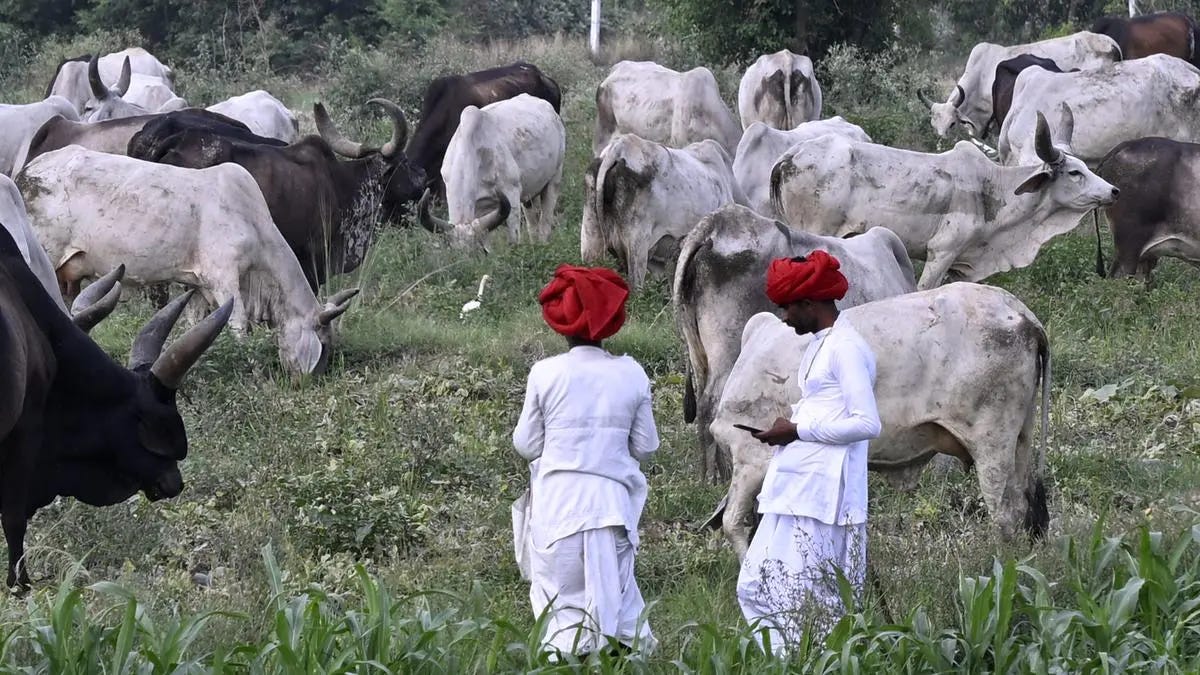
Photo credit: Shiv Kumar Pushapakar, The Hindu Business Line
Founded in 2022, Saswat has started from the dairy value chain by offering cattle loans, insurance, and para-veterinary services through mobile-enabled digital interfaces. It is now expanding to adjacent value chains. The startup leverages both conventional and alternative data sources, including milk yield, weather trends, and geographic indicators, to underwrite asset-backed loans and design insurance products for smallholders. Saswat has partnerships with dairy cooperatives, insurers and banks such as RBL Bank and Shivalik Small Finance Bank. It has to date reached over 6,000 customers and disbursed USD 6.63 million in loans.
17/06/25
Nigeria’s agritech Winich closes six-figure round for agri DFS
Nigerian agritech startup Winich Farms has closed a six-figure (undisclosed amount) Pre-Series A extension round led by Egypt-based fintech VC DisrupTech Ventures. Last October, Winich raised USD 3 million pre-series A to expand its order fulfilment centres and improve its technology in a round led Acumen Resilient Agriculture Fund (ARAF). The agritech plans to use the funding to expand its embedded agri digital financial services (Agri DFS), such as the Winich Cards (a debit card programme in partnership with Sterling Bank) and digital credit tailored for smallholder farmers.
Established in 2020, the startup’s core offer is a market linkages platform connecting farmers with factories and retailers. The startup operates collection points run by agents who process orders from buyers. When agents receive an order on the app, they rally local farmers to bring produce to the collection enter. Produce is then delivered to the buyer within 24 to 72 hours. Over time, Winich has expanded to support embedded finance and traceability in agricultural value chains. Currently active in 29 of Nigeria’s 36 states, the startup connects over 180,000 farmers to buyers.
16/06/25
Analysis: Ethio Telecom and Oromia launch Big Data platform for agriculture
Ethiopia’s leading telco Ethio Telecom has partnered with the state of Oromia to deploy a Big Data–powered Integrated agriculture value chain platform. The platform should connect farmers, cooperatives, agribusinesses, and retailers through a unified infrastructure integrating data from IoT devices, satellite imagery, remote sensing technologies, and field-level insights. It will serve as a central hub for data storage and analysis.
The plan is that value chain actors will be able to digitise transactions across the value chain, predict supply-demand gaps, and obtain real-time information pests, diseases, and weather events. In addition, the platform should enable market linkages between farmers and buyers. Initially launched in select woredas (districts), the platform will gradually expand across Oromia and serve as a blueprint for nationwide rollout.
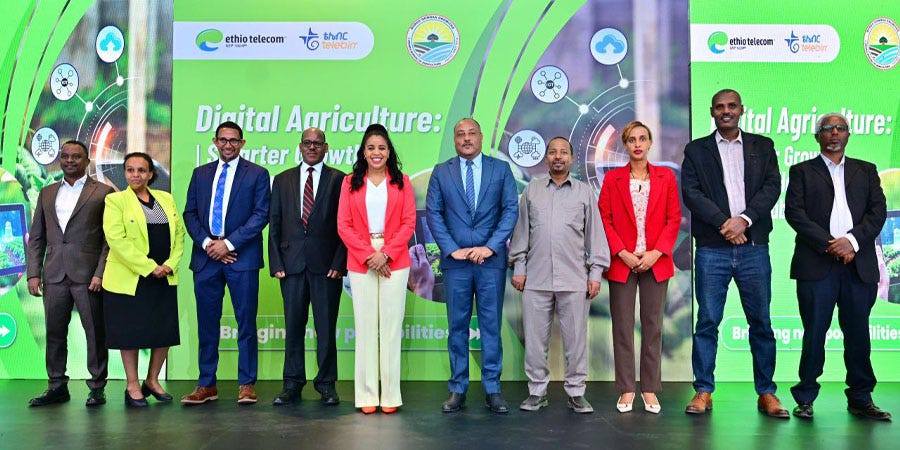
Photo credit: Telecom Review Africa
Why does it matter?
Ethio Telecom plays a pivotal role in Ethiopia’s digital landscape and is active across many verticals including agriculture. It is one of the key players behind the 8028 Farmer Hotline, an IVR/SMS based agri advisory service implemented in collaboration with NGO Digital Green, the Ethiopian Agricultural Transformation Institute (ATI), and the Ministry of Agriculture (MoA).
This Big Data platform aligns with Ethiopia’s Digital Ethiopia 2025 vision, which supports telecom-driven innovation in public sector digital transformation. Oromia is a key region of Ethiopia, surrounding the capital, Addis Ababa. It is the most populous state in the country (40.9 million people, accounting for about 30% of Ethiopia’s total population). It is also the largest state by land area, contributing the largest portion to Ethiopia’s overall agricultural economy.
This initiative is part of a broader government push to digitise agriculture in order to boost productivity and resilience. Last February, Ethiopia launched its Digital Agriculture Roadmap. Developed by the MoA with ATI and the Gates Foundation, the roadmap will be implemented from 2025 to 2032. Key initiatives include establishing Digital Public Infrastructure (DPIs) such as a data stack with APIs and farmer profiles and unique IDs. In addition, the plan is to create “digital kiosks” to allow farmers to adopt use cases, and to improve digital literacy for both farmers and extension agents.
In support of Ethiopia’s Digital Agriculture Roadmap, global nonprofit Precision Development (PxD) signed a USD 3 million partnership last week (funded by the Gates Foundation) with the Ministry of Agriculture to lead implementation of the roadmap’s project management plan.
20/06/25
Analysis: Agriculture a priority for Nigeria’s $7.5M AI Scaling Hub with Gates
The Bill & Melinda Gates Foundation has recently signed a memorandum of understanding (MoU) with Nigeria’s Ministry of Communications, Innovation and Digital Economy, formalising a USD 7.5 million partnership to establish the Nigeria Artificial Intelligence (AI) Scaling Hub. Building on the government’s draft National AI Strategy, the Hub will support government agencies, tech firms, academia, and development partners in scaling mature AI solutions across agriculture, as well as healthcare, and education.
Agri-focussed GenAI solutions will be very much in focus, such as real time advice on crops, weather and market prices in local languages. These kinds of solutions are already emerging in the market. For example, a year ago local agritech Crop2Cash launched the National Hotline for Agriculture, a service powered by a Large Language Model (LLM) acting as a personal extension agent, providing agri advisory to the individual farmer via a toll-free phone line. The service is available in English, Yoruba, Hausa and Igbo. These solutions are increasingly important to supplement extension services, especially in a country like Nigeria where the ratio of extension agents to farmers is one-to-ten thousands.
Why does it matter?
While full details are still emerging, the Hub is expected to offer multi-level support, including technical assistance, capacity-building programs, and crucially, access to shared computing infrastructure, such as cloud-based services and centralised High-Performance Computing (HPC) systems, to support data-intensive AI workloads. The launch comes at a pivotal time, as international actors intensify efforts to boost AI capacity in Nigeria. In February, Microsoft announced a USD 1 million initiative to train one million Nigerians in AI over the next two years.
In other news:
12/06/25
Satellite-enabled digital ag project launched in Mauritania
Details have emerged about a series of pilots in Mauritania using satellite data from the EU’s Copernicus Sentinel-2 mission to support smallholder farmers, initially in the rice value chain. The project dubbed TechGhilagro is led by InsightEx, a local agritech and environmental intelligence startup, in partnership with the National Employment Agency (TECHGHIL). TechGhilagro uses biophysical indicators such as vegetation cover, chlorophyll content, and canopy water levels, which are derived from Sentinel-2 imagery, to detect early signs of stress, pests or water shortages in crops. These insights are processed through machine learning and delivered to farmers via a user-friendly mobile application and a web-based monitoring dashboard.
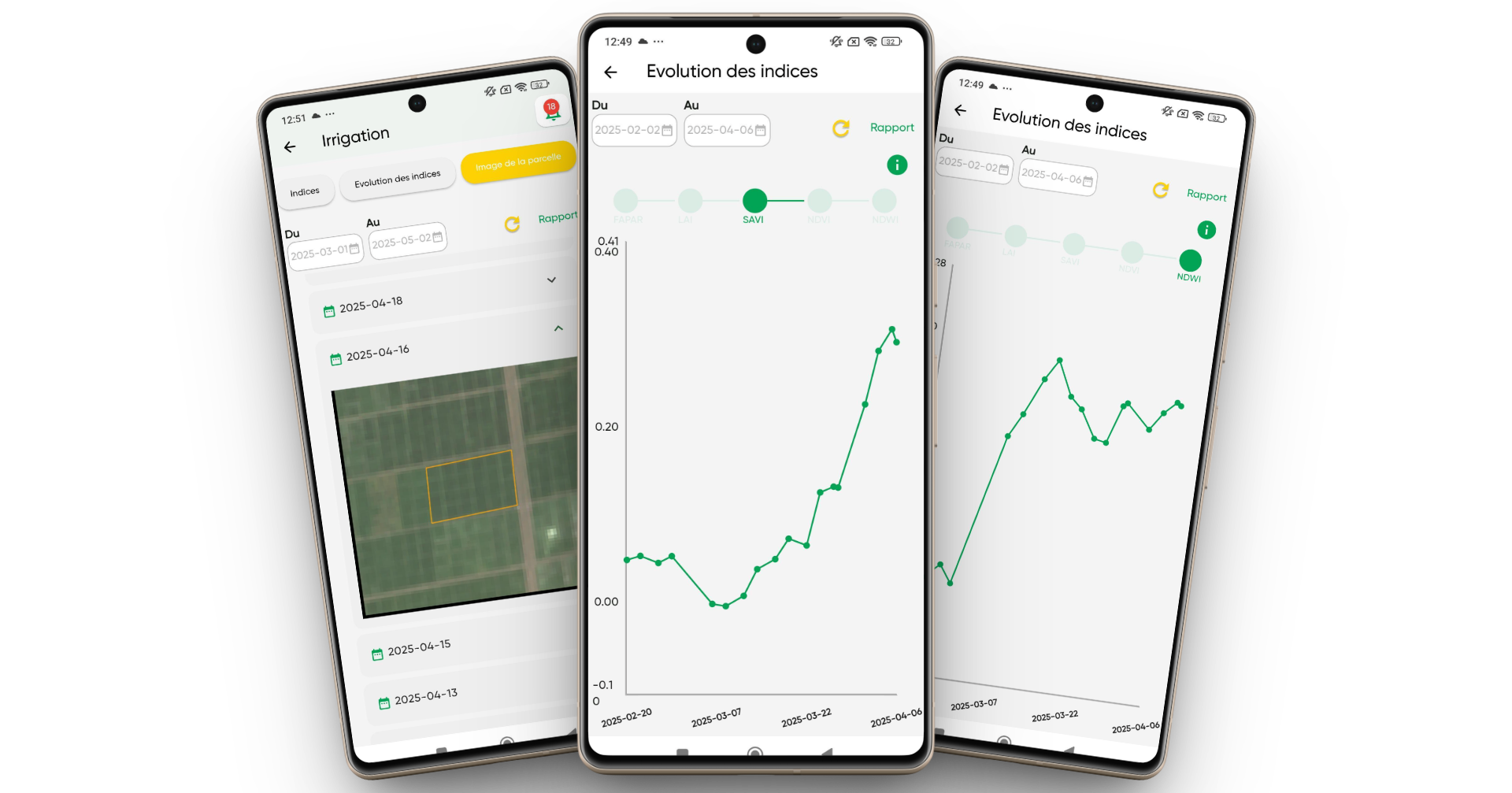
The TechghilAgro app showing historical RGB images, vegetation indices, and irrigation cycles.
There are currently two pilot sites in Rosso and R'kiz (Trarza region of Mauritania). InsightEx and TECHHIL aim to launch the service again in the second agricultural season in October 2025. There are plans to integrate AI-powered yield prediction models trained on Sentinel-2 data and to eventually scale the service nationally.
12/06/25
Soil mapping initiative to support data-driven agriculture in Mozambique
The Government of Mozambique, in collaboration with the Government of Japan and the Food and Agriculture Organization (FAO), has launched a new initiative named Soil Mapping for Resilient Agri-Food Systems: Vision for Crops and Adapted Soils (SoilFER-VACS). Developed by FAO, SoilFER-VACS is a data-driven, multidisciplinary framework designed to establish national soil information systems and decision-support tools. These tools will guide crop suitability assessments, improve soil-crop management practices, and enhance farmer advisory services. By introducing advanced soil analysis capabilities, the project aims to reduce processing time and generate high-quality data. This data will be accessible to both public and private sector stakeholders, enabling the development of more effective digital agricultural services. The Japanese government is providing USD 2 million to support the project’s implementation.