

24/05/25
Indian agri e-commerce Otipy collapses despite rapid growth
According to reports, Indian farm-to-fork agritech startup Otipy has ceased operations after failing to secure additional funding amid intensifying market competition. As a result, approximately 300 employees and delivery workers have lost their jobs.
Founded in 2020, Otipy operated as a B2B2C platform, sourcing fresh produce directly from farmers and delivering it to end consumers through a network of community resellers. The company was active primarily in Delhi-NCR and parts of the Mumbai metropolitan region.
At its peak, Otipy worked with 20,000 farmers and served over one million customers via a network of more than 20,000 community retailers. The platform leveraged AI-driven demand forecasting to deliver produce from farm to doorstep in under 12 hours, aiming to minimise food waste to just 3%.
Despite achieving a 43% year-on-year revenue growth in 2024, the company faced ongoing struggles with procurement costs, which accounted for 70% of total expenses, and high customer acquisition costs. Otipy raised approximately USD 44 million across three funding rounds, comprising both equity and debt.
26/05/25
Twiga reduces workforce by 200 as it shifts to FMCG platform
In a significant move to enhance operational efficiency, Kenyan B2B agri e-commerce company Twiga Foods is set to lay off over 300 employees as it establishes a new holding entity. This restructuring will centralise shared services including logistics, procurement, technology, and finance across Twiga and its subsidiaries. Only a small core team of 10 to 12 individuals is expected to transition into the new structure, while the majority of Twiga’s 435 employees, particularly those in supply chain roles, are expected to be made redundant.
In April, as reported by ArisTechia, Twiga Foods secured majority ownership in three regional distributors—Jumra in Nairobi, Sojpar in Kisumu, and Raisons in Mombasa. The move was part of a strategic evolution from a fresh produce supplier to a comprehensive FMCG platform. Rather than managing physical infrastructure directly, Twiga now intends to empower these partners with its proprietary software while outsourcing daily logistics to third-party providers.
For some time, Twiga has faced financial, including a legal battle over an unpaid USD 261,000 cloud services bill, leading to court proceedings and a temporary injunction against liquidation. In response to financial pressures, Twiga has undergone significant restructuring, including layoffs cutting its workforce by 40%. The company has also secured new funding to address outstanding debts and support its transformation plans.
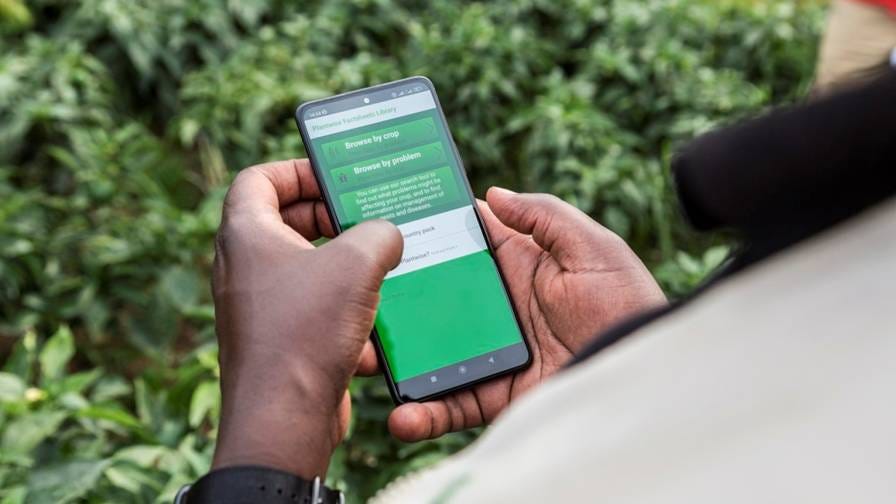
Photo credit: CABI
27/05/25
Malaysia’s LocalPasar bags funding from Antler
Malaysian agritech LocalPasar has received an investment from Singapore-based early-stage VC firm Antler. Details of the funding amount are not available, but according to reports the startup has received part of USD 110,000 that Antler invested in two Malaysian startups, LocalPasar and Filepillar.
LocalPasar is developing an agriculture intelligence platform that aims to modernise the fresh produce wholesale sector is Southeast Asia. The startup enables more efficient trade between farmers and restaurants by leveraging real-time pricing, demand forecasting, and supply chain traceability. According to the company, farmers using the platform can increase their earnings by more than 40%. With this funding, the agritech firm aims to enhance its brand presence and marketing efforts, fast-track product innovation, and expand its reach across the entire food value chain.
27/05/25
PxD 2024 report: 18.5M farmers reached at under $1 per user
Precision Development (PxD), a global nonprofit organisation that supports smallholder farmers, has published its 2024 annual report. In the study, the NGO outlines how in 2024 it reached 18.5 million farmers with digital agriculture services, including over 5 million female farmers. Taking into account all the farmers it has onboarded since its inception, PxD’s average cost per user per year stood at USD 0.94.
PxD has 14 active programmes across countries including India, Pakistan, Ethiopia and Nigeria. In India, in 2024 it provided SMS-based rainfall and monsoon-onset forecasts to more than 9 million farmers across five states (Uttar Pradesh, Madhya Pradesh, Rajasthan, Telangana, and Chhattisgarh). The NGO plans to scale this initiative in 2025.
Using data from its programme with the Indian state of Odisha, where PxD serves over 7 million farmers via the voice-based agricultural advisory service Ama Krushi, the NGO stated that farmers obtained an estimated USD 12-19 in profit for every USD 1 spent.
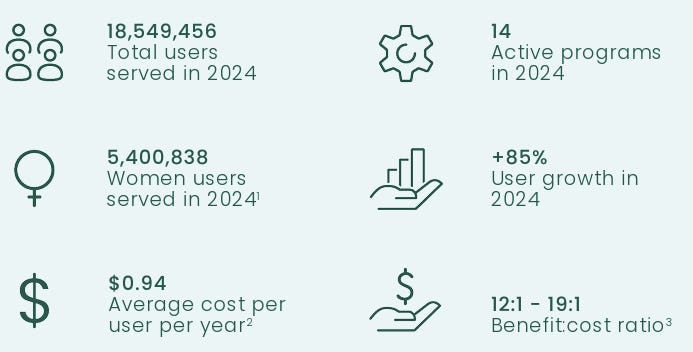
Source: PxD
In September 2024, PxD completed its five-year initiative supporting Ethiopia’s 8028 Farmers’ Hotline, a voice based agri advisory service implemented in collaboration with Digital Green, the Ethiopian Agricultural Transformation Institute (ATI), and the Ministry of Agriculture (MoA). PxD has obtained a new 12-month grant from Gates Foundation to complete the transition of the service to a local partner. As highlighted in the report, a key focus for PxD has been its “Build-Operate-Transfer (BOT)” model, which supports the transition of projects to government partners once they have been successfully scaled.
29/05/25
GROWiT bags $3M to expand protective farming solutions in India and Africa
Indian agritech GROWiT has secured USD 3 million Series A funding from early and mid-stage investor GVFL. With the new funding, the startup aims to reinforce its presence in India and expand into international markets with a focus on Africa. GROWiT specialises in providing protective farming inputs such as mulch films, shade nets, crop covers, and other accessories. It also offers a soil testing device that recommends tailored products, along with a mobile app that educates farmers on protective farming practices and provides product information.
GROWiT has a network of 650+ on-ground franchises, and reaches 225,000 farmers across 12 Indian states. The startup claims its solutions help farmers boost yields by 40% to 60% by minimizing water and pesticide usage and protecting crops from adverse weather conditions.