

Featured stories
20/11/25
AgroStar raises $30M for AI-driven agri platform in India
Indian agritech AgroStar has raised USD 30 million in equity funding from Just Climate, a specialist investment business focused on climate finance, with participation from existing investors. Just in April this year, the company had raised USD 6.7 million through the issuance of convertible preference shares. Post-allotment, its valuation was estimated to be about USD 293 million.
Established in 2013, the company uses a proprietary AI-powered technology stack to provide real-time advisory to farmers across India, along with a portfolio of over 200 AgroStar-branded agri-inputs including biologicals and climate-smart seeds. The company has reached over 10 million farmers through an omnichannel network of 10,000+ retail stores and its direct-to-farmer digital platform. AgroStar has a fresh-produce brand dubbed Kimaye that it markets in premium supermarkets across 25+ countries. AgroStar is one of the main agritechs in India alongside WayCool, NinjaCart and DeHaat.
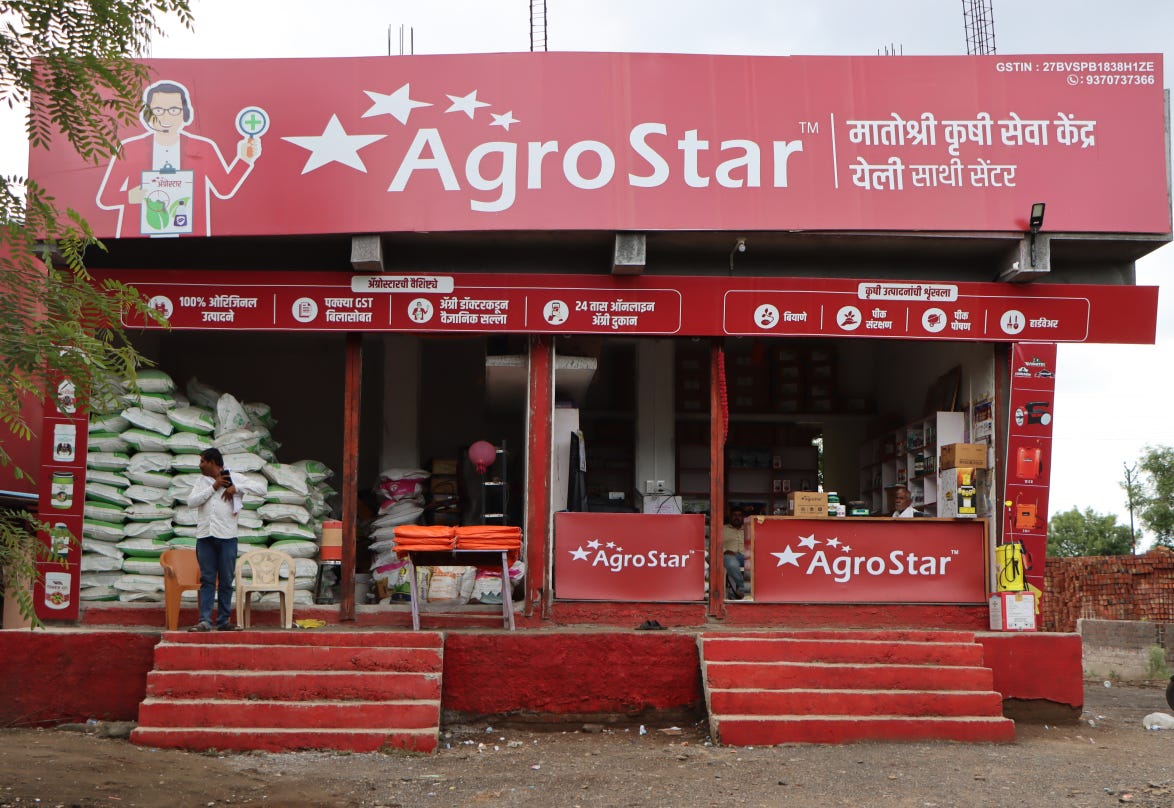
Photo credit: AgroStar
In terms of impact, AgroStar reports that independent surveys have found that 81% of its farmer base reported increased farm production, while 53% also found that their cost of cultivation reduced. The company also cites studies indicating that reduced use of chemical fertilisers on its platform has helped avoid more than 120,000 metric tonnes of CO₂-equivalent emissions.
21/11/25
LimaBot AI rolls out accessible crop diagnostics tool for East African farmers
Newly launched Tanzanian agritech startup LimaBot AI has shared details of its AI-powered crop-diagnostics platform designed for smallholder farmers. Founded in 2024, the company began operations in early 2025 and has built its service to be accessible on both low-end smartphones and basic feature phones. Farmers can submit photos, text descriptions or symptom inputs through a mobile app, WhatsApp, SMS or USSD, allowing the system to function in areas with limited connectivity.
LimaBot’s machine-learning models analyse these inputs in real time to identify crop diseases and generate recommendations for treatment, prevention and field-management actions. The company reports that it also incorporates data from drones, satellite imagery and mobile devices to support early detection of pests and plant stress. The objective is to limit limit yield pressure, reduce excessive pesticide use and support more sustainable practices.
The startup claims to have onboarded more than 12,000 farmers across Kenya and Tanzania as it expands the platform’s early deployment.
25/11/25
World Bank commits $490M to scale digital extension in Maharashtra
The World Bank has approved a USD 490 million investment to accelerate digital and climate-smart agriculture in Maharashtra, supporting the state government’s extension services and its flagship Maharashtra Project on Climate Resilient Agriculture (POCRA II). The programme will deploy digital advisories and resource-efficient practices across 21 districts, reaching more than two million small and marginal farmers, including nearly 290,000 women.
POCRA II aims to strengthen resilience to extreme weather, pest pressure and soil degradation by expanding real-time digital agronomic guidance, supporting Farmer Producer Organisations (FPOs) and upgrading government-led extension systems. Its focus on nutrient efficiency, water management and crop-planning tools aligns with Maharashtra’s strategy to modernise agriculture through data-driven interventions.
Maharashtra has been particularly active in developing digital agriculture programmes. In April, the state approved the MahaAgri-AI 2025–29 policy to expand the use of AI and emerging technologies. Existing initiatives such as Maha-Agritech, launched in 2019, use satellite data and AI for crop monitoring and yield estimation, while CropSAP offers digital tools for pest tracking, insurance and crop planning. The relevance of these programmes is underscored by the state’s scale: Maharashtra has a population of around 130 million, with more than half the workforce dependent on agriculture.
The World Bank funding forms part of a broader USD 776 million package that also includes a USD 286 million digital-education project in Punjab, reflecting the Bank’s continued support for technology-enabled, government-led development across India.
1/12/25
SwiftVEE raises $10.1M to expand fintech and insurance for Southern African livestock farmers
African agritech startup SwiftVEE has raised R173 million (about US $10.1 million) in a Series A funding round led by HAVAÍC and Exeo Capital. Launched in 2019, SwiftVEE began as a digital livestock-auction marketplace, enabling farmers and agents to list cattle, sheep, goats and game for sale, and helping formalise and digitise a historically fragmented value chain. The platform now reportedly facilitates more than USD 100 million in annual transactions and operates beyond South Africa in Namibia, Botswana, Zimbabwe and Zambia, linking producers to buyers across the region and internationally.
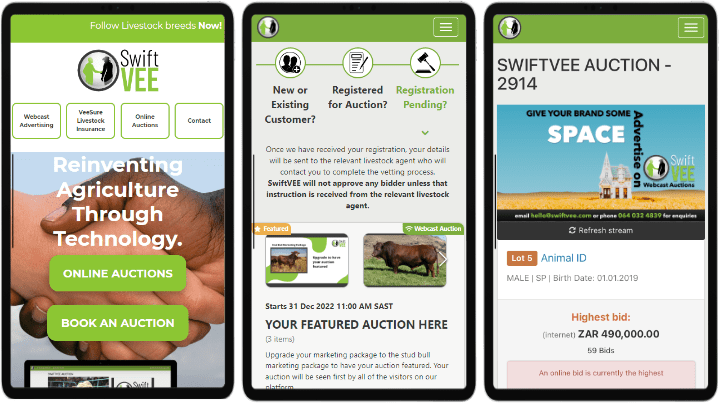
Image credit: SwiftVEE
With new capital, SwiftVEE plans to move beyond trade facilitation by integrating embedded finance, insurance and data-driven services into its marketplace. The expansion aims to address long-standing barriers faced by smallholder and livestock farmers who have limited access to formal credit and risk-management tools. If executed effectively, the model could be particularly beneficial for smallholders in Botswana, Zimbabwe and Zambia, where livestock markets are less formalised and financial inclusion gaps remain pronounced.
Good reads (what ArisTechia is reading..)
1/12/25
FAO report finds women left behind in digital agriculture in India and Bangladesh
FAO has published a new comparative study examining how digital extension and advisory services in Bangladesh and India are addressing (and often failing to address) gender gaps in access to agricultural information.
The report analyses the digital landscape, national policy frameworks and a wide range of service providers, drawing on surveys, field interviews and focus group discussions with rural women. It highlights that both countries have near-universal 4G coverage and solid digital ecosystems, yet women remain disadvantaged in the shift toward digital agriculture.
According to the study, around 30 percent of women farmers interviewed do not own a mobile phone, and smartphone ownership is even rarer. Despite significant availability of agritech solutions, only about 15 percent of women reported ever using a phone to access agricultural information, relying instead on neighbours or known intermediaries. Persistent gender gaps in mobile ownership (20 percent in Bangladesh and 16 percent in India), and even wider gaps in mobile internet use (up to 39 percent in Bangladesh), continue to limit women’s ability to benefit from digital advisory tools.
A central message of the report is that while gender-responsive design is emerging as a competitive differentiator in digital agriculture, most solutions have not been intentionally designed for women. Interfaces often assume high digital literacy, content does not reflect women’s work in agrifood systems, and few services include mechanisms to track whether women are actually reached. The study warns that without addressing these issues, the rapid digitalisation of extension risks reinforcing existing inequalities rather than reducing them.
28/11/25
FCDO-commissioned study finds thin evidence for AI impact in agriculture
Consultancy firm Athena Infonomics has published a new rapid review for FCDO’s Research Commissioning Centre (RCC) assessing how AI is being applied in food and agriculture systems across low- and middle-income countries. The study analyses 51 peer-reviewed and grey-literature papers and finds that most AI applications remain at an early stage, with research concentrated in laboratory or simulation settings rather than real-world smallholder contexts.
The review identifies significant evidence gaps, a finding that is unsurprising given the early phase of adoption of many AI-enabled agricultural tools. The authors note that smallholder farmers are largely absent from current studies, and issues such as digital literacy, accessibility, socio-cultural barriers and gender inclusion are rarely examined. Only one study explicitly considers women farmers.
The study also finds that across the literature, model accuracy is prioritised over field performance, leaving limited proof that AI tools improve yields, food security or livelihoods. Evaluations of scalability, governance and cost-effectiveness also remain scarce. The review concludes that while AI offers clear potential, the current evidence base is too thin and too detached from real farming conditions to inform large-scale, equitable deployment.