

Featured stories
29/08/25
Complete Farmer gets additional $5M debt to scale operations
Back in June, we reported on Complete Farmer’s USD 2.5 million financing from the EU-backed AgriFI facility, directed toward the construction of six fulfilment hubs in Northern Ghana to support over 5,000 smallholder farmers.
The company has now secured a further USD 5 million debt facility from Symbiotics, a global impact investment platform. This latest funding is expected to expand Complete Farmer’s services to more than 12,000 farmers across Ghana, more than doubling the original target.
The investment follows earlier rounds, including a USD 10.4 million pre-Series A in 2023. It reflects continued confidence in Complete Farmer’s model of digitising the agricultural value chain through its CF Grower solution, which connects farmers to international markets and provides them with precision agriculture services using satellite, IoT technologies, and crop data insights for crop growth optimisation and market standards compliance.
02/09/25
BII commits $7.5M to scale Babban Gona’s digital ag model in Northern Nigeria
British International Investment (BII) has committed $7.5 million in debt funding to Babban Gona, a Nigerian agritech social enterprise supporting smallholder farmers in northern Nigeria. Its digital agriculture platform uses data analytics and mobile tools to assess creditworthiness, deliver agronomic training, distribute inputs, and connect harvests to buyers.
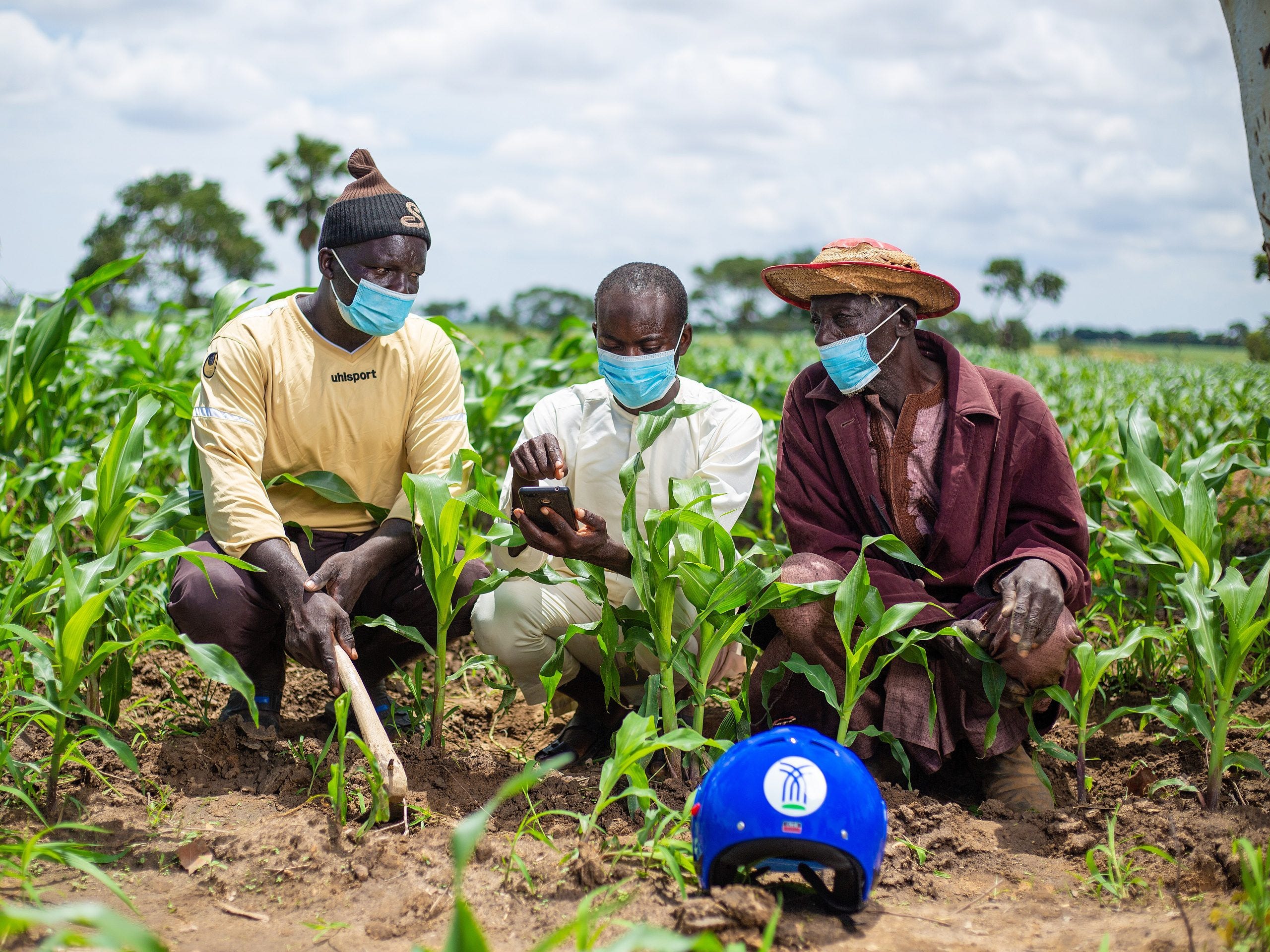
Photo credit: Babban Gona
Through a B2B2C model, Babban Gona works with franchise-style farmer groups, training leaders and equipping them with digital tools, financing, and services. These leaders support individual farmers, allowing the organisation to scale while maintaining close relationships. Digital monitoring systems track activities, measure productivity, and forecast yields, giving farmers actionable insights while reducing climate and financial risks.
The investment will help Babban Gona expand its reach and strengthen food security and climate resilience in the region.
Other news
21/08/25
NEC and IFAD partner to bring digital ag to African smallholders
Japan-based IT and electronics company NEC and the UN’s International Fund for Agricultural Development (IFAD) have launched a new digital agriculture initiative to support small-scale producers across Africa. NEC will provide digital tools such as its CropScope platform, which uses remote sensing and data analytics to enable precision farming and informed decision-making. An e-Voucher system will also be piloted to make it easier for farmers to access inputs and subsidies. The announcement was made at the Ninth Tokyo International Conference on African Development (TICAD9).
IFAD will integrate these technologies into its programmes and projects, ensuring that smallholder farmers can adopt and benefit from them at scale. It will also provide the institutional framework, partnerships, and on-the-ground presence needed to tailor digital solutions to local contexts. This collaboration is part of IFAD’s broader strategy to accelerate digital inclusion, enhance programme monitoring, and build climate resilience among rural communities.
26/08/25
Degas to accelerate AI-driven agriculture in Ghana with $100M investment
Japanese agri-fintech startup Degas has announced a four-year, USD 100 million investment to establish Ghana as Africa’s first AI-powered agricultural hub. The initiative builds on the company’s existing work in Ghana, where it has provided financing and digital farming services to more than 86,000 smallholder farmers.
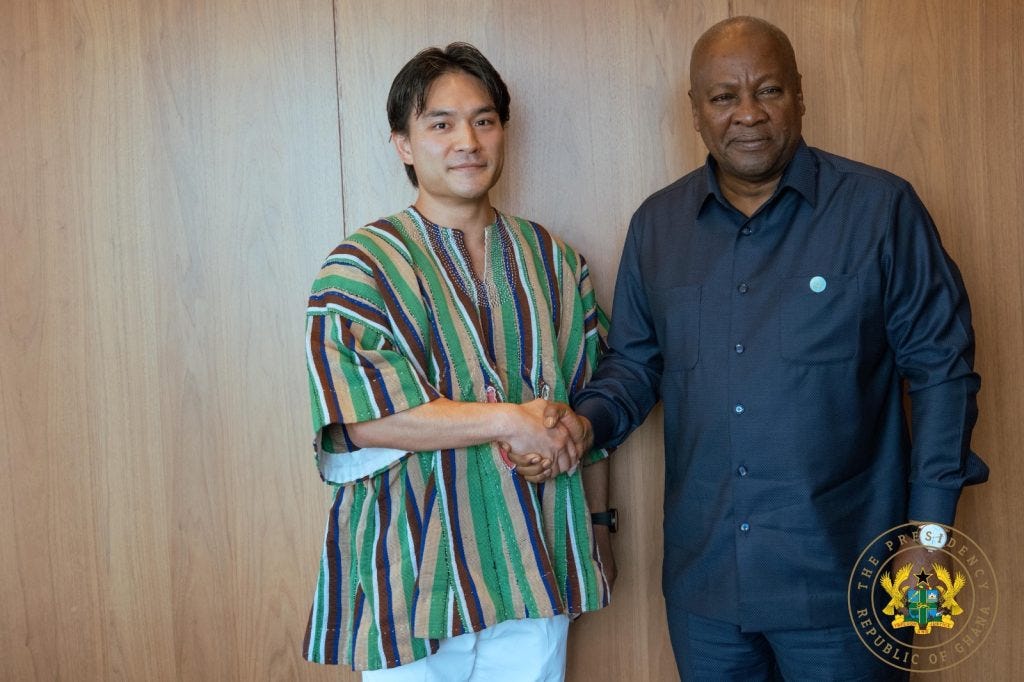
Photo credit: Presidency of the Republic of Ghana
Established in 2019, Degas operates across Africa, using AI-powered satellite monitoring and precision agronomy to support smallholder farmers with crop health assessment, yield forecasting, and data-guided planting and irrigation. The new USD 100 million investment will scale this model in Ghana by expanding tailored financing, agronomic services, and digital tools, while strengthening links to suppliers, logistics, storage, and markets. The approach has already shown results, with farmer incomes reported to have doubled and loan repayment rates reaching 95 percent.
04/09/25
Somalia unveils digital ag strategy and $100M investment
Somalia’s Ministry of Agriculture and Irrigation has launched the National Digital Agriculture Strategy 2025–2029, developed with support from the African Development Bank and FAO Somalia. The plan sets a roadmap to digitalise the sector by strengthening innovation, data systems, and platforms such as the Agricultural Information Management System (AIMS) for registration, certification, traceability, monitoring, and service delivery.
At the Africa Food Systems Forum in Dakar, the government also announced the Somalia Agri-Food Investment Partnership (SAIP), a USD 100 million blended-finance programme to scale the national food system. Centred on a commercial farm, 15,000 out-growers, and a modern processing facility, SAIP will deliver fortified foods, reduce the USD 2 billion food import bill, raise farmer incomes, generate jobs for women and youth, and apply digital tools to meet global standards.
Agriculture already contributes around 70% of GDP and employs more than 80% of Somalis, yet the UN warns that 4.4 million people remain at risk of crisis-level hunger. Together, the new strategy and SAIP represent a coordinated push to strengthen resilience, boost productivity, and unlock the potential of crops ranging from bananas and limes to legumes, vegetables, and dates.