

27/05/25
Nigeria’s government to deploy precision ag platform with met agency and World Bank
The Nigerian Meteorological Agency (NiMet) has partnered with the Agro-Climatic Resilience in Semi-Arid Landscapes (ACReSAL) initiative, a World Bank-financed project, to deliver precision digital agriculture extension services to smallholder farmers in Northern Nigeria. The plan is for NiMet to co-develop, pilot, and implement with the Federal Government of Nigeria the Digital Precision Agricultural Extension (DPAE) platform.
The solution will offer to extension officers real-time weather and climate intelligence as well as agriculture information to support decisions on crop planning, irrigation, and input usage. The World Bank and the government are planning to engage on the project all different actors in the agri value chain including, farmers, public extension services, input dealers, traders, processors, and mechanisation services providers. Recently, the Federal Government said that through the ACReSAL initiative it successfully recovered 178,000 hectares of degraded land across 19 northern states affected by climate change.
02/06/25
Samunnati raises $5.83M to strengthen India’s agri value chains
Indian agritech Samunnati has raised INR 500 million (USD 5.83 million) through non-convertible debentures on the local Wintwealth digital investment platform. A debenture is a loan agreement in writing between a borrower and a lender. The total funding raised via Wintwealth has now reached INR 1.6 billion (USD 18.65 million).
Samunnati is an agri value chain market linkage platform working with FPOs, and through them with smallholder farmers. The agritech offers a blend of financial and non-financial services. Besides market linkages, it provides customised loans for farmers, capacity building for FPOs, and farmer advisory services.
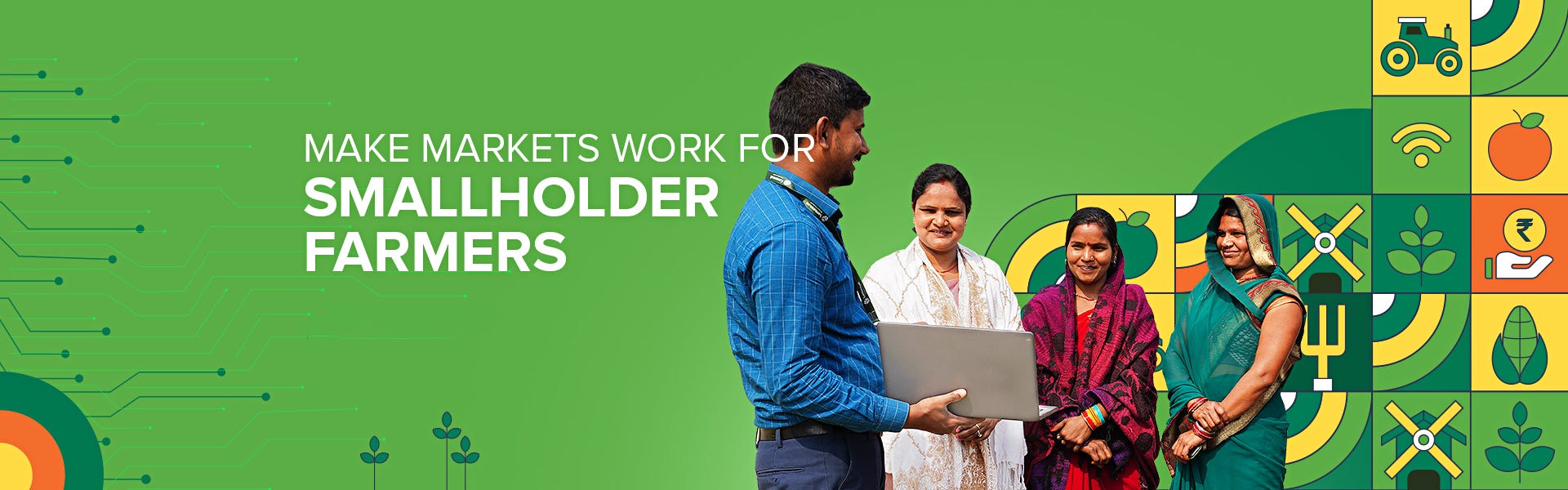
Image credit: Samunnati
Samunnati plans to use the fresh funding to provide working capital to Farmer Producer Organisations (FPOs), enhancing inclusive agri value chains. Wintwealth is a platform that enables individuals to invest in fixed-income securities, such as senior secured bonds issued by Non-Banking Financial Companies (NBFCs). According to its website, Samunnati currently reaches about +6,500 FPOs with a member base of over 8 million farmers.
03/06/25
OpenAI expands AI For Impact Program with grants to PxD and Digital Green
OpenAI has expanded its AI for Impact Accelerator initiative in India, providing USD 150,000 in grants to 11 nonprofit organizations focused on developing AI solutions for sectors like healthcare, education, agriculture, and digital inclusion. AgriTech players Precision Development (PxD), a global nonprofit organisation that supports smallholder farmers, and development organisation Digital Green are among the receivers of the grants.
The grants are primarily distributed as API credits and aim to support nonprofits in leveraging AI technologies for social good. Digital Green And PxD are using AI to deliver highly localised farming advisory and expand peer-to-peer knowledge sharing by automating crop recommendations and strategies for adapting to climate change. The AI for Impact Accelerator initiative aligns with the IndiaAI Mission, a government-led initiative launched in March 2024 to establish the country as a global leader in AI research and development.
04/06/25
Vodacom-backed Mezzanine announces milestones and expansion plans for eVuna platform
South African-based tech startup Mezzanine, a company owned by the Vodacom Group, a mobile communications company operating across Africa, is expanding its former Connected Farmer platform, now known as eVuna. The platform is a B2B2C solution targeting agribusinesses, input providers, financial service providers and government agencies working with smallholder farmers. It provides a suite of solutions that deliver efficiencies in agricultural value chains. Farmers benefit by accessing services including advisory, finance and insurance, market linkages and e-vouchers.
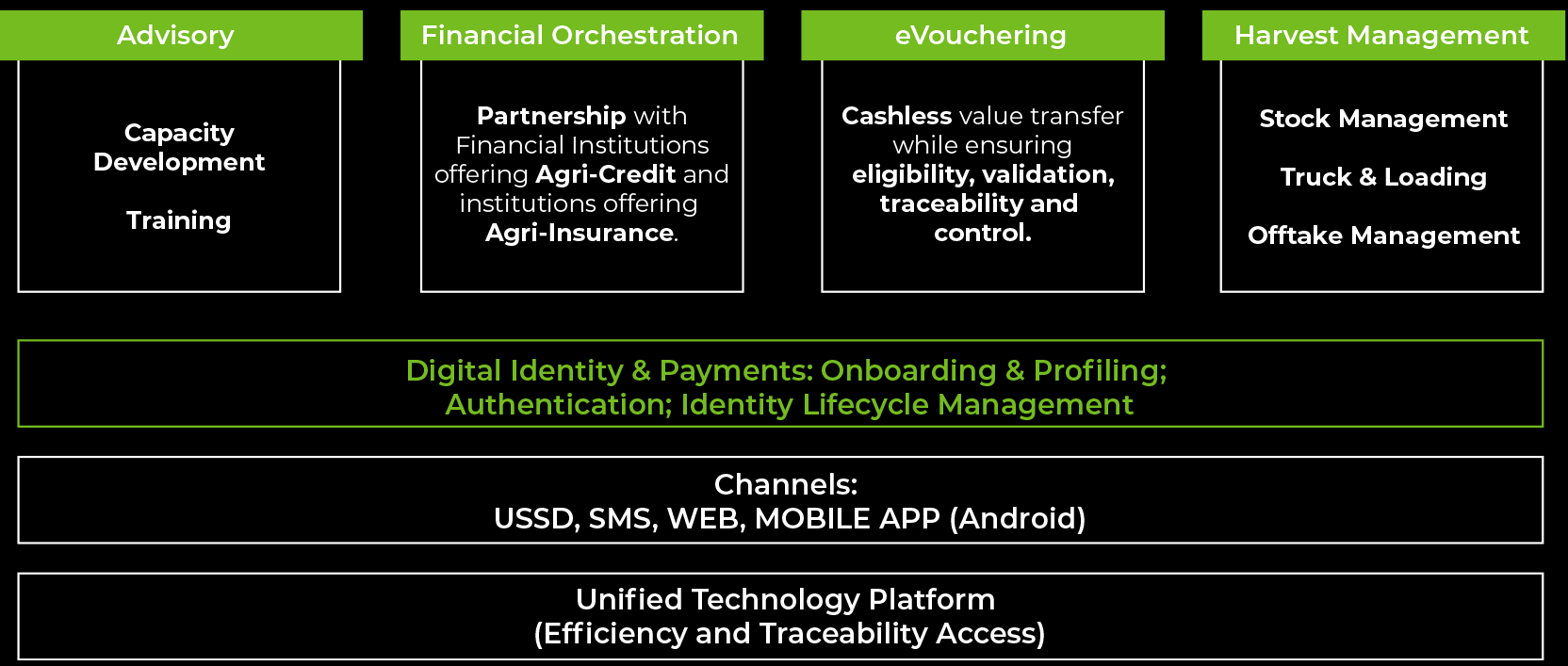
Image credit: Mezzanine
Videsha Proothveerajh, Director of Vodacom’s business arm, said that in East Africa the platform is actively engaging 100,000+ farmers and further expansion is being planned. According to reports, the eVuna eVouchering programme has registered 6 million farmers and has seen 3.5 million vouchers redeemed. Mezzanine claims that farmers using eVuna have accessed over USD 1 million in capital, leading to an 80% increase in yields and an additional USD 600 in revenue per farmer.
Besides eVuna, Vodacom directly operates the M-Kulima platform in Tanzania, a B2B2C solution that allows agribusinesses to digitally register farmers, provide advisory services, and facilitate payments via mobile money. M-Kulima has reportedly registered 3.2 million farmers in Tanzania.
04/06/25
DeHaat acquires NEERX to expand digital ag ecosystem in India
Indian agritech DeHaat has acquired smart farming company NEERX for an undisclosed amount. DeHaat aims to integrate NEERX's real-time soil and weather monitoring technology into its platform to offer farmers precision agriculture services including real-time insights into soil health and weather conditions. This acquisition is part of the company’s plan to integrate cutting-edge technology and expand its digital agriculture ecosystem. It follows another takeover in January this year, when DeHatt acquired from agribusiness Olam Agri the AgriCentral farm advisory platform.
Founded in 2012, DeHaat is India’s largest digital agri-food marketplace. It operates in 12 Indian states through a “phygital” model, supported by its network of +18,000 DeHaat Centers, as well as parterships with Farmer Producer Organisations (FPOs). As reported by ArisTechia, just in April DeHaat completed a USD 23.4M debt funding round to fuel expansion beyond India. Founded in 2019, NEERX’s flagship product is its SHOOL soil sensor, which delivers data on soil and crop conditions by combining on-ground sensors with satellite imagery and cloud-based analytics.
30/05/25
Good reads (1): WEF publishes toolkit to help governments launch agritech innovations
The World Economic Forum (WEF) has launched the AI4AI Toolkit, a step-by-step resource aimed at helping governments and partners scale agritech solutions through structured Public-Private Partnership (PPP) models. The toolkit focuses on agritech innovations enabled by emerging technologies including AI, IoT Blockchain and on Digital Public Infrastructure (DPIs). It is an output of the WEF’s AI for Agricultural Innovations (AI4AI) initiative, which aims to address challenges in the rollout of agritech initiatives through a framework for national and sub-national governments to build enabling ecosystems.
Key challenges discussed in the toolkit include the lack of quality and accurate data, the absence of public procurement models for agritech services, a focus on isolated use-cases rather than broader transformational goals, and the lack of platforms for testing and validating new technologies. To address these, the toolkit offers a library of agritech use cases from crop planning to harvest that can drive impact on value chains, a reference guide for public sector to design national or state level programmes, and resources on DPIs such as India’s Agricultural Data Exchange (ADeX) and Agritech Sandbox.
One of the early adopters of the AI4AI framework has been the Government of Telangana in India through initiatives such as Project Saagu Baagu and ADEx. Project Saagu Baagu ( “agricultural advancement”) has been rolled out in partnership with WEF, supported by the Bill and Melinda Gates Foundation and implemented by global development organisation Digital Green. It has supported chilli farmers to access AI-based advisories, soil testing, produce quality testing and e-commerce.
04/06/25
Good reads (2): New PxD report discusses smallholder engagement in carbon projects
Precision Development (PxD) has published a new report “Smallholder Farmer Engagement in Carbon Credit Projects: Views from the Field” funded by the Swiss Re Foundation, the corporate foundation of reinsurance company Swiss Re. Based on field research in Kenya, the study reveals key factors that influence smallholder farmers’ participation in carbon credit initiatives.
PxD’s research shows that non-monetary co-benefits, such as improved productivity and better access to agricultural services, are the real drivers behind farmer engagement. These benefits create a positive feedback loop, encouraging continued investment in sustainable practices. However, the report warns that communication gaps can fuel misconceptions, and that farmers are prepared to shift their behaviour if incentive structures change or fail to meet their evolving needs. The study recommends providers of carbon credit schemes to embed co-benefits in the project’s core theory of change, and to engage all stakeholders in design and implementation.