

19/02/26
TomorrowNow and Google.org back AI-powered weather intelligence in Africa
TomorrowNow, the non-profit climatetech originating from software company Tomorrow.io, has secured USD 1 million in support from Google.org, Google’s charitable foundation, to scale AI-powered actionable agro-meteorological advisories for smallholder farmers across Africa. The funding supports integration of advanced weather forecasting models, expansion of validation infrastructure, and strengthened farmer-centred impact measurement with local delivery institutions.
TomorrowNow will integrate WeatherNext models developed by Google DeepMind into its digital advisory system, the Global Access Platform. These AI-based models process atmospheric data to generate detailed, location-specific forecasts several days ahead. The platform translates these forecasts into practical farming guidance, including planting windows, crop protection timing and preparation for heavy rainfall.
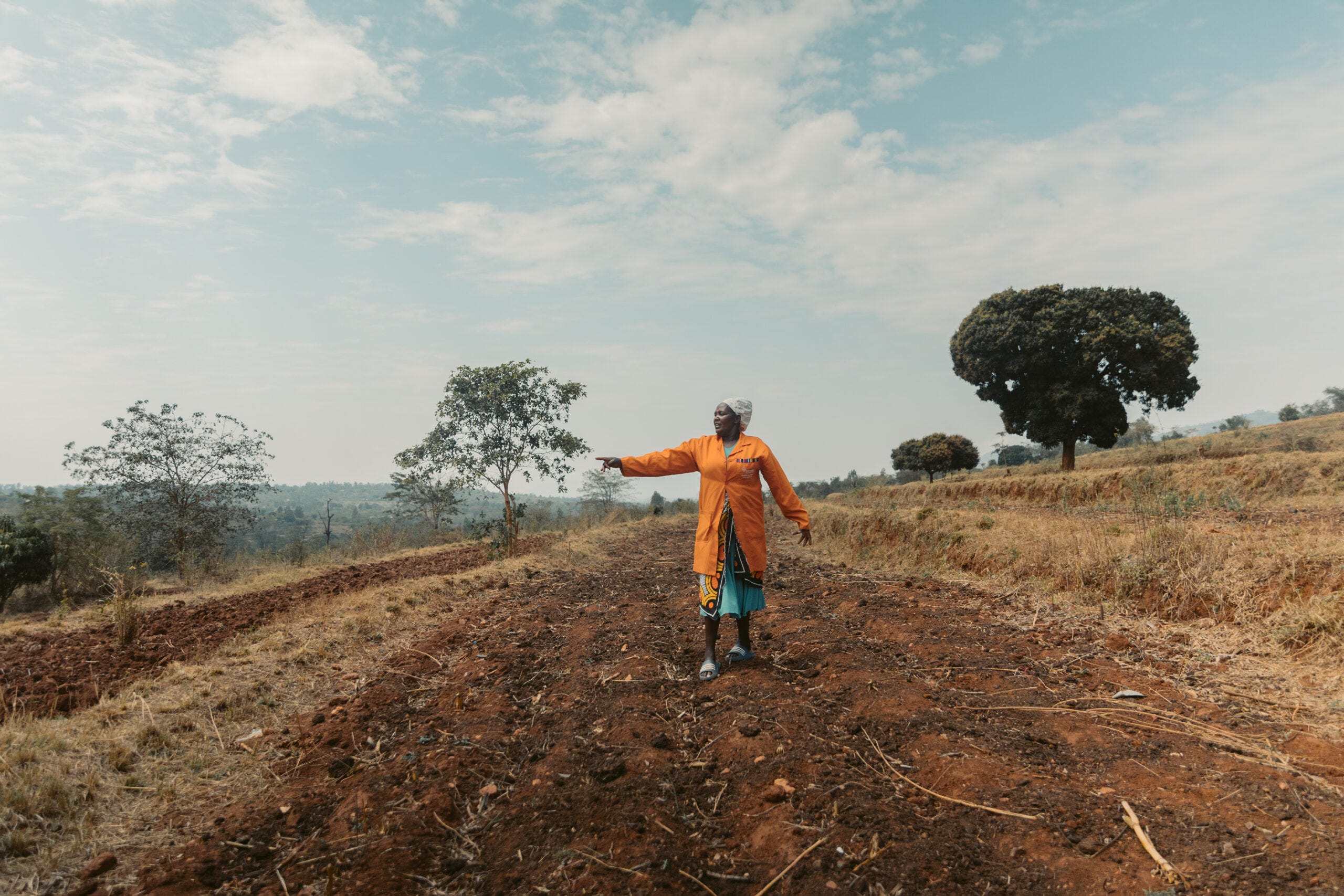
With this support, TomorrowNow will also expand the Gold Standard Validation Network, a growing network of high-quality weather stations across East and Southern Africa that continuously measures model performance in the agro-ecological conditions where farmers operate. Expanding across Kenya, Zambia and Malawi, the network compares forecast outputs with observed conditions to test accuracy and refine advisories.
A further component of the initiative is the strengthening of farmer-impact measurement systems in partnership with Kenya Agricultural and Livestock Research Organization, Zambia Meteorological Department and One Acre Fund to assess forecast accuracy, advisory uptake and farmer response under increasing rainfall variability.
TomorrowNow reports reaching more than 6 million farmers across Kenya, Malawi and Zambia, with 98% confirming receipt of weather advisories and 72% reporting that they acted on the guidance.
Why it matters
AI-based weather models are improving the resolution and speed of short-term forecasts, but smallholders need farm-level intelligence that is locally validated and actionable. By combining advanced forecasting with investment in ground weather stations, this initiative addresses a core constraint in Africa: limited observation infrastructure. Reliable, field-tested forecasts are essential for turning predictive capability into practical agricultural decisions.
26/02/26
Acumen invests in Ghana’s digital shea platform Vitara
More details have emerged on the investment by social impact investor Acumen Acumen in Ghana-based Vitara, formerly known as Sommalife, announced earlier this year. Financial terms were not disclosed. The backing will support scaling market linkage to 60,000 farmers, expanding shea butter processing capacity and fully deploying the company’s digital traceability infrastructure across all operational zones.
Vitara digitises the shea nut and soybean value chains through a B2B model supplying verified, traceable produce to international buyers and brands. Aggregation and digitisation occur via intermediary mobile-enabled agents who register farmers, coordinate procurement, capture transaction data and manage quality control at community level. The company sources from rural communities where 90 percent of suppliers are women farmers.
Its TreeSyt platform tracks crops from farm to buyer and generates real-time supply chain data. To date, 150,000 farmers are registered on TreeSyt, with 40,000 active suppliers. The company targets reaching one million farmers by 2030, integrating traceability, climate resilience and premium market access into routine farming practices.
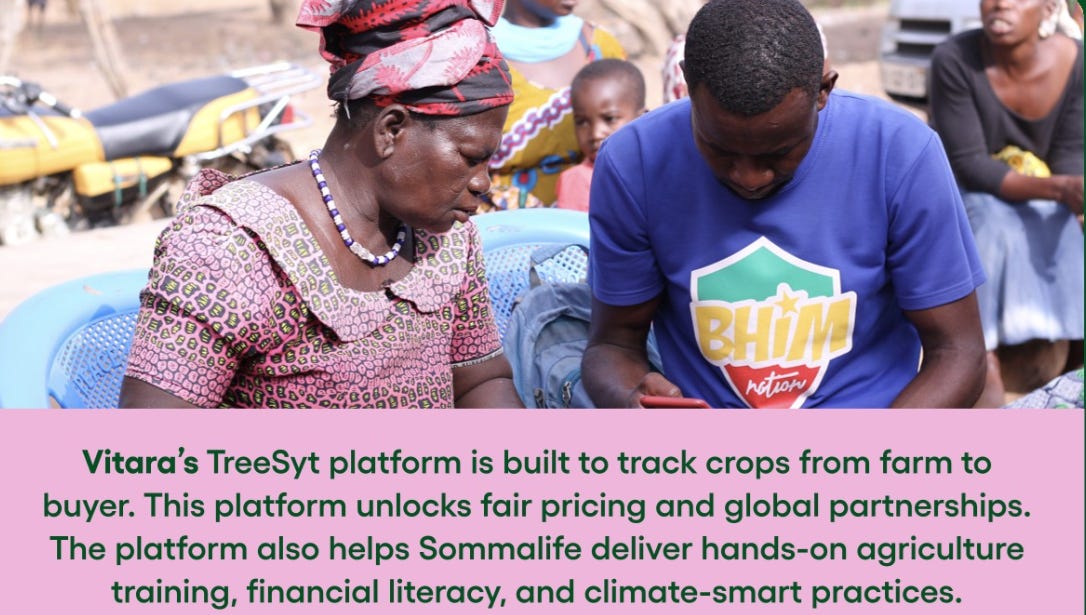
Image credit: Acumen
Vitara is also a former grantee of the GSMA Innovation Fund for Climate Resilience and Adaptation 2.0, supporting digital innovations that enable vulnerable populations to adapt to climate change and strengthen biodiversity.
Why it matters
Recent ArisTechia coverage shows rising investment in digital value-chain infrastructure across Kenya, India and Sri Lanka. Capital is concentrating on buyer-facing platforms built around aggregation and traceability, suggesting investors see stronger revenue scalability in market-linked systems than in direct-to-farmer app models.
27/02/26
AfDB backs Saviu II startup fund in Francophone West Africa, agritech in focus
The African Development Bank Group has committed USD7.1 million as a limited partner in Saviu II, a venture capital fund investing in early-stage technology startups across Francophone West and Central Africa, including agritech companies. The commitment includes USD4.9 million in equity and USD2.2 million in first-loss capital, backed by the European Commission through the Boost Africa Programme.
Managed by Saviu Partners, the fund plans to invest USD540,000–USD3.3 million in around 20 seed and early-stage startups, with at least 60% of investments targeting Francophone markets including Côte d’Ivoire, Senegal, Benin and Cameroon.
Why it matters
Venture capital in Africa remains concentrated in a few English-speaking hubs. Startups in Francophone Africa raised about USD450m in 2025, according to Africa: The Big Deal, but early-stage capital remains limited. As sectors such as agritech expand, including companies like OKO Finance, Tolbi and Ignitia, funds such as Saviu II aim to strengthen seed-stage financing across the region.
28/02/26
AfCFTA and AGRA partner to boost farmer-centred intra-African trade
The African Continental Free Trade Area (AfCFTA) Secretariat and the Alliance for a Green Revolution in Africa (AGRA) have launched a new partnership aimed at strengthening farmer-centred agricultural trade within Africa. The collaboration focuses on accelerating the practical implementation of the AfCFTA agricultural agenda, including reducing barriers to cross-border agricultural trade and improving coordination between governments, agribusinesses and farmer organisations. By strengthening regional supply chains, the alliance aims to expand market opportunities for African farmers while improving food security and economic resilience.
Why it matters
While this is a trade initiative, deeper regional integration under AfCFTA has important implications for digital agriculture. Trade integration enables digital services that connect farmers, buyers and supply chains across borders, including digital commodity exchanges, traceability systems and other cross-border agritech solutions.
04/03/26
Kenya rolls out electronic central registry for warehouse receipts
Kenya has launched a national Electronic Warehouse Receipt System Central Registry (eWRS-CR) to digitise agricultural commodity trading and expand farmers’ access to finance. The secure, government-owned system automates and centralises warehouse receipts issued under the national Warehouse Receipt System. It was developed by TradeMark Africa, a not-for-profit organisation that works to improve trade infrastructure across Africa, and funded by the British High Commission in Nairobi.
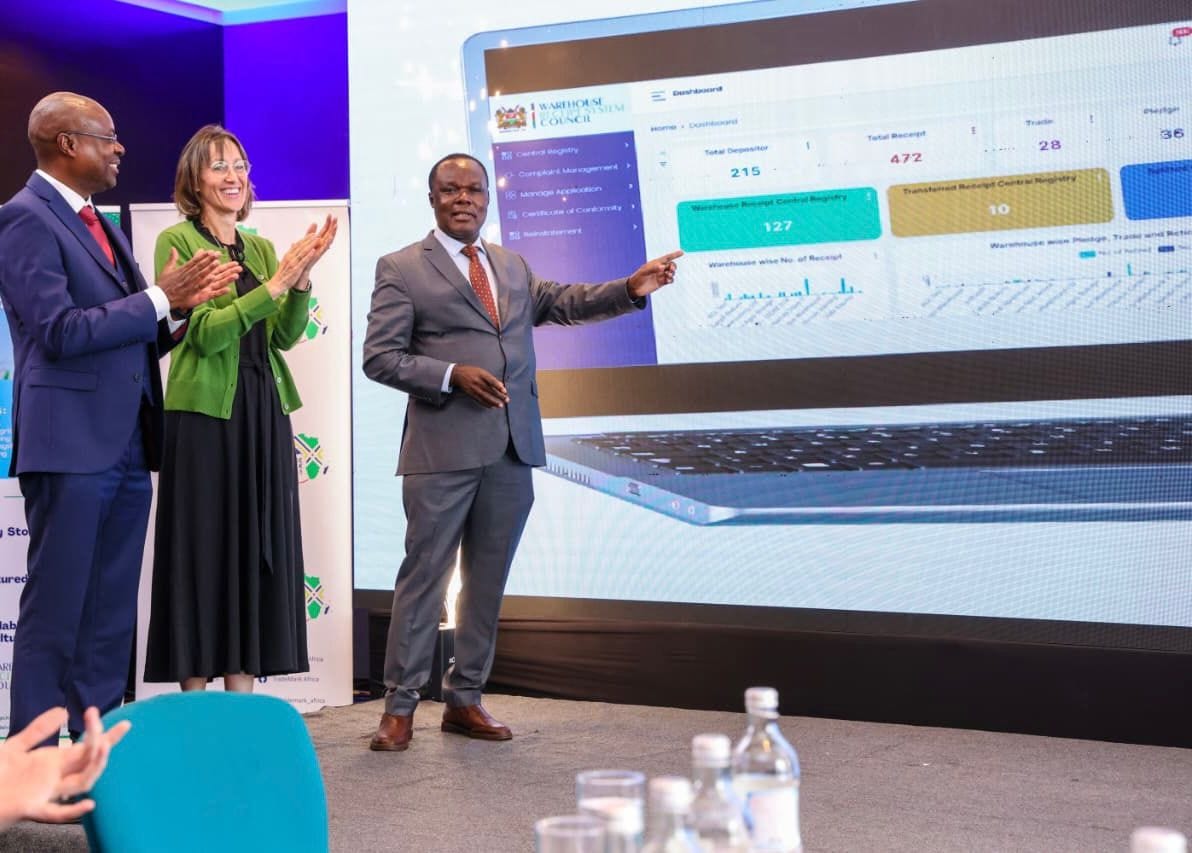
Photo credit: Ministry of Investment, Trade and Industry (Kenya)
The system is operated by Kenya’s Warehouse Receipt System Council, the statutory regulator overseeing licensed warehouses and the national warehouse receipt framework. Supported by the Ministry of Investments, Trade and Industry, through the State Department for Trade, the launch is a step in the rollout of a structured and digitised warehouse receipt system.
Commodities stored in certified warehouses can be converted into electronic receipts that can be pledged as collateral for financing, helping strengthen trust in stored commodities as financial assets while improving transparency in agricultural markets.
Why it matters
Warehouse receipts are a key mechanism linking agricultural value chain digitalisation with farmer finance. By turning stored commodities into verifiable collateral, they enable access to working capital. Similar models underpin agritech platforms such as StarAgri and Arya.ag in India, where digital warehouse receipts support collateralised lending and commodity trade.
05/03/26
Gates grants $7M to climate-resilient crop research in LMICs
The Gates Foundation has awarded USD 7 million to Belgian agritech startup Rainbow Crops to accelerate the development of climate-resilient crop varieties for Africa and South Asia.
Rainbow Crops combines AI, multiplex genome editing and automated phenotyping to identify complex genetic traits that improve crop performance under heat and drought stress. The funding will support the company’s Trait Foundry platform, designed to speed up the discovery of traits that are difficult to develop through conventional breeding.
The research will initially focus on three key staple crops (maize, sorghum and rice), which are central to food security in climate-vulnerable regions.
Why it matters
This investment reflects growing interest in AI-driven crop design, where computational tools are used to accelerate plant breeding and identify combinations of genetic traits linked to climate resilience.
As climate pressures intensify across smallholder farming systems, advances in drought- and heat-tolerant crop varieties could play an important role in stabilising yields and strengthening food security in emerging markets.