

02/01/25
Kenya’s precision agriculture startup Rhea bags funding
Kenyan agritech startup Rhea Soil Health Management has received funding from Village Capital. The funding is part of the USD 150,000 that Village Capital has awarded to two women-led startups, including Rhea and Nigerian fintech Regxta, as part of the Women in Tech Financing Facility, a joint initiative with Standard Chartered. The startup has developed an IoT solution that supports smallholder farmers with real time soil analysis, enabling them to implement precision agriculture practices. The sensors provide farmers with instant data on soil health, nutrient levels, and other critical metrics. Farmers receive through their phone advisory to make informed decisions about crop planting and fertiliser use. Village Capital is a non-profit organisation supporting impact-driven, seed-stage startups. It is backing a number of African agritechs, including Aquarech in Kenya, and Crop2Cash and Coamana in Nigeria.
02/01/25
Lersha and Safaricom bring Agri DFS to wheat farmers in Ethiopia
Details have emerged about a digitally-enabled value chain financing pilot in the region of South Sidama in Ethiopia. The project aims to bring financial services to smallholder farmers in the wheat value chain. It leverages a data-driven digital scoring model to provide loans bundled with agroclimatic advisories and agri insurance. A number of organisations are behind the pilot, which is supported by Japan International Cooperation Agency (JICA). The lead implementer is Ethiopian agritech Lersha. Other partners behind the pilot are local mobile operator Safaricom, Hibret Bank, Nyala Insurance, and the local farmer cooperative Sidama Elto Union.
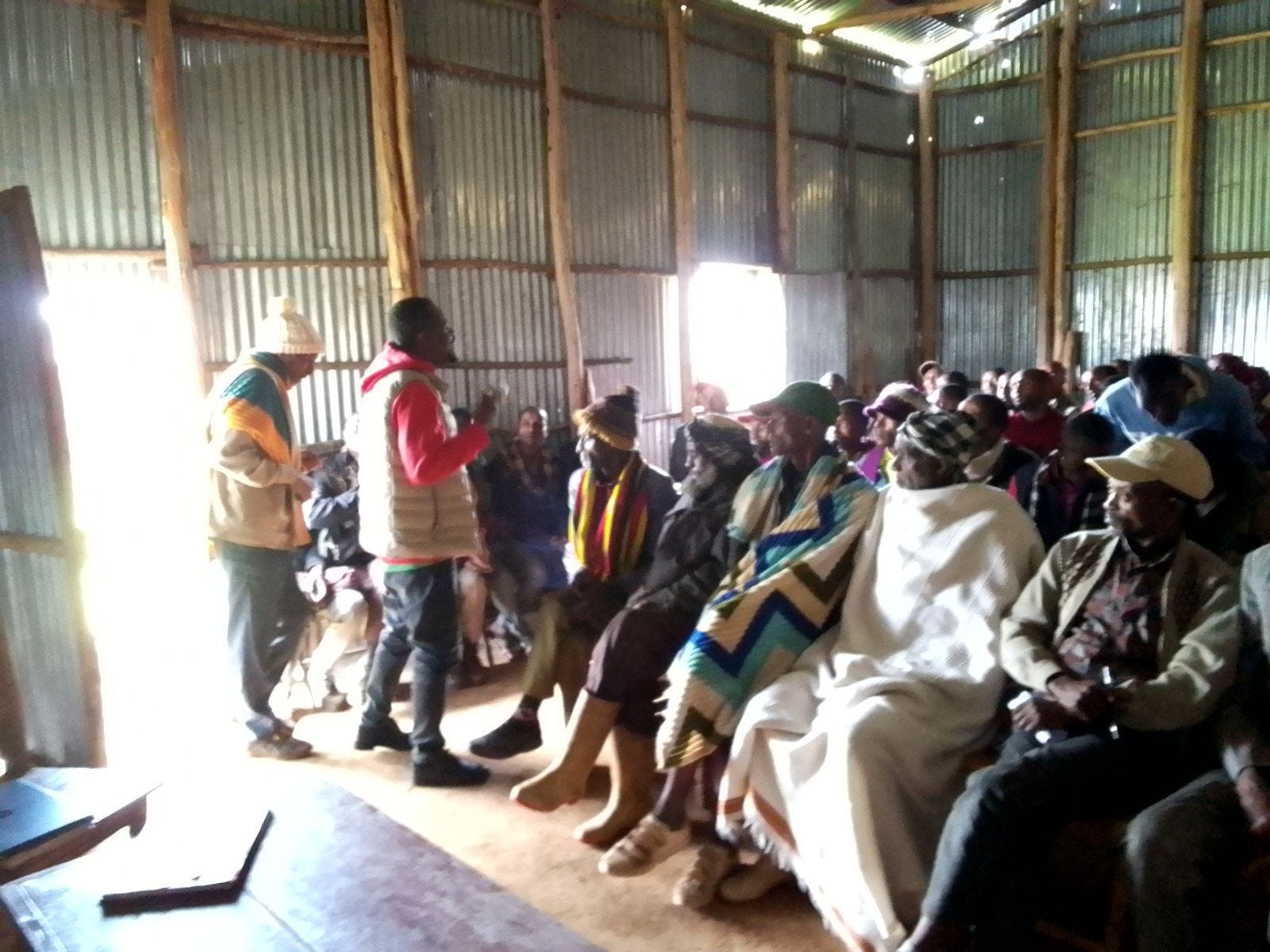
Onboarding activities in South Sidama. Photo credit: Lersha
The initiative leverages Safaricom's mobile money services M-PESA as well as its digital lending platform. To date, 200+ farmers have been onboarded in the woreda (district) of Teticha, with a view to reach 10,000 farmers. The main objective is to create a scalable model for economic growth and financial inclusion. Founded in 2018, Lersha is a one -stop-shop enabling farmers to access inputs, hire mechanisation services, and request agro-climatic advisory via a mobile app and a call centre. The agritech deploys a network of 5,000+ agents.
03/01/25
Egypt’s ReNile raises $450K for IoT-based smart farming solution
Egyptian agritech startup ReNile has closed a funding round of USD 450,000 from undisclosed investors. Founded in 2017, the agritech offers IoT-powered smart farming solutions that optimise resource management, improving water quality and energy efficiency for farmers. Its solutions include automated monitoring, customisable alerts, and control systems tailored to various farming environments such as aquaculture, hydroponics, and greenhouses. Through its agri-cloud platform, the startup enables data-driven agriculture supporting informed decision-making and leading to increased productivity and sustainability.
07/01/25
India’s government announces $116M fund for agri-climate innovations
India’s National Bank for Agriculture and Rural Development (NABARD) has announced a second round of funding of its NabVentures Fund supporting agritechs and agribusinesses in the country. The new round “NabVentures Fund 2” will have a corpus of INR 10 billion (USD 116.4). It aims to support pilot projects by companies that address climate change concerns in the rural financial ecosystem. The bank’s first fund named AgriSURE was launched in July last year, and totalled INR 7.5 billion (USD 89.6 million). Its objective was to support high-risk, high-impact innovations in digital agriculture and to de-risk investment in agritech startups. NABARD had initially announced plans to support approximately 85 agri startups. NABARD is in talks with international institutions such as the Asian Development Bank (ADB) and the United Nations Food and Agriculture Organization (FAO) with the objective to bring external expertise for its funds.
19/12/24
Good reads: WEF report outlines business case for gender-inclusive agritech
The World Economic Forum has published the new report “Agritech for Women Farmers: A Business Case for Inclusive Growth” . The study explores the untapped potential of gender-inclusive agritech, and highlights how addressing women farmers’ needs can drive farm-level and macroeconomic gains while creating new opportunities for agritech companies. WEF provides recommendations to address systemic barriers women face and encourages agritech companies to innovate on the “5Ps” – product, price, promotion, place and people – to better serve women farmers.
The authors argue that agritech companies should focus on developing solutions that address the specific needs of women. Agritechs should also explore collaboration at a pre-competitive level to build the infrastructure necessary to better serve women farmers. According to FAO, women represent 43% of the global agriculture labour force. Women produce between 60% and 80% of food in developing countries, signifying their importance for food security. According to WEF, ensuring that women have the same access to productive resources in agriculture as men could lead to food production increase in LMICs by 20% to 30%.